

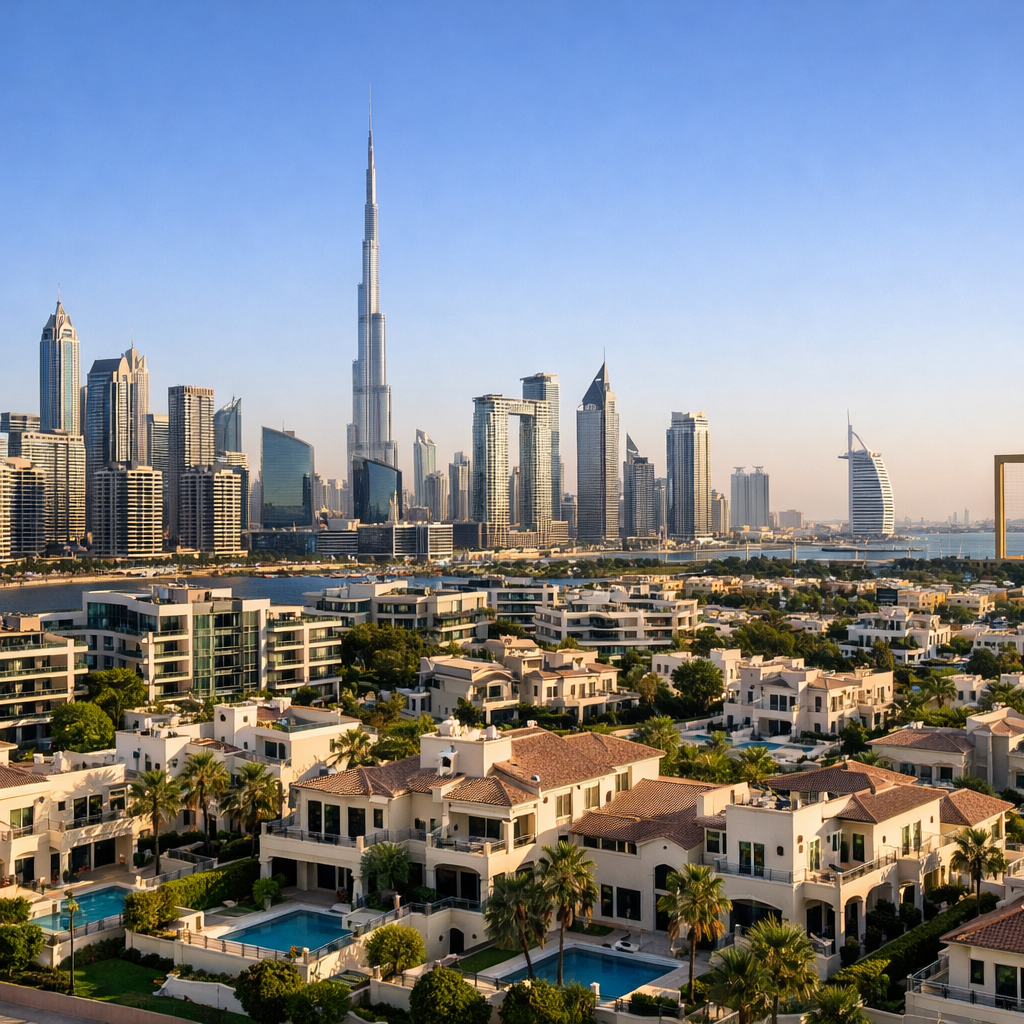
Dubai’s rental market is undergoing significant changes, influenced by factors such as new property developments, shifting tenant preferences, and broader economic conditions. Understanding these trends is crucial for both tenants seeking accommodation and landlords aiming to optimize their investments.
Current Trends in Rental Prices
Recent data indicates a divergence in rental price movements between apartments and villas. According to Property Finder, the average apartment rent in Dubai decreased to approximately AED 90,940 in April 2026, marking a 4.6% decline from the first quarter of the year. In contrast, villa rents experienced a 3.3% increase over the same period, reaching an average of around AED 229,000. Year-on-year, apartments have seen a 4.4% rise, while villas have increased by 9.1%.
Factors Influencing the Market
Several elements contribute to these trends:
- Supply Dynamics: The introduction of new residential units, particularly in areas like Jumeirah Village Circle (JVC), Arjan, Dubai Silicon Oasis, Discovery Gardens, and Sports City, has expanded housing options. This influx has intensified competition among landlords, providing tenants with more choices and greater negotiating power.
- Tenant Preferences: There’s a noticeable shift towards homeownership, driven by favorable long-term residency policies such as the UAE Golden Visa and initiatives like Dubai’s First-Time Home Buyer Programme. This program has enabled over 2,000 residents to purchase their first homes in the past six months, contributing to more than AED 3.25 billion in residential property sales.
- Economic Factors: External events, including regional security concerns, have influenced the property market. For instance, a conflict in early 2026 led to a decline in new rental contracts by over a third in March, highlighting the market’s sensitivity to geopolitical developments.
Implications for Tenants and Landlords
For tenants, the current market conditions offer opportunities to secure favorable rental terms, especially in the apartment segment where rents are stabilizing or decreasing. Prospective renters should explore various communities to find options that align with their preferences and budgets.
Landlords, on the other hand, may need to adjust their strategies to attract and retain tenants. This could involve offering competitive pricing, enhancing property amenities, or providing flexible lease terms to remain appealing in a more competitive landscape.
Looking Ahead
As Dubai’s real estate market continues to evolve, staying informed about ongoing developments is essential. Both tenants and landlords should monitor market reports and seek professional advice to make informed decisions that align with their objectives.
By understanding the current dynamics and anticipating future trends, stakeholders can navigate Dubai’s rental market more effectively, ensuring mutually beneficial arrangements in this ever-changing environment.