

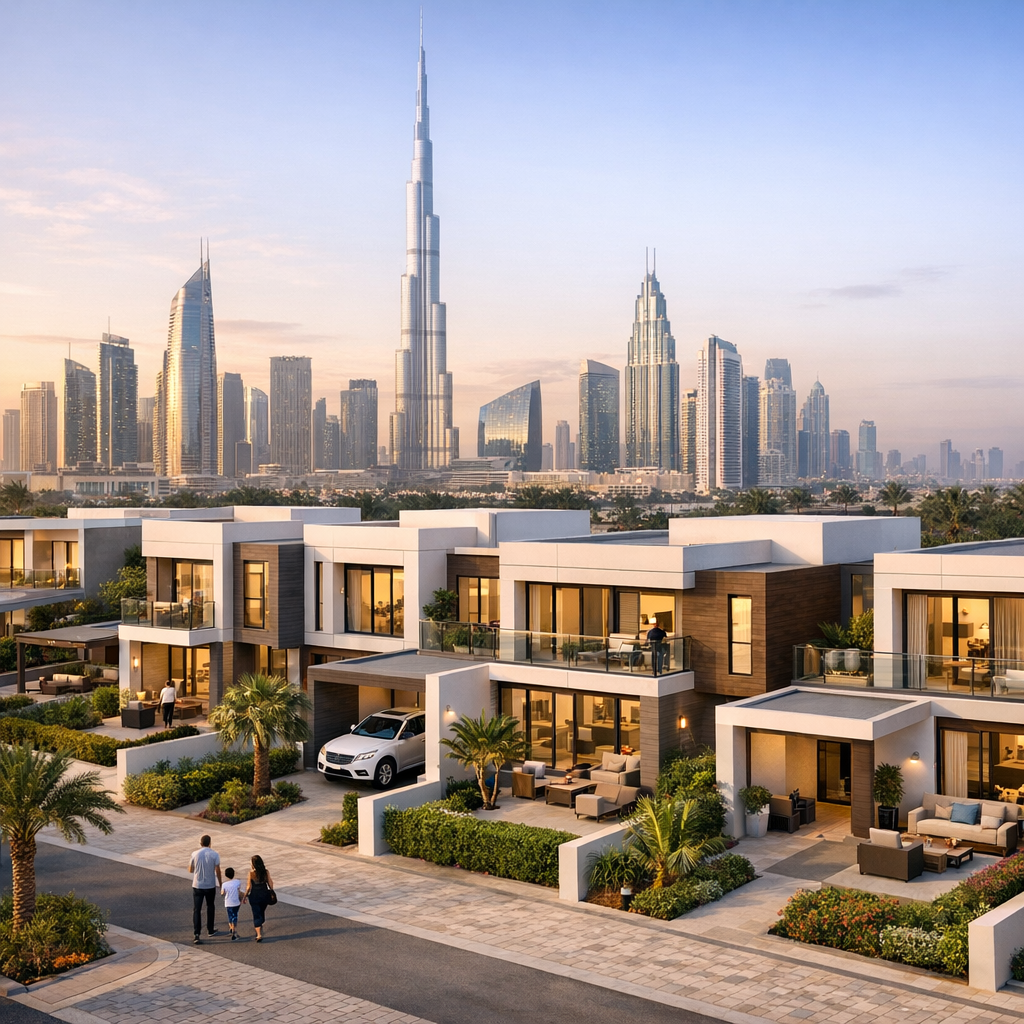
Dubai’s housing market is evolving. As options multiply and investment decisions become more nuanced, both renters and buyers are asking many of the same questions: Where should I live? When does buying make more sense than renting? Which new projects are worth considering? Here’s a local view on what to watch.
What’s New in Supply & Latest Community Projects
Off-plan launches remain robust. Between January and late August 2026, more than 373 new development projects were registered in Dubai, introducing over 104,000 residential units from developers across master-planned areas. Many are pending and still in early construction phases.
One project catching attention is Lantana Hills, which broke ground in mid-2026 in the Dubai Science Park area. It’s planned as a gated community with about 390 townhouses (3- and 4-bedroom), developed with modular construction techniques and sustainable design standards. Handover is expected in the second half of 2027.
Rent vs Buy: What the Numbers are Saying
Rental yields across Dubai stayed healthy in the first half of 2026. On average, residential rental yields hit about 6.6%, with apartments leading at nearly 6.9%, while townhouses and villas yielded lower on average.
The “break-even” point—when buying becomes financially preferable to renting—varies by area. In mid-market apartment communities, the upfront costs and prices mean you might recoup those sooner (often in the range of 14 to 16 years), whereas in high-prestige areas with luxury pricing, renting remains financially cheaper for longer.
Important Cost Factors for Buyers vs Renters
- Buying: down payments, developer fees, service/maintenance costs, registration fees.
- Renting: security deposits, annual rent escalation, flexibility to relocate.
If you plan to stay 5-10 years or more, buying may offer capital growth and stability. If your stay is less certain, renting can offer greater flexibility and lower risk upfront. The ideal choice depends heavily on your lifestyle, finances, and priorities.
Where Demand is Shifting & What Buyers Want
Buyers are becoming more selective. Attributes like developer track record, location convenience (schools, transit, medical services), build quality, and long-term investment potential carry greater weight than ever.
Instead of smaller apartment units, there is growing demand for villas or townhouses with more space—especially among families. The southern and less central master-planned communities, such as Jumeirah Village Circle (JVC), Al Furjan, and communities around Dubai South, are seeing interest for offering more affordable, larger homes with lifestyle amenities.
Tips for Prospective Renters and Buyers
- Do detailed comparisons by neighbourhood: Rental costs, sales prices, yield, and maintenance vary significantly from one district to another.
- Check timelines for off-plan handovers: Projects under construction can face delays; always verify completion and delivery schedule.
- Understand full cost of ownership: Beyond price, consider service charges, utility costs, insurance, and potential resale or rental income.
- Negotiate rental terms: Long-term leases may get you more stability and better rates.
- Consider future infrastructure: Upcoming transit lines, new schools, roads and amenities can boost property value.
Dubai’s real estate scene is increasingly shaped by supply growth, investor expectations, and changing lifestyle demands. Whether you’re renting or buying, staying informed on these structural trends will help you make smarter choices in this dynamic market.