

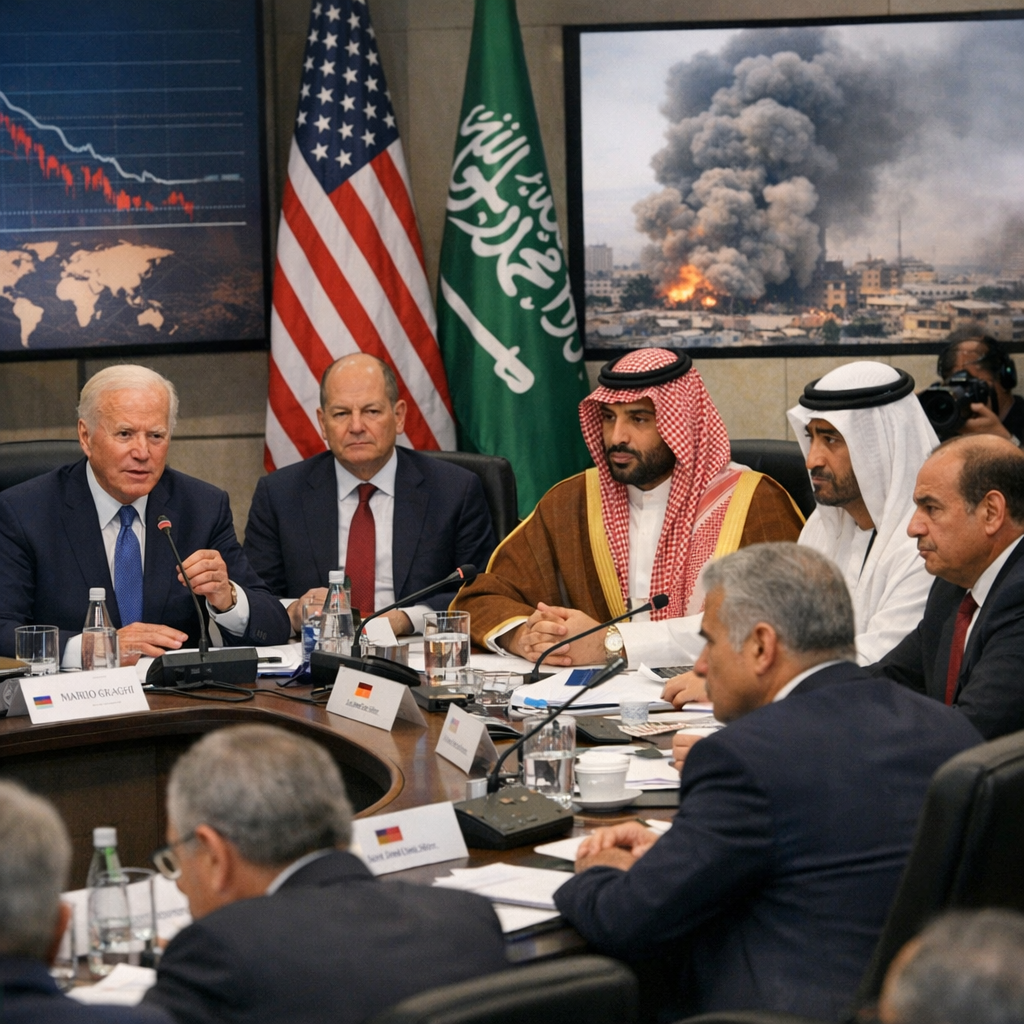
The global economy is currently navigating a complex landscape, significantly influenced by escalating conflicts in the Middle East. These tensions have introduced an energy shock, leading to rising inflationary pressures and a projected slowdown in global growth.
Impact on Global Growth
According to the Organisation for Economic Co-operation and Development (OECD), the evolving conflict in the Middle East has become a dominant force shaping global economic prospects. The OECD’s latest Economic Outlook projects global growth slowing from 3.4% in 2025 to 2.8% in 2026, before picking up to 3.1% in 2027. This slowdown is attributed to the energy supply shock resulting from the conflict, which is expected to weigh significantly on global growth while putting upward pressure on inflation.
Regional Economic Projections
The OECD’s projections indicate that GDP growth in the United States is expected to be 2.0% in 2026, before moderating to 1.7% in 2027. In the euro area, growth is projected to be 0.8% in 2026 and 1.2% in 2027. China’s growth is projected to slow to 4.4% in 2026 and 4.3% in 2027. These projections reflect the broader impact of the Middle East conflict on major economies worldwide.
Inflationary Pressures
Inflation pressures are expected to persist, with inflation now projected to be higher in 2026 than previously anticipated, reflecting the surge in global energy prices. Headline inflation in G20 countries is projected to be 4.0% in 2026, easing to 2.7% in 2027. This underscores the need for targeted fiscal support and policy measures to address the economic challenges posed by the ongoing conflict.
Policy Recommendations
In response to these challenges, the OECD recommends that government policies be timely, targeted towards those most in need, and provide incentives to lower energy use. This includes setting a termination date for fiscal support to ensure sustainability, diversifying sources of supply and purchase, introducing a financial stability framework, and promoting eco-friendly energy solutions.
As the global economy continues to grapple with the repercussions of Middle East tensions, it is imperative for policymakers and stakeholders to remain vigilant and proactive in implementing strategies that mitigate risks and foster economic resilience.