

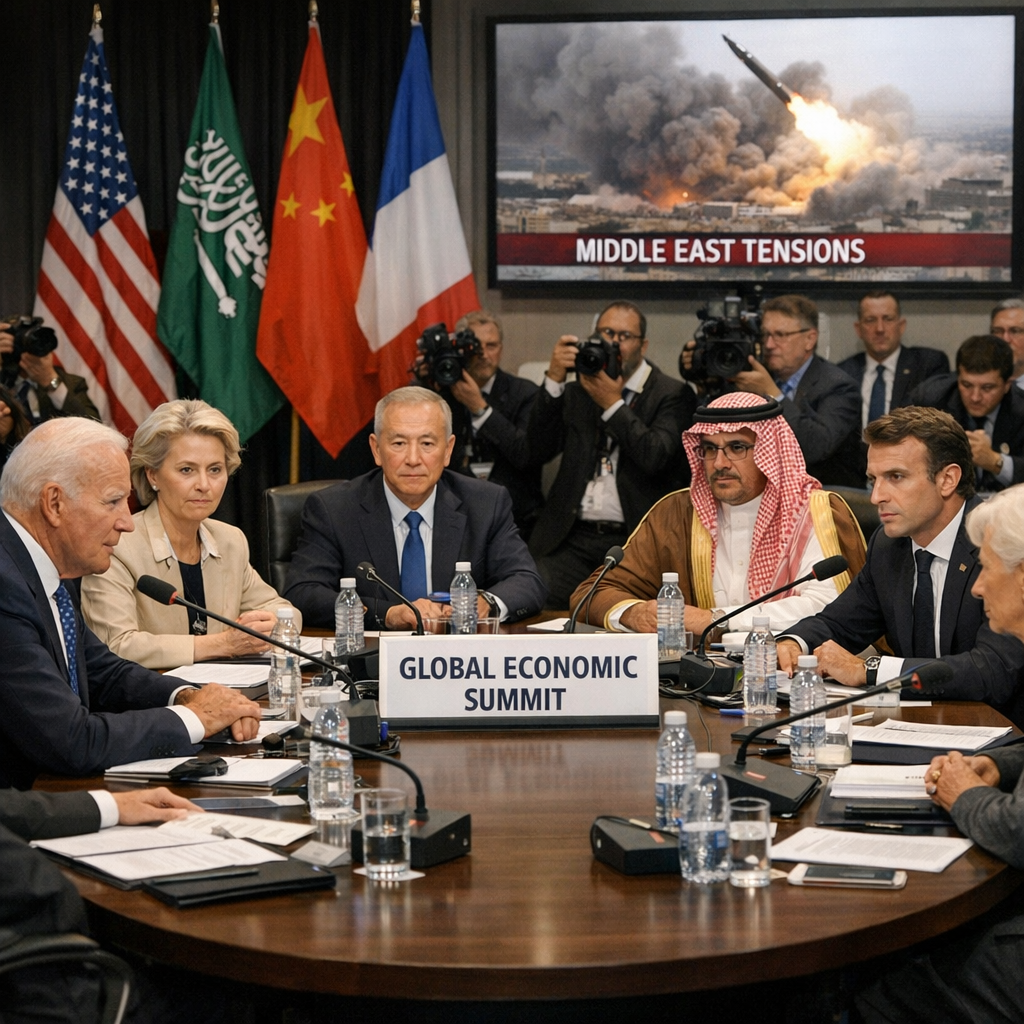
The global economic landscape is currently navigating significant challenges, primarily influenced by escalating conflicts in the Middle East. These tensions have led to disruptions in energy supplies, resulting in increased oil prices and heightened inflationary pressures worldwide.
Impact on Global Growth
According to the Organisation for Economic Co-operation and Development (OECD), global growth is projected to slow to 2.8% in 2026, down from 3.4% in 2025. This deceleration is attributed to the energy shock stemming from the Middle East conflict, which has adversely affected economic activities across various regions.
Regional Economic Outlook
The United States demonstrates relative resilience, with a projected GDP growth of 2.1% in 2026. This stability is supported by robust domestic energy production and substantial investments in artificial intelligence, defense, and energy sectors. However, consumers are exhibiting caution in spending due to rising inflation and unemployment rates.
In contrast, Europe faces stagflation, with the eurozone’s growth anticipated at just 0.8% in 2026. Elevated energy costs have severely impacted industrial output, particularly in Germany and the United Kingdom. The European Union is also contending with a surge of inexpensive Chinese exports, which poses a threat to key industries and influences current trade policies.
China’s growth is expected to slow to 4.5% in 2026, influenced by ongoing real estate challenges. Nevertheless, the country is making gains in green technology and AI exports. India stands out with a projected growth of 6.5%, driven by strong domestic momentum.
Inflation and Monetary Policies
Global inflation is anticipated to reach around 4.5% in 2026, propelled by rising commodity prices due to the energy crisis. Central banks are likely to maintain cautious stances, with interest rates remaining elevated to address inflation concerns. The OECD emphasizes the importance of targeted and temporary fiscal support to mitigate the impact on vulnerable households and businesses, while preserving incentives to reduce energy consumption.
Implications for Dubai and the UAE
For Dubai and the broader United Arab Emirates, these global economic shifts present both challenges and opportunities. The region’s strategic position as a global trade hub necessitates adaptability to fluctuating energy markets and international trade dynamics. Continued investment in renewable energy and technological innovation will be crucial in navigating these uncertain times and sustaining economic growth.