

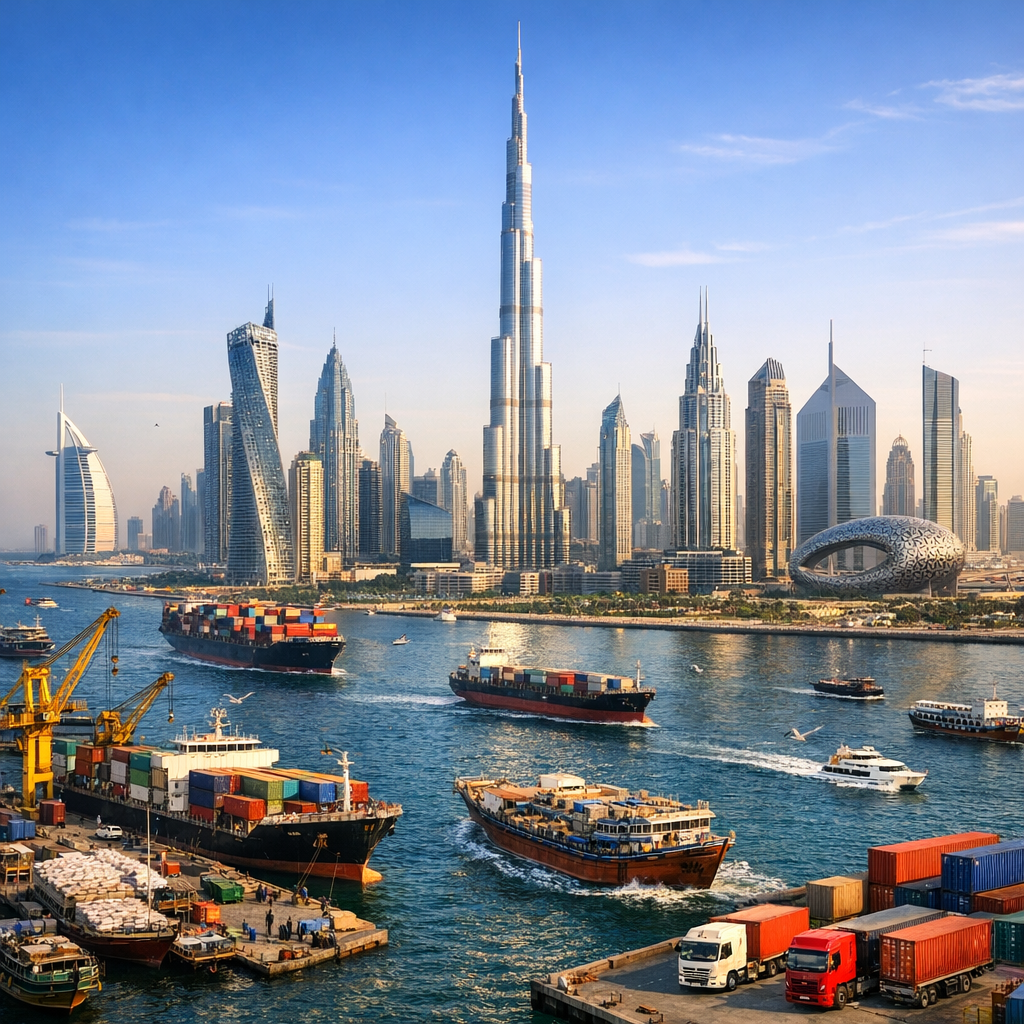
The global economic landscape is undergoing significant transformations, influenced by geopolitical tensions, technological advancements, and evolving trade dynamics. As a pivotal hub in the Middle East, Dubai is uniquely positioned to navigate these shifts, leveraging its strategic location and diversified economy.
Global Economic Outlook
Recent analyses indicate a moderation in global growth. The World Bank projects a slowdown to 2.6% in 2026, with a slight uptick to 2.7% in 2027. This deceleration is attributed to subdued investment and structural challenges, despite easing inflation and monetary policies. Similarly, the OECD highlights the impact of Middle East conflicts on energy markets, leading to inflationary pressures and potential growth constraints.
Dubai’s Economic Resilience
Dubai’s economy has demonstrated resilience amidst global uncertainties. The emirate’s proactive approach to economic diversification, focusing on sectors such as tourism, finance, and technology, has bolstered its stability. The city’s strategic initiatives in artificial intelligence and infrastructure development position it as a leader in innovation and economic adaptability.
Opportunities Amidst Challenges
While global economic projections suggest a cautious outlook, Dubai’s strategic initiatives offer promising avenues for growth. The emphasis on technological innovation, coupled with a robust infrastructure and favorable business environment, positions the emirate to attract international investment and talent. Additionally, Dubai’s role as a global trade hub enables it to capitalize on shifting trade patterns and emerging markets.
Conclusion
In an era of global economic transformation, Dubai’s strategic foresight and adaptability underscore its potential to not only weather challenges but also to thrive. By continuing to invest in diversification and innovation, Dubai is poised to maintain its status as a dynamic and resilient economic powerhouse.