

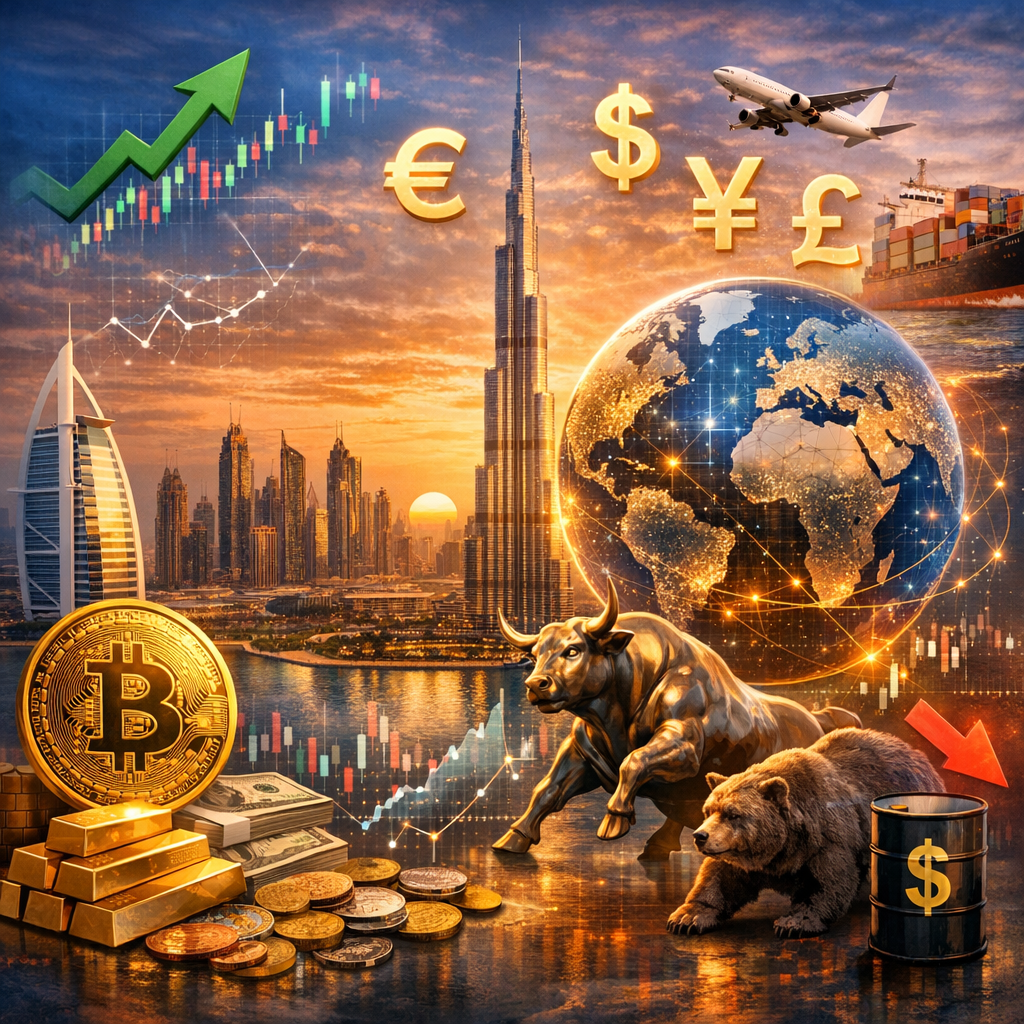
The global economy is currently navigating a complex landscape marked by geopolitical tensions, energy market disruptions, and technological advancements. These factors collectively influence economic growth, inflation rates, and trade dynamics worldwide.
Global Economic Outlook
Recent assessments indicate a moderation in global economic growth. The Organization for Economic Cooperation and Development (OECD) projects global growth to slow to 2.8% in 2026, down from 3.4% in 2025. This deceleration is attributed to factors such as the ongoing conflict in the Middle East, which has led to energy supply shocks and heightened inflationary pressures. The OECD notes that the evolving conflict has become a dominant force shaping global economic prospects, prompting an energy shock that is driving inflationary pressures and is projected to have adverse impacts on growth.
Similarly, the World Bank’s latest Global Economic Prospects report highlights that the global economy is proving more resilient than anticipated despite persistent trade tensions and policy uncertainty. However, growth is expected to slow to 2.6% in 2026 before rising to 2.7% in 2027, reflecting subdued investment and structural headwinds.
Implications for Dubai
Dubai’s economy, characterized by its strategic location and diversified sectors, is intricately linked to global economic trends. The projected slowdown in global growth and the energy market disruptions could have several implications for the emirate:
Trade and Logistics
As a global trade hub, Dubai’s logistics and shipping sectors may experience fluctuations due to altered trade routes and volumes stemming from geopolitical tensions and energy supply issues. Businesses should monitor these developments to adapt their strategies accordingly.
Tourism and Hospitality
The tourism sector, a significant contributor to Dubai’s GDP, could be affected by global economic uncertainties. Potential travelers may alter their plans in response to economic conditions in their home countries. Stakeholders in this sector should consider diversifying their markets and enhancing value propositions to attract visitors.
Real Estate and Investment
Global economic shifts can influence investor sentiment and capital flows. Dubai’s real estate market may see changes in demand patterns, necessitating adaptive strategies from developers and investors to maintain market stability.
Strategic Considerations
To navigate these global economic shifts, Dubai can focus on:
- Economic Diversification: Continuing to expand non-oil sectors to reduce dependency on volatile markets.
- Innovation and Technology: Investing in emerging technologies and fostering a knowledge-based economy to enhance competitiveness.
- Policy Adaptation: Implementing responsive policies that address global economic changes while supporting local businesses and communities.
By proactively addressing these areas, Dubai can mitigate potential adverse effects and position itself for sustained growth amidst global economic uncertainties.