

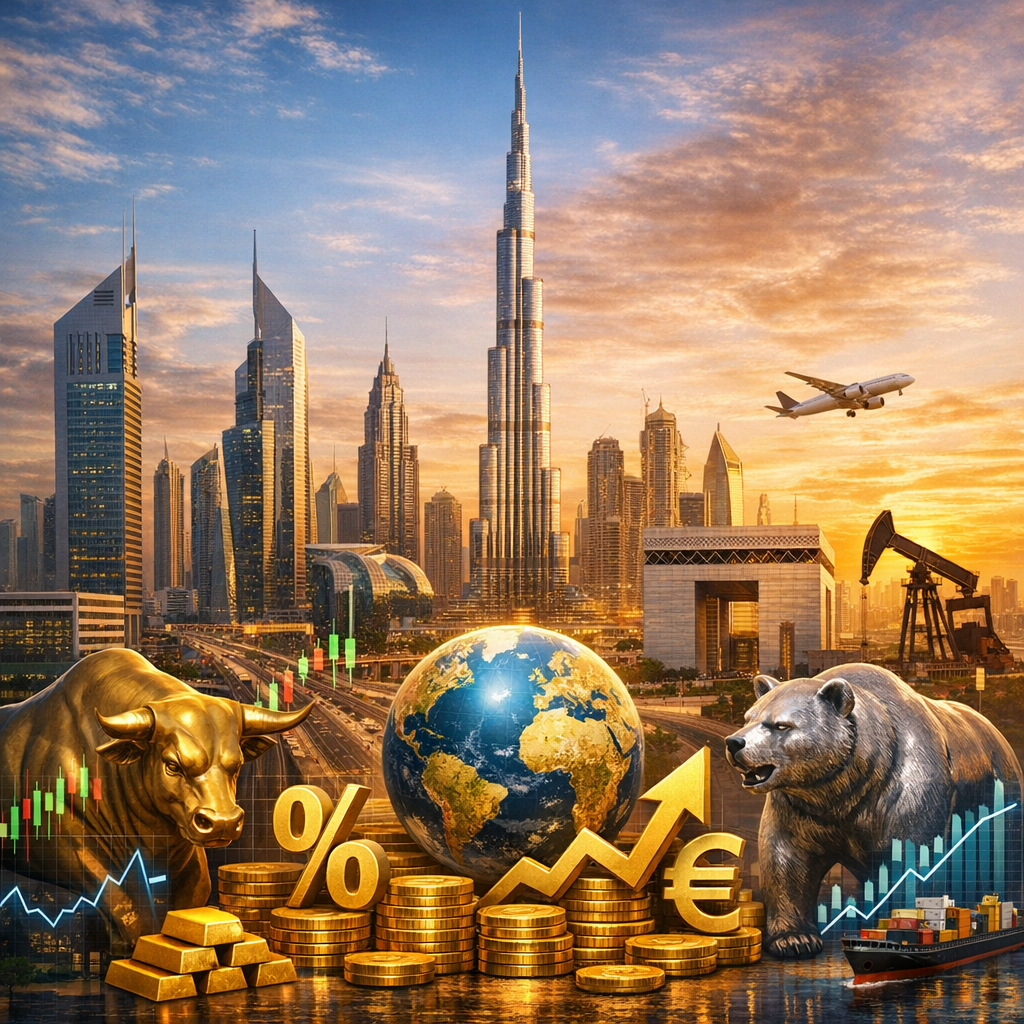
Dubai has long been recognized as a global financial hub, attracting investors and businesses worldwide. However, recent global economic trends and geopolitical events are reshaping the economic landscape, presenting both challenges and opportunities for the emirate.
Global Economic Outlook
The global economy is experiencing a period of moderate growth. The World Bank projects global growth to ease to 2.6% in 2026 before rising to 2.7% in 2027. This slowdown is attributed to factors such as trade tensions, policy uncertainty, and subdued investment. Despite these challenges, the global economy has shown resilience, with better-than-expected growth in certain regions, notably the United States.
Geopolitical Tensions and Energy Markets
Geopolitical conflicts, particularly in the Middle East, have introduced volatility into global energy markets. The Organization for Economic Cooperation and Development (OECD) notes that the evolving conflict in the Middle East has become a dominant force shaping global economic prospects, leading to an energy shock that drives inflationary pressures and adversely impacts growth. This situation underscores the interconnectedness of geopolitical events and economic performance.
Implications for Dubai
As a major player in the global economy, Dubai is not immune to these shifts. The emirate’s strategic location and status as a financial hub mean that changes in global economic conditions and energy markets can have direct and indirect effects on its economy. For instance, fluctuations in oil prices can influence regional investment patterns, while global trade tensions may impact the flow of goods and services through Dubai’s ports.
Moreover, Dubai’s appeal as a safe haven for the wealthy is being tested. Reports indicate that the ongoing war with Iran is challenging Dubai’s position as a secure destination for the global elite. While the city has successfully attracted millionaires by offering tax-free benefits and a stable environment, fears of becoming a target in regional conflicts are prompting some wealthy residents to reconsider their presence in the city.
Strategic Considerations
In response to these global economic shifts, Dubai may need to adapt its economic strategies. Diversifying its economy beyond traditional sectors, investing in emerging industries, and enhancing its appeal as a global business hub could help mitigate the impacts of global economic volatility. Additionally, strengthening diplomatic ties and promoting regional stability can further bolster investor confidence.
In conclusion, while global economic trends present challenges, they also offer opportunities for Dubai to reassess and refine its economic strategies. By staying attuned to global developments and proactively adapting, Dubai can continue to thrive in an ever-changing economic landscape.