

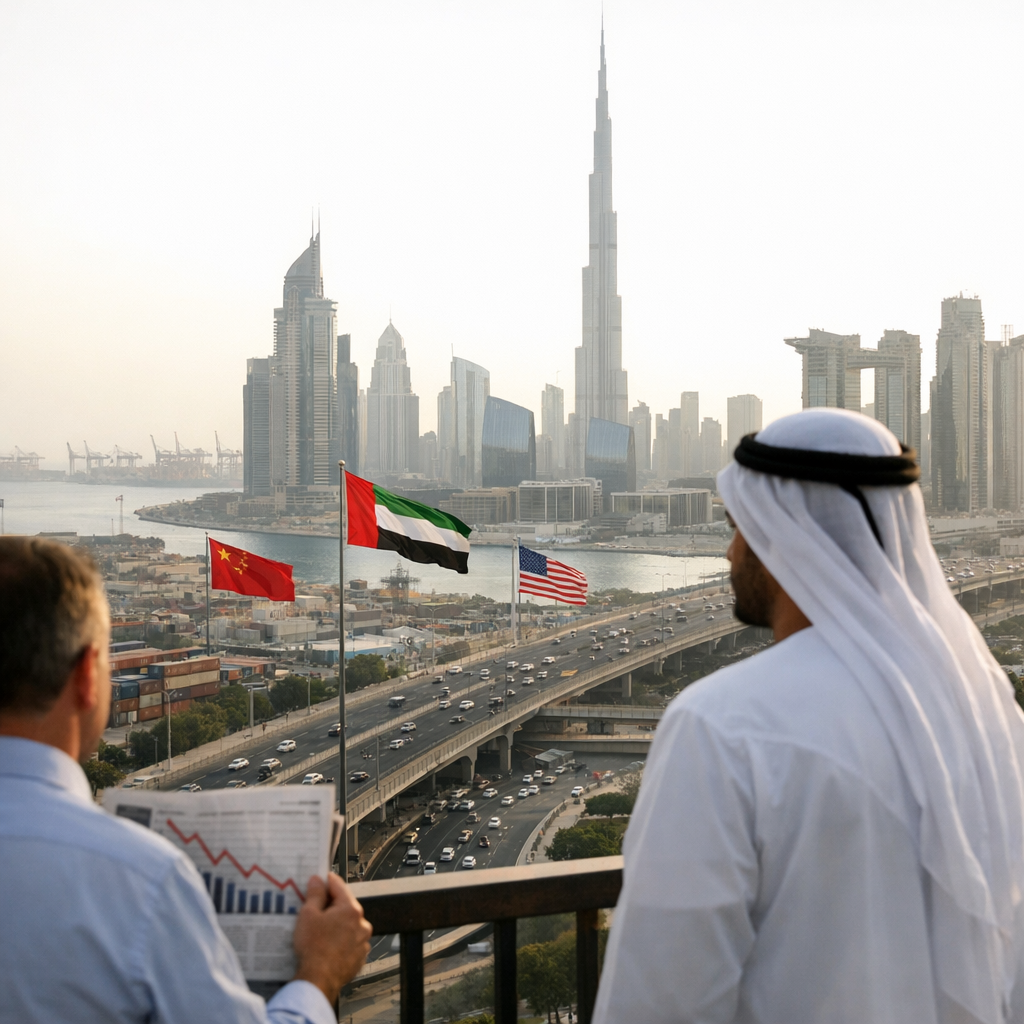
As the global economy faces significant challenges, including energy crises and geopolitical tensions, Dubai’s strategic position and diversified economy play a crucial role in navigating these shifts.
Global Economic Landscape
The Organization for Economic Cooperation and Development (OECD) projects global growth to slow to 2.8% in 2026, influenced by energy supply shocks and geopolitical uncertainties. Inflationary pressures are expected to persist, with G20 countries experiencing an average inflation rate of 4.0% in 2026.
Dubai’s Economic Resilience
Dubai’s economy, characterized by its diversification and strategic location, is well-positioned to adapt to these global challenges. The emirate’s investments in technology, infrastructure, and tourism continue to attract international business and bolster economic resilience.
Energy Market Dynamics
The ongoing energy crisis, exacerbated by conflicts in the Middle East, has led to rising oil prices and inflationary pressures worldwide. Dubai’s proactive approach to energy diversification and investment in renewable energy sources helps mitigate some of these impacts.
Trade and Investment Opportunities
Despite global economic uncertainties, Dubai remains a hub for trade and investment. The emirate’s business-friendly environment and strategic initiatives continue to attract foreign direct investment, fostering economic growth and stability.
Conclusion
While the global economic outlook presents challenges, Dubai’s strategic initiatives and diversified economy position it to navigate these shifts effectively. Continued investment in technology, infrastructure, and renewable energy will be key to sustaining economic resilience in the face of global uncertainties.