

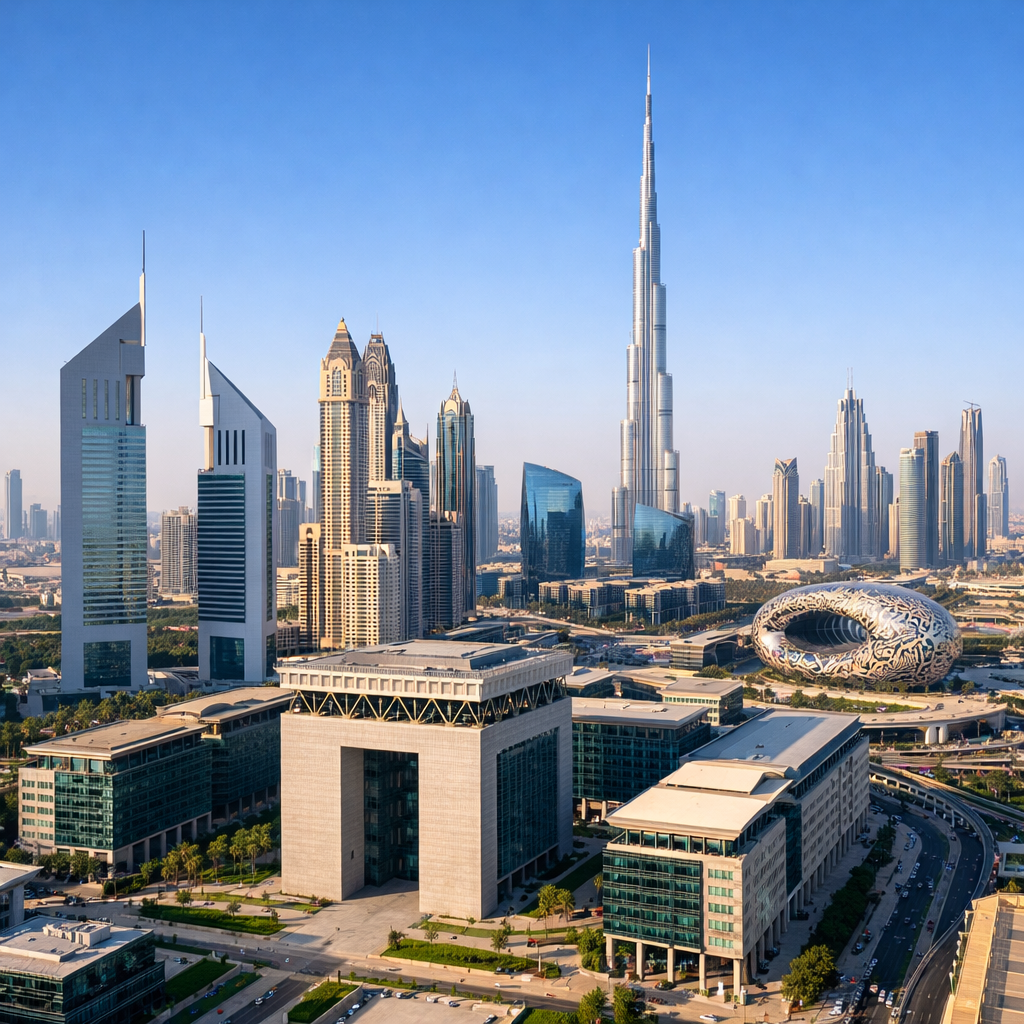
As the global economy faces a series of challenges, including geopolitical tensions and technological transformations, Dubai’s strategic position necessitates a nuanced understanding of these developments to maintain its economic resilience.
Global Economic Outlook
Recent forecasts indicate a moderation in global economic growth. The OECD projects a slowdown from 3.4% in 2025 to 2.8% in 2026, with a potential rebound to 3.1% in 2027. This deceleration is attributed to factors such as energy shocks and rising inflationary pressures stemming from ongoing conflicts in the Middle East. The IMF echoes this sentiment, projecting global growth at 3.1% in 2026 and 3.2% in 2027, emphasizing the impact of regional conflicts on economic stability.
Geopolitical Tensions and Economic Impacts
The conflict in the Middle East has introduced significant volatility into global markets. The OECD outlines two scenarios: a time-limited disruption leading to gradual recovery, and a prolonged disruption resulting in sustained economic strain. Both scenarios underscore the importance of strategic planning for economies closely tied to global trade and energy markets.
Dubai’s Economic Positioning
Dubai has long been recognized as a global financial hub, attracting substantial wealth due to its favorable tax policies and strategic location. However, recent geopolitical developments have tested this status. Reports suggest that the ongoing conflict has prompted some wealthy residents to reconsider their presence in the city, highlighting the need for Dubai to reinforce its position as a safe and stable environment for international business.
Strategic Considerations for Dubai
In light of these global economic shifts, Dubai may consider the following strategies:
- Diversification of Economic Sectors: Reducing reliance on sectors vulnerable to geopolitical tensions by investing in technology, renewable energy, and knowledge-based industries.
- Strengthening Trade Partnerships: Expanding and solidifying trade relationships with a diverse range of global partners to mitigate risks associated with regional conflicts.
- Enhancing Financial Regulations: Implementing robust financial policies to maintain investor confidence and attract sustainable foreign direct investment.
By proactively addressing these areas, Dubai can navigate the complexities of the current global economic landscape and continue to thrive as a leading international business hub.