

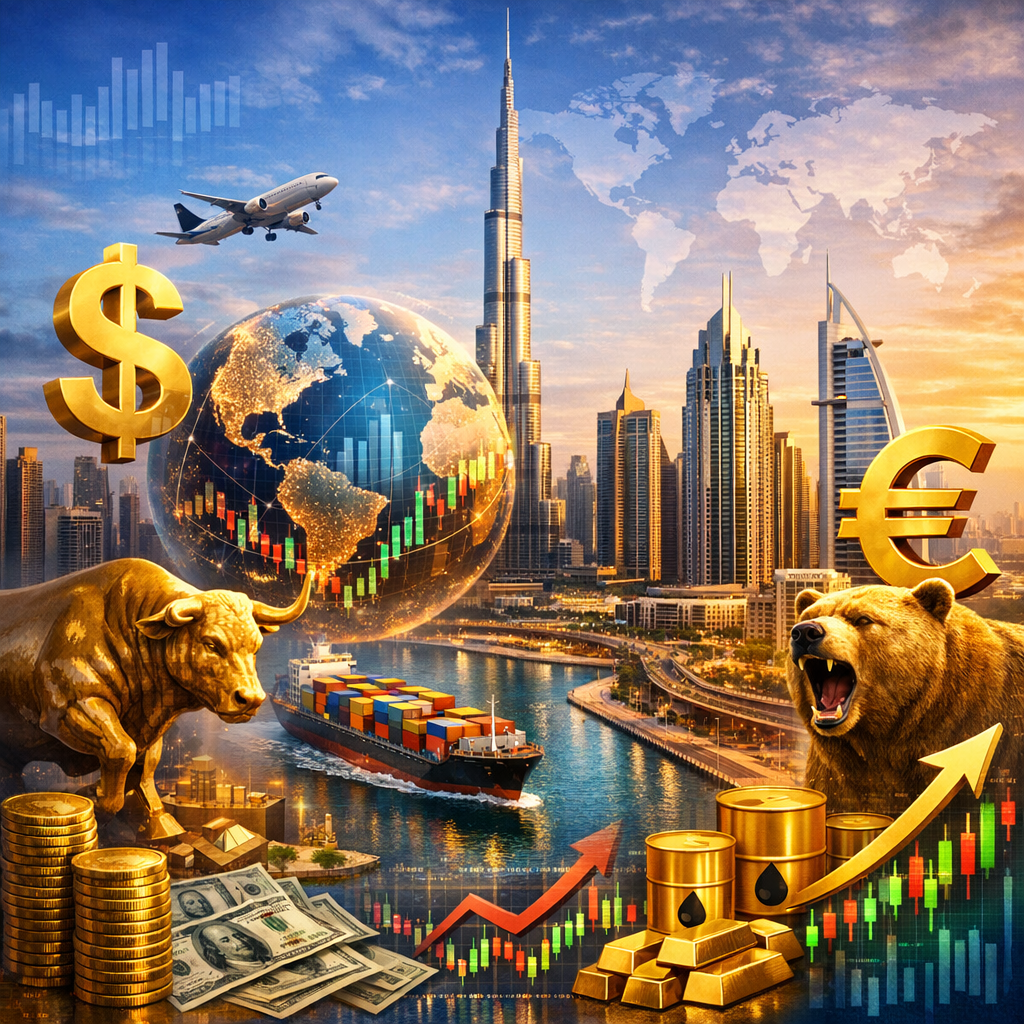
In recent times, the global economy has faced significant challenges, notably due to escalating energy crises and rising inflation. These developments have profound implications for economies worldwide, including Dubai.
Global Economic Landscape
The ongoing conflict in the Middle East has led to disruptions in oil exports, causing a surge in energy prices. This situation has contributed to a slowdown in global economic growth, with projections indicating a decrease from 3.4% in 2025 to 2.8% in 2026. Inflation rates are also on the rise, with global consumer price inflation expected to reach 4.0% in 2026.
Impact on Dubai
Dubai’s economy, heavily reliant on international trade and tourism, is susceptible to these global economic shifts. The increase in energy prices can lead to higher operational costs for businesses, potentially affecting profitability and investment decisions. Additionally, rising inflation may influence consumer spending patterns, impacting sectors such as retail and hospitality.
Strategic Responses
To navigate these challenges, Dubai is focusing on economic diversification and innovation. Investments in sectors like technology, renewable energy, and artificial intelligence are being prioritized to reduce dependence on traditional industries. Strengthening trade relations with emerging markets and enhancing the business environment are also key strategies to bolster economic resilience.
Conclusion
While global economic uncertainties present challenges, Dubai’s proactive approach in diversifying its economy and embracing innovation positions it well to adapt and thrive in the evolving global landscape.