

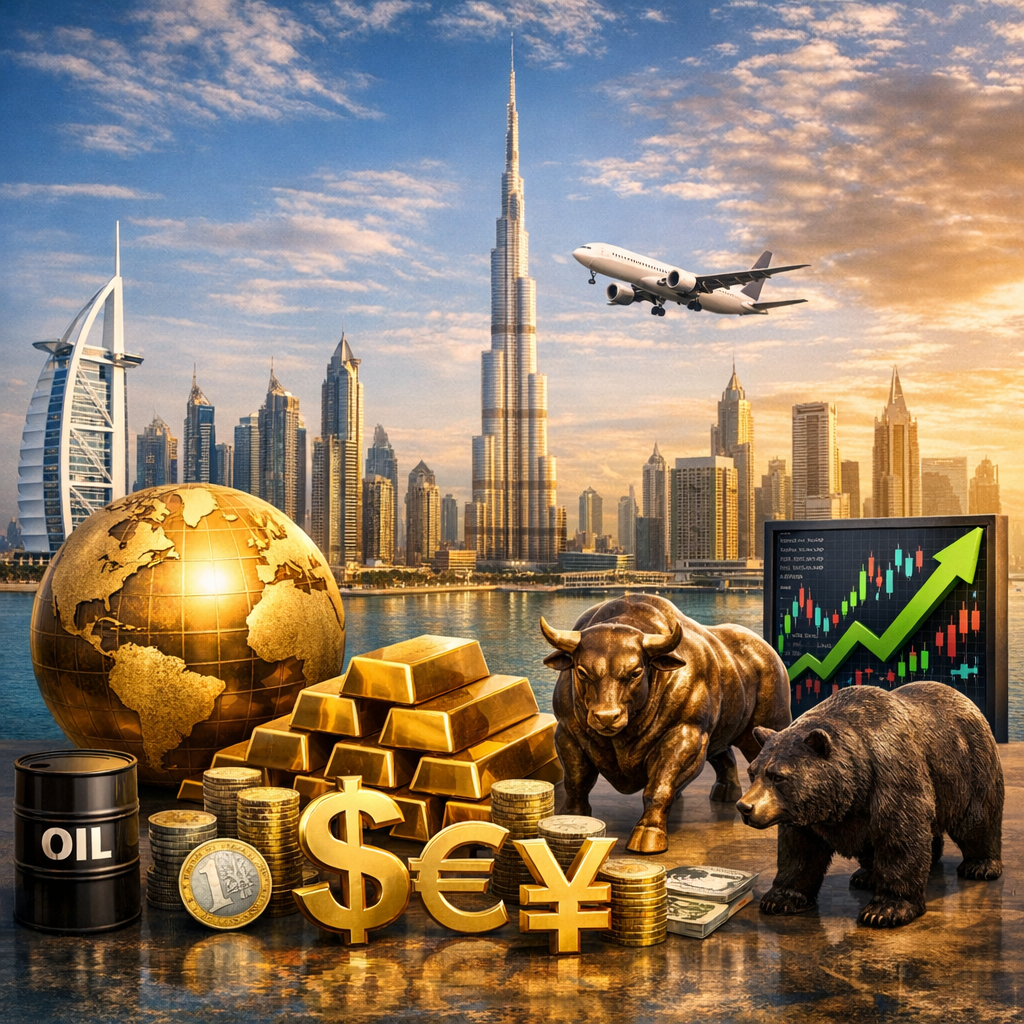
The global economy is currently experiencing significant transformations, influenced by various factors such as geopolitical tensions, energy market fluctuations, and technological advancements. These developments have far-reaching implications, including for Dubai, a city deeply integrated into the global economic fabric.
Global Economic Overview
Recent reports indicate a slowdown in global economic growth. The Organisation for Economic Co-operation and Development (OECD) projects global growth to decelerate from 3.4% in 2025 to 2.8% in 2026, before a slight uptick to 3.1% in 2027. This moderation is attributed to factors like energy shocks and rising inflationary pressures. Similarly, the World Bank forecasts global growth to ease to 2.6% in 2026, with a subsequent rise to 2.7% in 2027, highlighting the resilience of the global economy amidst persistent trade tensions and policy uncertainties.
Regional Economic Dynamics
Different regions are experiencing varied economic trajectories. The United States is projected to maintain moderate growth, with GDP expected to grow by 2.0% in 2026, supported by resilient consumer spending and capital expenditures in artificial intelligence. In contrast, the Eurozone faces challenges, with growth projected at 0.8% in 2026, influenced by rising energy prices and geopolitical uncertainties. China’s growth is anticipated to slow to 4.5% in 2026, as the country undergoes economic rebalancing and addresses structural challenges.
Implications for Dubai
Dubai’s economy, characterized by its diversification and global connectivity, is poised to be influenced by these global trends. The city’s strategic position as a trade and logistics hub means that fluctuations in global trade volumes and energy prices can have direct impacts. Additionally, Dubai’s emphasis on sectors like tourism, real estate, and finance makes it sensitive to shifts in global economic sentiment and investment flows.
To navigate these challenges, Dubai may consider strategies such as further diversifying its economic base, enhancing its appeal as a global business hub, and investing in emerging sectors like technology and renewable energy. Strengthening economic resilience through policy measures and infrastructure development can also position Dubai to better adapt to global economic shifts.
In conclusion, while the global economic landscape presents challenges, it also offers opportunities for adaptive economies like Dubai. By staying attuned to global trends and proactively implementing strategic initiatives, Dubai can continue to thrive in an evolving economic environment.