

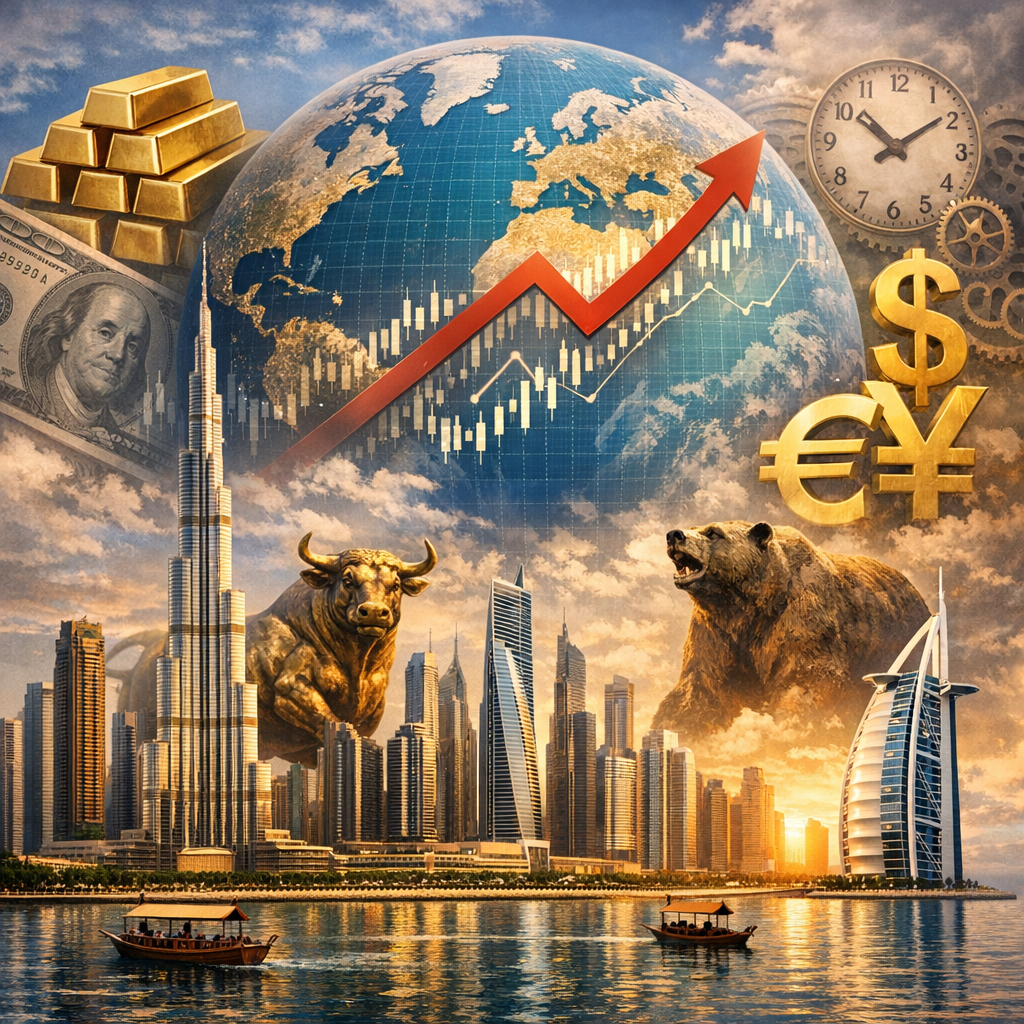
The global economy is currently navigating a complex landscape marked by geopolitical tensions, energy crises, and evolving trade dynamics. These factors have significant implications for economies worldwide, including Dubai’s.
Global Economic Overview
Recent conflicts in the Middle East have led to disruptions in oil exports, resulting in rising commodity prices and inflationary pressures. The Organization for Economic Cooperation and Development (OECD) projects global growth to slow to 2.8% in 2026, with inflation expected to reach around 4.5% globally. The United States shows resilience with a projected GDP growth of 2.1%, while Europe faces stagflation, with eurozone growth predicted at just 0.8%.
Impact on Dubai
Dubai’s economy, heavily reliant on international trade and tourism, is susceptible to these global shifts. The energy crisis has led to increased operational costs, affecting various sectors. Additionally, the slowdown in global growth may impact trade volumes and investment inflows into the region.
Strategic Responses
To mitigate these challenges, Dubai is focusing on economic diversification, investing in sectors such as technology, renewable energy, and finance. Strengthening trade partnerships and enhancing the business environment are also key strategies to bolster economic resilience.
Conclusion
While global economic trends present challenges, Dubai’s proactive measures and strategic initiatives position it to navigate these shifts effectively, ensuring sustained growth and stability in the face of global uncertainties.