

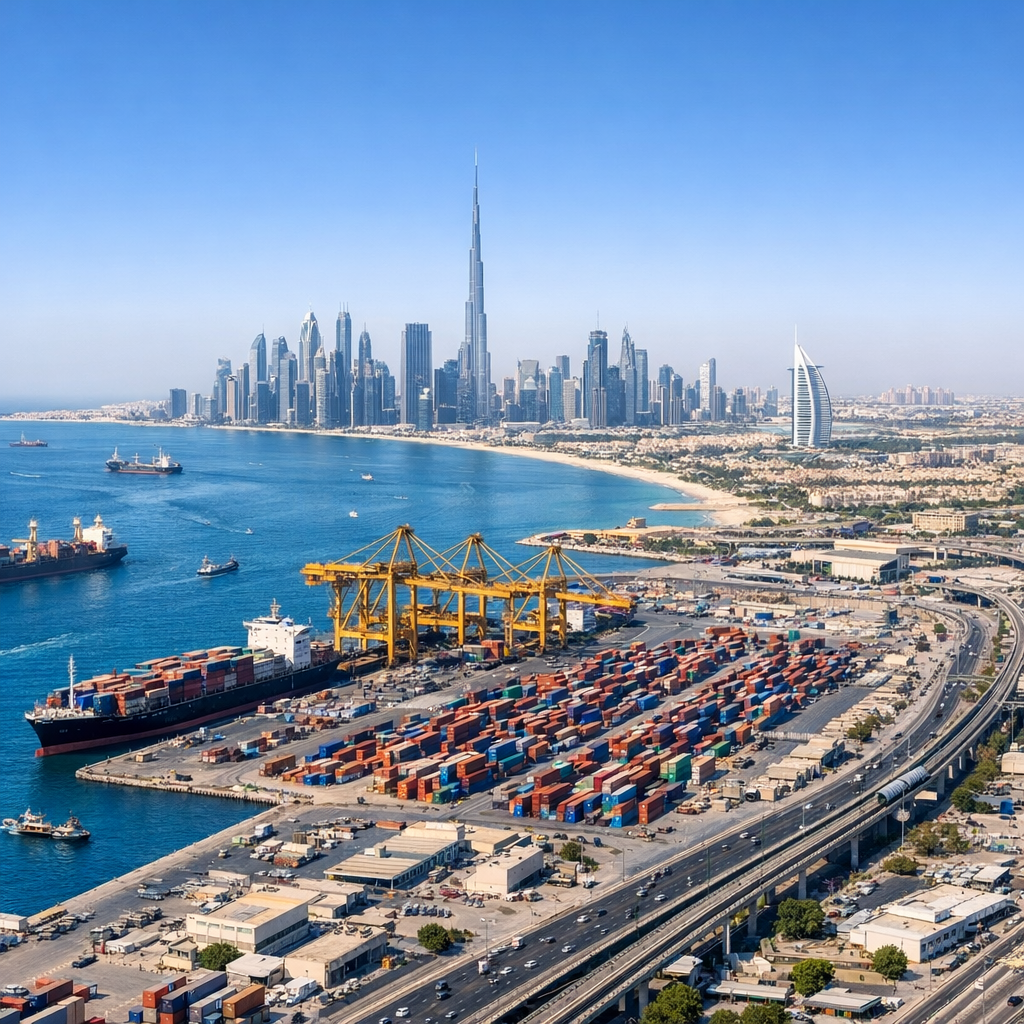
The global economy is currently experiencing significant transformations, influenced by various factors such as geopolitical tensions, energy market fluctuations, and technological advancements. These developments have far-reaching implications, including for Dubai’s dynamic economy.
Global Economic Overview
Recent reports indicate a slowdown in global economic growth. The Organization for Economic Cooperation and Development (OECD) projects global growth to decelerate to 2.8% in 2026, down from 3.4% in 2025. This slowdown is attributed to factors like the ongoing conflict in the Middle East, which has led to an energy shock and rising inflationary pressures. The OECD outlines two scenarios: a time-limited disruption where energy production returns to pre-conflict levels by mid-2026, and a prolonged disruption with lasting impacts into 2027. In the latter scenario, global growth could slow to 2.1% in 2026 and 1.8% in 2027.
Impact on Key Economies
The United States is expected to maintain moderate growth, with projections of 2.0% in 2026 and 1.8% in 2027. This resilience is supported by strong domestic energy production and investments in artificial intelligence and defense sectors. However, consumers are tightening spending due to rising inflation and unemployment. In contrast, the Eurozone faces stagflation, with growth predicted at just 0.8% in 2026, as energy costs severely impact industrial output, especially in Germany and the UK. Emerging economies like India are projected to grow at 6.5%, driven by strong domestic momentum, while China is expected to slow to 4.5% amid ongoing real estate issues but gains in green-tech and AI exports.
Implications for Dubai
Dubai’s economy is intricately linked to global economic trends, particularly in sectors like trade, tourism, and real estate. The projected global slowdown and energy market volatility could have several implications:
- Trade and Logistics: As a global trade hub, Dubai may experience shifts in trade volumes due to changing global demand and supply chain disruptions. Diversifying trade partnerships and investing in logistics infrastructure could help mitigate potential downturns.
- Tourism: Economic slowdowns in key source markets may affect tourist inflows. Enhancing Dubai’s appeal through diversified offerings and targeted marketing can help sustain tourism growth.
- Real Estate: Global economic uncertainties might influence investor sentiment in Dubai’s real estate market. Maintaining transparency and offering attractive investment incentives can bolster confidence.
Strategic Considerations
To navigate these global economic shifts, Dubai could consider the following strategies:
- Economic Diversification: Continuing to diversify the economy beyond oil and real estate by investing in sectors like technology, renewable energy, and healthcare can reduce vulnerability to global economic fluctuations.
- Strengthening Trade Relations: Expanding trade relations with emerging markets and participating in international trade agreements can open new avenues for growth.
- Infrastructure Investment: Investing in infrastructure projects can stimulate economic activity and attract foreign investment, positioning Dubai as a resilient and forward-looking economy.
By proactively addressing these challenges and leveraging its strategic advantages, Dubai can continue to thrive amidst global economic uncertainties.