

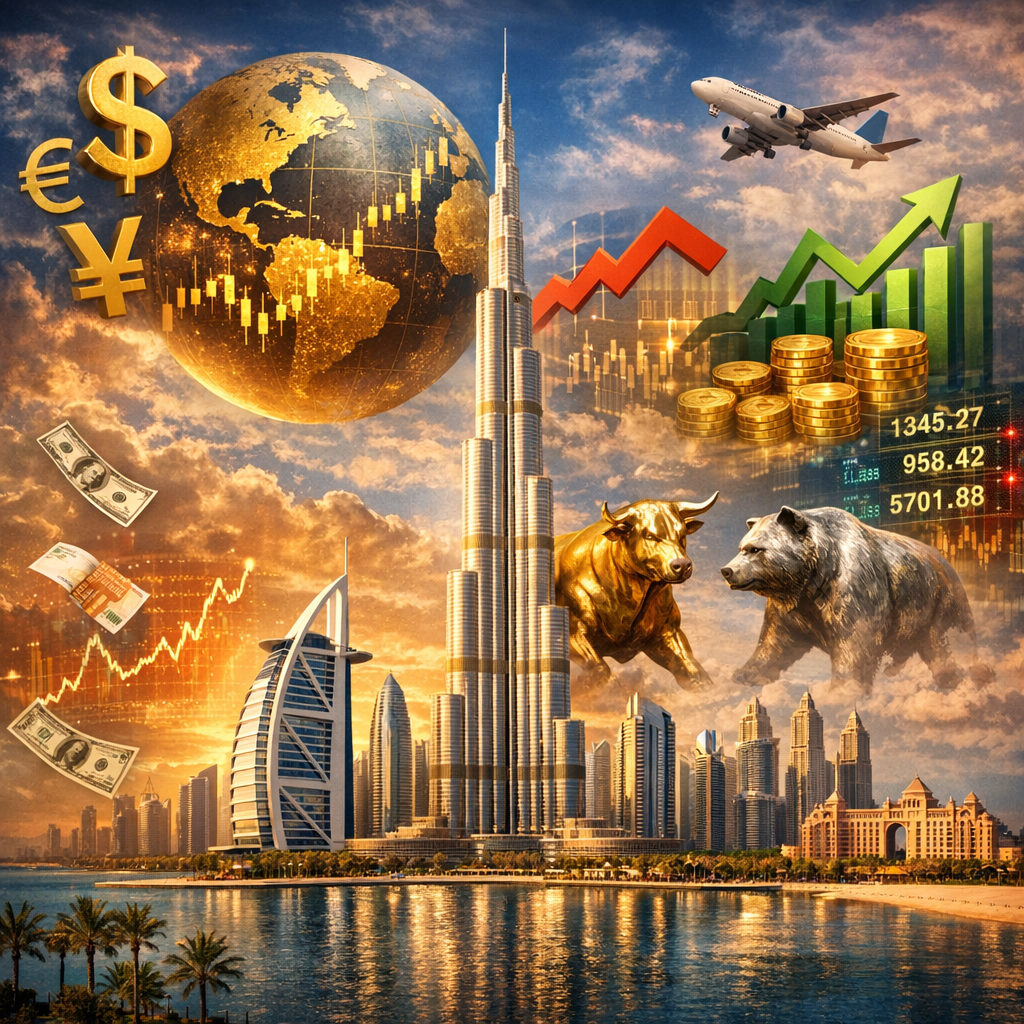
The global economy is currently experiencing a period of moderate growth, influenced by various geopolitical and technological factors. According to recent forecasts, global GDP is projected to rise by 2.8% in 2026, slightly down from 3% in 2025, indicating a ‘soft landing’ for the global economy. This outlook is shaped by ongoing geopolitical tensions and rapid technological advancements, particularly in artificial intelligence (AI).
In the United States, a robust tech sector, especially AI investments, is expected to drive economic resilience. However, a cooling labor market may affect middle- and lower-income households. Europe faces slower growth, with Germany rebounding due to fiscal and defense spending, while France and the UK confront domestic challenges. India is poised to lead Asia with strong growth, propelled by consumer demand, whereas China’s growth is anticipated to slow, hindered by property sector issues.
For Dubai, these global trends present both challenges and opportunities. As a major international trade hub, Dubai’s economy is closely tied to global economic health. The anticipated slowdown in global growth could impact trade volumes and investment flows. However, Dubai’s strategic initiatives in technology and infrastructure position it well to capitalize on emerging opportunities, particularly in sectors like AI and renewable energy.
To navigate these shifts, Dubai may consider diversifying its economic base further, investing in emerging technologies, and strengthening trade partnerships with rapidly growing economies. By staying attuned to global economic developments and adapting proactively, Dubai can continue to thrive in an evolving global landscape.