

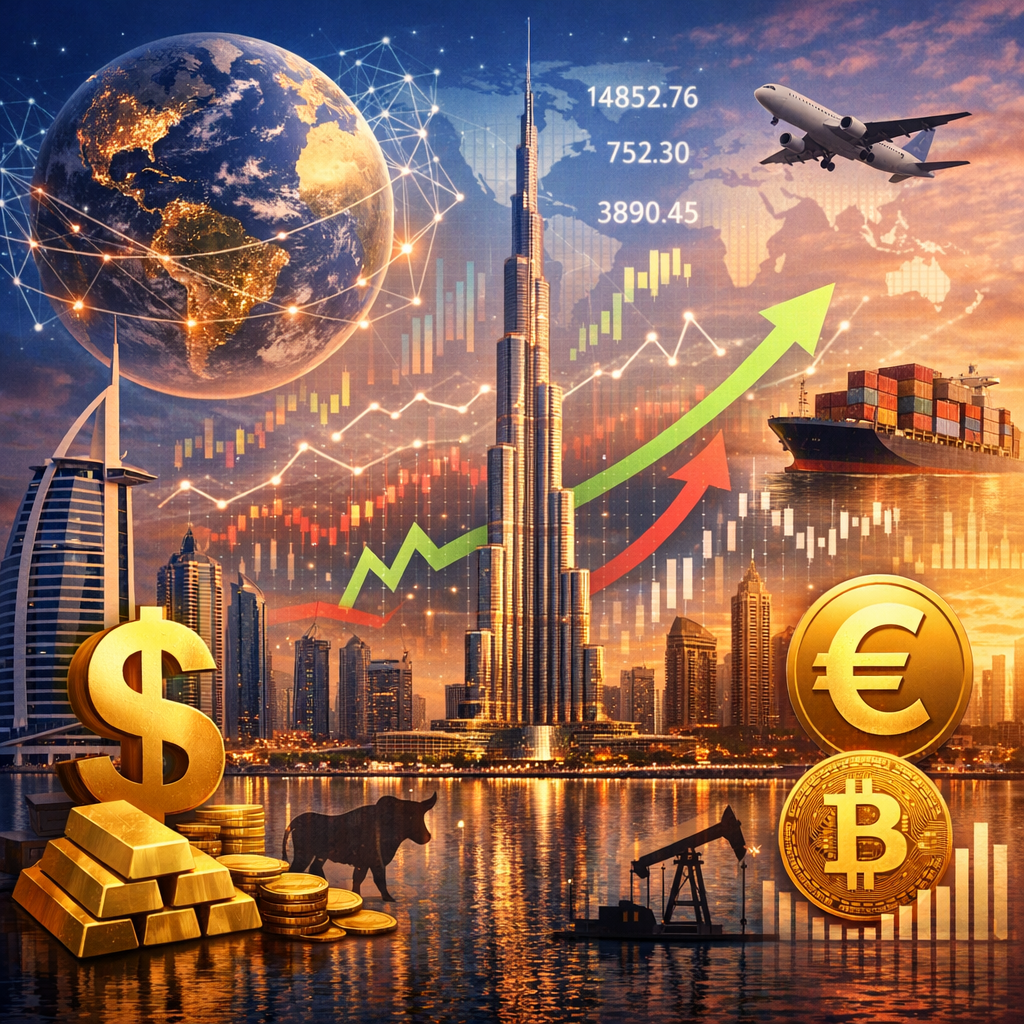
As the global economy experiences significant transformations, Dubai stands at a pivotal juncture, poised to adapt and thrive amidst these changes. Understanding the broader economic landscape is essential for anticipating the challenges and opportunities that lie ahead.
Global Economic Overview
Recent forecasts indicate a moderation in global economic growth. The World Bank projects a slowdown to 2.6% in 2026, influenced by trade tensions and policy uncertainties. Similarly, the United Nations Conference on Trade and Development (UNCTAD) anticipates a growth rate of 2.7% for the same year, highlighting concerns over trade disputes and fiscal challenges.
Key Influencing Factors
Energy Market Volatility
Geopolitical tensions, particularly in the Middle East, have led to fluctuations in energy markets. The Organization for Economic Cooperation and Development (OECD) notes that conflicts in the region have tested the resilience of the global economy, with potential impacts on energy prices and supply chains.
Technological Advancements
The rapid integration of artificial intelligence (AI) and other technological innovations is reshaping industries worldwide. While these advancements promise increased efficiency and new business models, they also pose challenges related to workforce adaptation and regulatory frameworks.
Implications for Dubai
Dubai’s strategic position as a global trade hub means that shifts in the global economy have direct implications for its economic landscape.
Trade and Logistics
Fluctuations in global trade dynamics may affect Dubai’s logistics and shipping sectors. Diversifying trade partnerships and investing in resilient supply chain infrastructures can mitigate potential disruptions.
Energy Sector
As a significant player in the energy market, Dubai must navigate the challenges posed by volatile oil prices. Investing in renewable energy sources and enhancing energy efficiency can provide stability and align with global sustainability trends.
Technological Integration
Embracing technological advancements, particularly in AI and digital transformation, can position Dubai as a leader in innovation. This requires investment in education, infrastructure, and regulatory frameworks to support a tech-driven economy.
Strategic Recommendations
To effectively navigate these global economic shifts, Dubai should consider the following strategies:
- Diversify the Economy: Reduce reliance on traditional sectors by promoting growth in technology, tourism, and green industries.
- Enhance Trade Partnerships: Establish and strengthen trade agreements with emerging markets to broaden economic opportunities.
- Invest in Human Capital: Focus on education and skill development to prepare the workforce for a rapidly changing economic environment.
- Promote Sustainable Practices: Align with global sustainability goals by investing in renewable energy and implementing eco-friendly policies.
By proactively addressing these areas, Dubai can not only mitigate potential risks but also capitalize on new opportunities, ensuring sustained economic growth and resilience in the face of global economic transformations.