

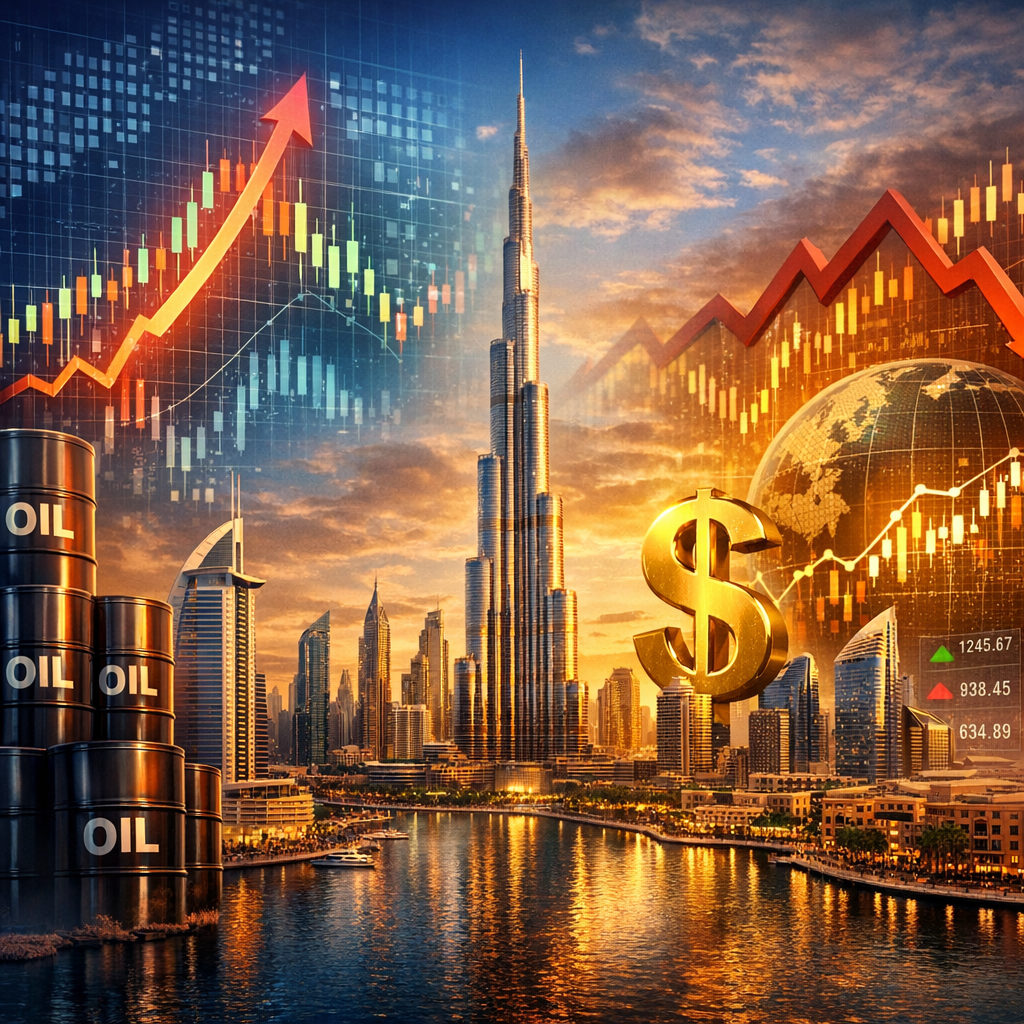
As the global economy faces a complex landscape marked by geopolitical tensions and technological advancements, Dubai’s strategic position necessitates a keen understanding of these developments to maintain its economic resilience.
Global Economic Overview
Recent forecasts indicate a moderation in global economic growth. The World Bank projects a slowdown to 2.6% in 2026, influenced by trade tensions and policy uncertainties. Similarly, the United Nations anticipates a growth rate of 2.7% for the same year, citing subdued investment and structural challenges.
Key Influencing Factors
Geopolitical Tensions
Ongoing conflicts, particularly in the Middle East, have disrupted oil exports, leading to rising commodity prices and inflation. This scenario poses challenges for energy-dependent economies and could impact global trade dynamics.
Technological Advancements
The rapid adoption of artificial intelligence (AI) is reshaping industries worldwide. While AI investments are driving growth in sectors like technology and energy, concerns about job displacement and the equitable distribution of benefits remain prevalent.
Implications for Dubai
Dubai’s economy, characterized by its diversification and global connectivity, is both vulnerable to and capable of adapting to these global shifts.
Energy Market Sensitivity
As a regional hub, Dubai is susceptible to fluctuations in energy prices resulting from geopolitical conflicts. Rising oil prices can increase operational costs but may also boost revenues in the energy sector, necessitating balanced economic strategies.
Embracing Technological Innovation
Dubai’s commitment to becoming a smart city positions it to leverage AI advancements. By investing in AI-driven infrastructure and services, Dubai can enhance efficiency and attract global tech investments, mitigating potential economic slowdowns.
Strategic Recommendations
To navigate these global economic shifts, Dubai should consider the following strategies:
- Economic Diversification: Continue expanding non-oil sectors such as tourism, finance, and technology to reduce dependency on volatile energy markets.
- Investment in Technology: Foster partnerships with AI and tech firms to drive innovation and create new economic opportunities.
- Policy Adaptation: Develop flexible economic policies that can swiftly respond to global market changes and geopolitical developments.
By proactively addressing these global economic trends, Dubai can reinforce its position as a resilient and forward-thinking economic hub.