

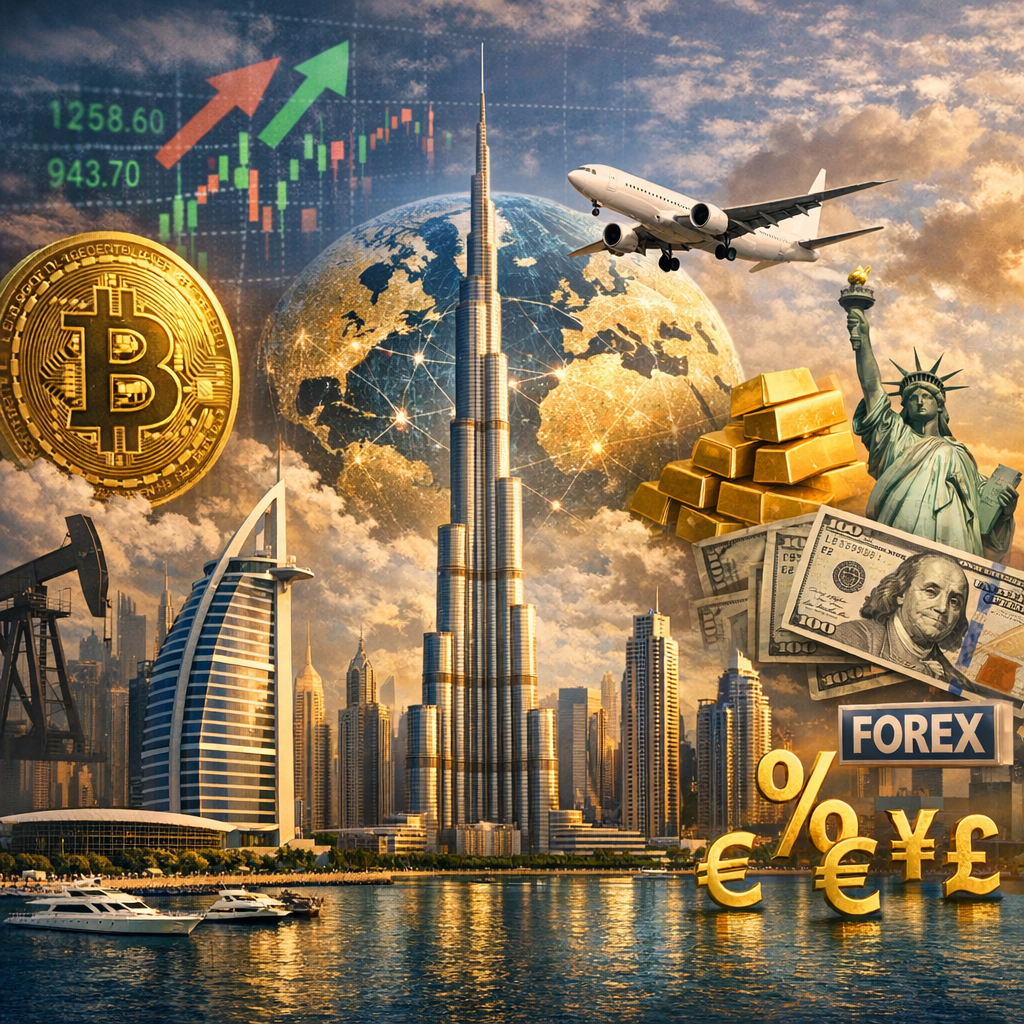
The global economy is currently navigating a complex landscape marked by geopolitical tensions, technological advancements, and evolving trade dynamics. These factors collectively influence economic growth, inflation rates, and investment patterns worldwide.
Global Economic Overview
Recent analyses indicate a moderation in global economic growth. The World Bank projects a slight easing to 2.6% in 2026, with a modest uptick to 2.7% in 2027. This deceleration is attributed to subdued investment and structural challenges, despite some easing in inflation and monetary policies. Notably, the United States exhibits resilience, with growth supported by robust consumer spending and capital investments, particularly in artificial intelligence sectors. Conversely, Europe faces slower growth, with projections of 0.8% in 2026 and 1.2% in 2027, influenced by energy price fluctuations and policy uncertainties.
Middle East Dynamics
The Middle East’s economic landscape is significantly impacted by ongoing geopolitical developments. The OECD highlights that conflicts in the region have introduced new inflationary pressures and heightened uncertainty, testing the resilience of the global economy. These tensions have led to energy supply shocks, affecting global growth and contributing to increased inflation rates.
Dubai’s Economic Position
Dubai, as a pivotal hub in the Middle East, is intricately connected to these global economic currents. The emirate’s strategic location and diversified economy position it uniquely to navigate these challenges. However, the energy supply disruptions stemming from regional conflicts could influence key sectors such as trade, tourism, and real estate. Additionally, shifts in global investment patterns, particularly in technology and infrastructure, present both opportunities and challenges for Dubai’s economic strategy.
Strategic Considerations
To maintain its economic resilience, Dubai may consider several strategic approaches:
- Diversification: Continuing to broaden its economic base beyond traditional sectors to mitigate risks associated with global economic fluctuations.
- Innovation and Technology: Investing in emerging technologies and fostering innovation to enhance competitiveness and attract global talent and investment.
- Strengthening Trade Relations: Expanding and deepening trade partnerships to ensure a steady flow of goods and services, thereby reducing dependency on any single market.
In conclusion, while the global economic environment presents a series of challenges, Dubai’s proactive and adaptive strategies can position it to not only withstand these shifts but also to capitalize on emerging opportunities, reinforcing its status as a leading global economic center.