

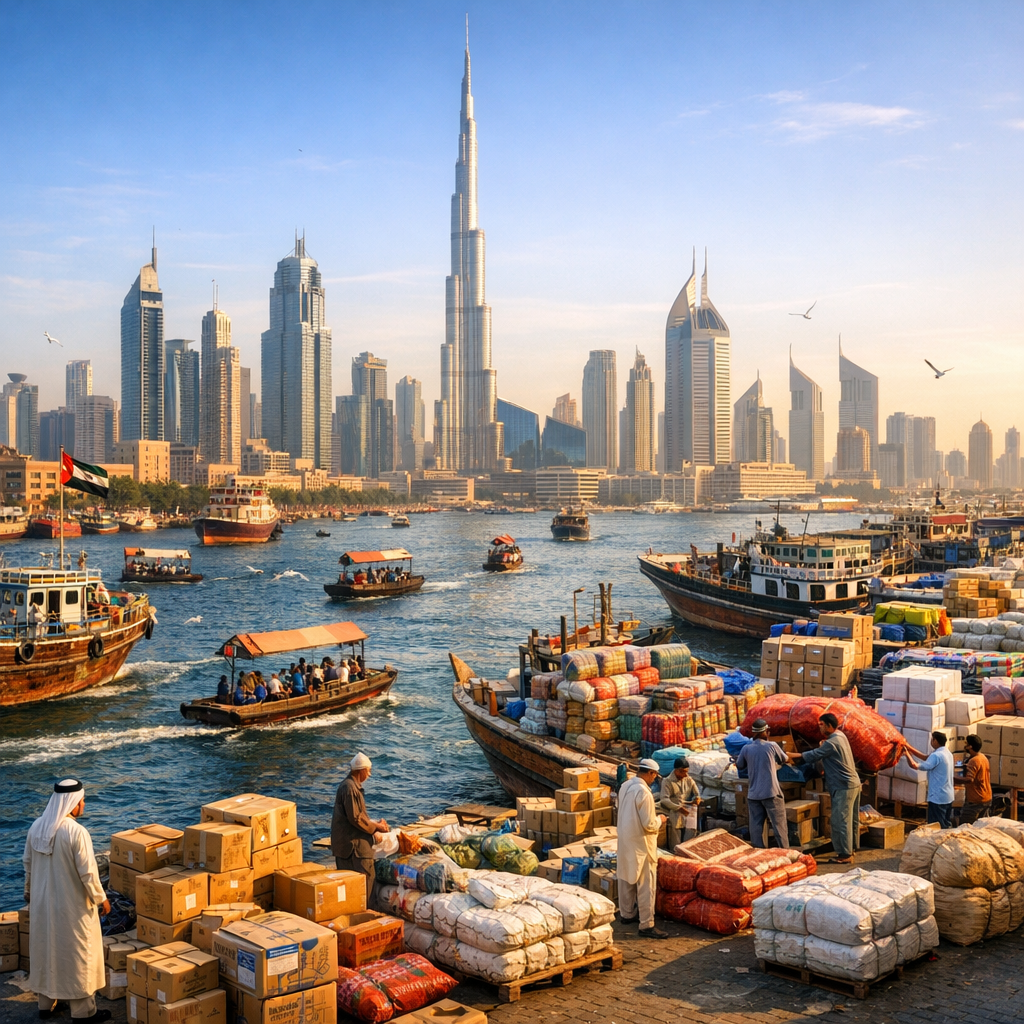
In recent months, the global economic landscape has experienced significant turbulence, influenced by geopolitical tensions and technological advancements. These developments have far-reaching implications for economies worldwide, including Dubai.
Global Economic Overview
The Organization for Economic Cooperation and Development (OECD) has highlighted that the evolving conflict in the Middle East has become a dominant force shaping global economic prospects. This situation has led to an energy shock, driving inflationary pressures and adversely impacting growth. The OECD projects global growth to slow from 3.4% in 2025 to 2.8% in 2026, before picking up to 3.1% in 2027. In the United States, GDP growth is projected at 2.0% in 2026, while the euro area is expected to see modest growth at 0.8% in 2026, picking up to 1.2% in 2027. China’s growth is projected to slow to 4.5% in 2026 and 4.3% in 2027.
Additionally, the World Economic Forum’s Chief Economists’ Outlook indicates that nearly nine in ten chief economists expect global growth to weaken over the next 12 months. This sentiment is largely due to the ongoing conflict in the Middle East and the closure of the Strait of Hormuz, which have fueled concerns over a major global economic shock. An overwhelming 94% of the surveyed chief economists expect global inflation to increase over the coming year.
Dubai’s Economic Position
Dubai’s economy is intricately linked to global markets, particularly through its role as a major trade and logistics hub. The current global economic slowdown and rising inflationary pressures present both challenges and opportunities for the emirate.
On one hand, the energy shock resulting from Middle East conflicts has led to higher commodity prices, impacting sectors such as transportation and manufacturing. This scenario necessitates strategic adjustments to mitigate potential economic disruptions.
On the other hand, Dubai’s strategic investments in technology and infrastructure position it to capitalize on emerging opportunities. The global emphasis on artificial intelligence (AI) and digital transformation aligns with Dubai’s vision of becoming a leading smart city. By fostering innovation and enhancing its technological capabilities, Dubai can attract international businesses seeking a stable and forward-thinking environment.
Strategic Responses
To navigate these global economic shifts, Dubai is focusing on several key strategies:
- Diversification of the Economy: Reducing reliance on oil revenues by investing in sectors such as tourism, real estate, and technology.
- Enhancing Trade Partnerships: Strengthening ties with emerging markets to offset potential declines in traditional trade routes.
- Investing in Technology: Accelerating the adoption of AI and other digital technologies to boost productivity and attract tech-driven enterprises.
- Infrastructure Development: Continuing to develop world-class infrastructure to support business growth and improve quality of life for residents.
By proactively addressing these challenges and leveraging its strategic advantages, Dubai aims to maintain its position as a resilient and dynamic player in the global economy.