

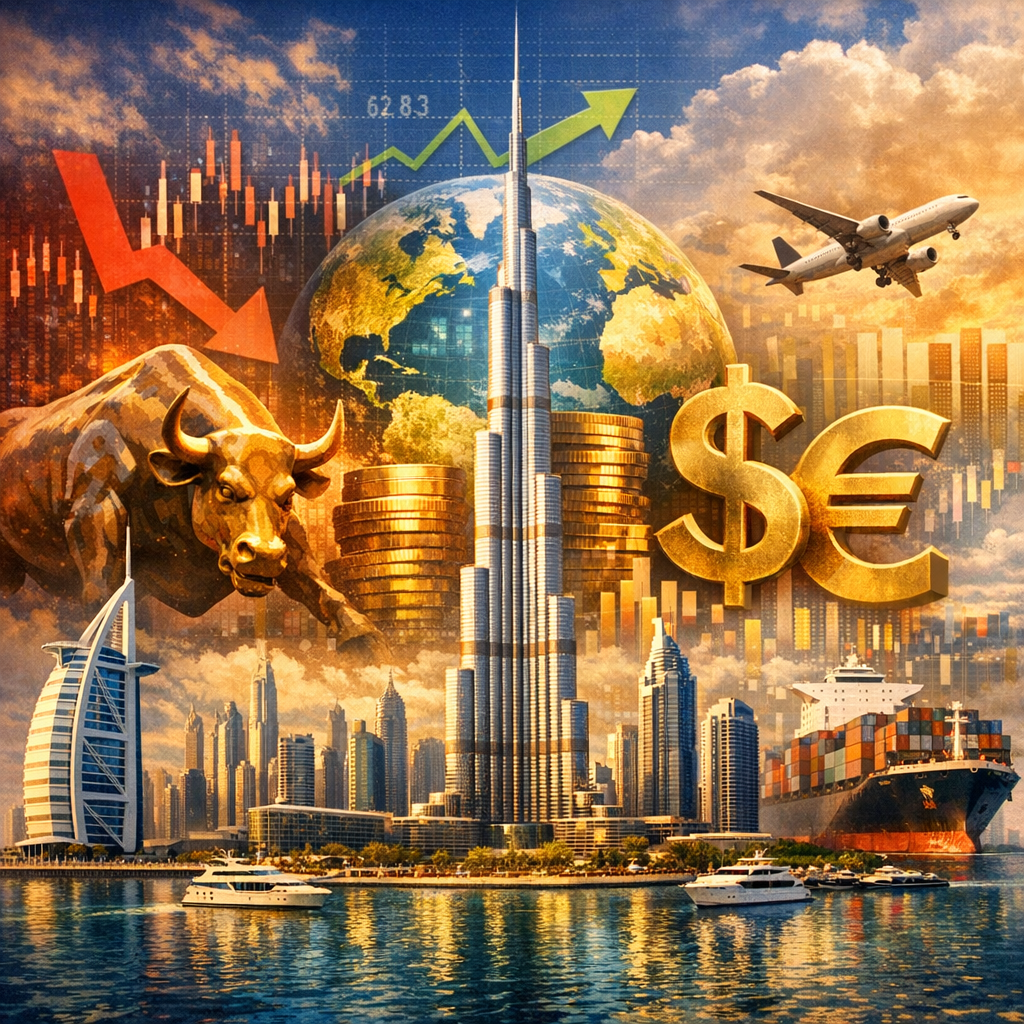
As the global economy experiences significant transformations, Dubai stands at a pivotal juncture, poised to adapt and thrive amidst these changes. Recent analyses highlight several key trends shaping the international economic landscape.
Global Economic Outlook
According to the International Monetary Fund (IMF), global growth is projected at 3.0% for 2026 and 3.4% for 2027. This outlook reflects a balance between technological advancements and geopolitical challenges. The IMF notes that while artificial intelligence (AI) is driving demand in tech-centric economies, conflicts in regions like the Middle East are exerting downward pressure on energy importers and vulnerable nations.
Technological Advancements and AI Integration
The integration of AI into various sectors is a significant driver of economic activity. Morgan Stanley’s research indicates that U.S. consumer spending and capital expenditures on AI are likely to drive moderate growth as global inflation slows. This trend underscores the importance of technological innovation in sustaining economic momentum.
Geopolitical Tensions and Energy Markets
Geopolitical events, particularly in the Middle East, have introduced volatility into global energy markets. S&P Global’s July 2026 outlook highlights that renewed hostilities in regions like the Strait of Hormuz have led to fluctuating oil prices, impacting economies worldwide. Such developments necessitate strategic planning for energy-dependent regions.
Dubai’s Strategic Position
Dubai’s economy, characterized by its diversification and strategic location, is well-positioned to navigate these global shifts. The city’s emphasis on technology and innovation aligns with the global trend towards AI integration. Additionally, Dubai’s role as a trade and logistics hub enables it to adapt to changes in global trade patterns resulting from geopolitical developments.
In conclusion, while the global economic landscape presents both opportunities and challenges, Dubai’s proactive approach and strategic initiatives position it to capitalize on emerging trends and mitigate potential risks.