

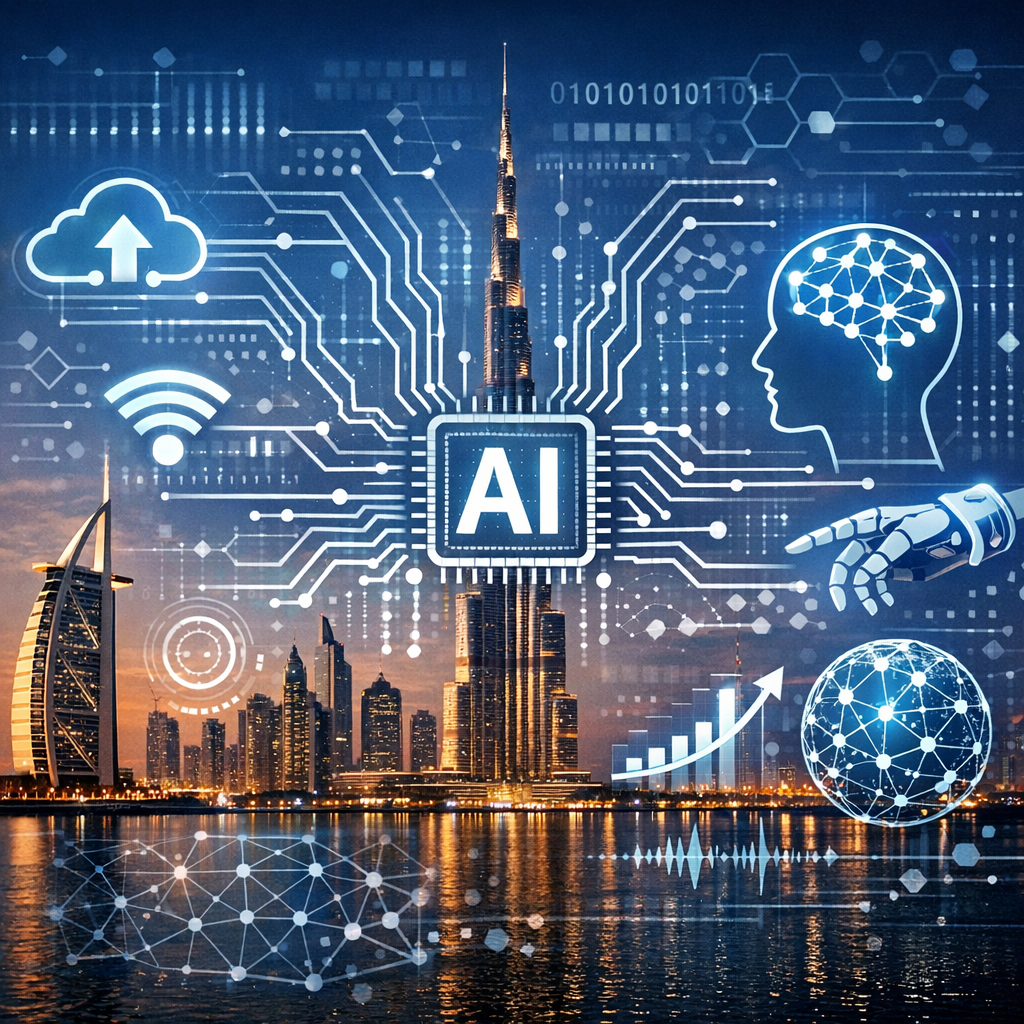
As the global economy undergoes significant transformations, Dubai stands at a pivotal juncture, poised to adapt and thrive amidst these changes. Key global trends, notably the surge in artificial intelligence (AI) investments and evolving geopolitical dynamics, are set to influence the emirate’s economic trajectory.
Global Economic Landscape
Recent analyses project a moderation in global economic growth, with estimates indicating a slowdown to 2.7% in 2026, down from previous years. This deceleration is attributed to factors such as subdued investment and structural challenges, despite easing inflation and monetary policy adjustments. Notably, the United States demonstrates resilience, bolstered by robust consumer spending and substantial capital expenditures in AI technologies. This investment in AI is anticipated to drive moderate growth, as global inflation trends downward.
Geopolitical Influences
Geopolitical tensions, particularly in the Middle East, have introduced volatility into global markets. Conflicts in regions like the Strait of Hormuz have disrupted oil exports, leading to rising commodity prices and inflationary pressures. Such developments pose challenges for energy-importing economies and have the potential to impact global trade dynamics.
Implications for Dubai
Dubai’s strategic position as a global trade and business hub necessitates a proactive approach to these global shifts. The emirate’s diversified economy, encompassing sectors such as tourism, real estate, and finance, provides a buffer against external shocks. However, the emphasis on AI and technological advancements presents both opportunities and challenges. By investing in AI infrastructure and fostering innovation, Dubai can enhance its competitive edge and attract international businesses seeking a technologically advanced environment.
Furthermore, the emirate’s proactive policies in energy diversification and sustainability align with global trends towards renewable energy sources. This strategic direction not only mitigates risks associated with geopolitical tensions affecting oil markets but also positions Dubai as a leader in sustainable development.
Conclusion
In an era marked by rapid technological advancements and geopolitical complexities, Dubai’s ability to adapt and innovate remains crucial. By leveraging global economic trends, investing in AI, and maintaining a diversified economic base, the emirate is well-equipped to navigate the challenges and opportunities that lie ahead.