

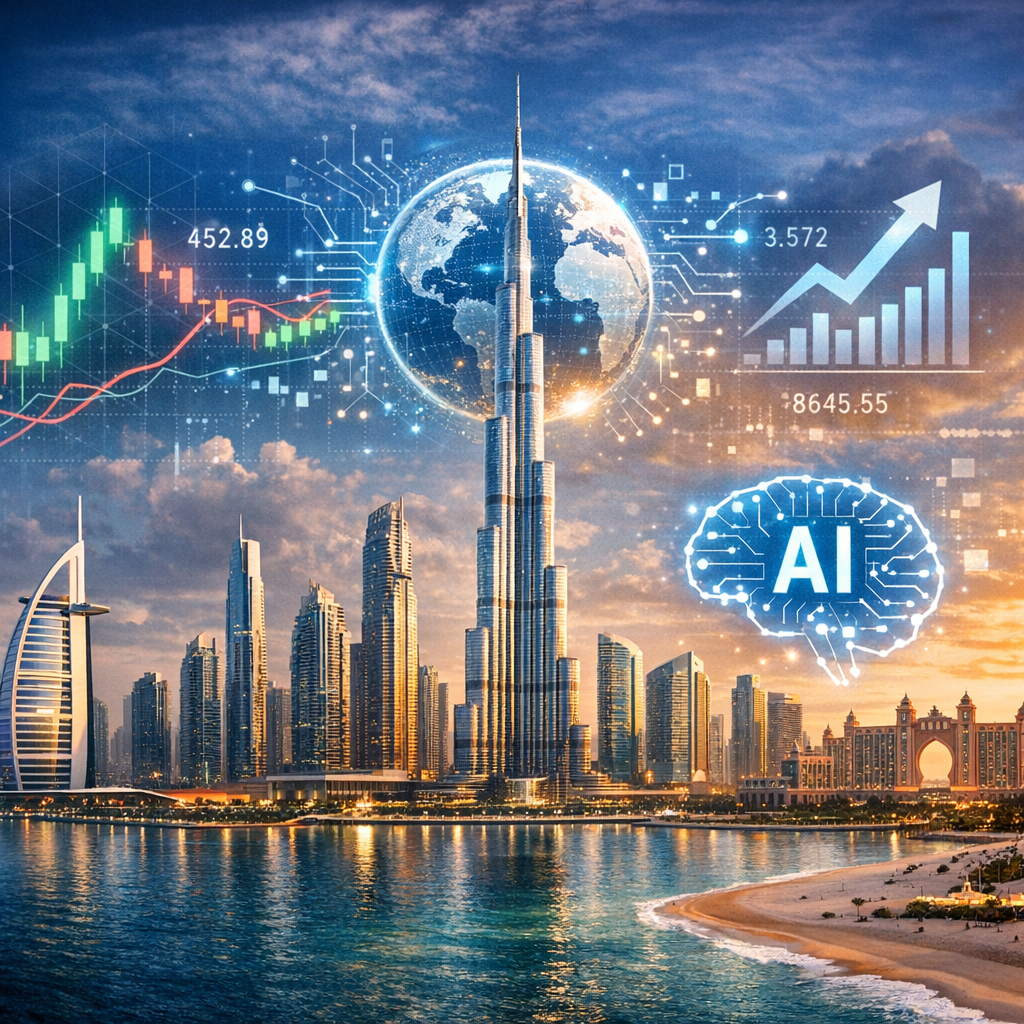
The global economic landscape is undergoing significant transformations, influenced by technological advancements, geopolitical tensions, and fluctuating energy markets. These developments hold particular relevance for Dubai, a city deeply integrated into the global economy.
Global Economic Trends
Recent forecasts indicate a moderation in global economic growth. The International Monetary Fund projects a global growth rate of 3.0% for 2026, with a slight increase to 3.4% in 2027. This slowdown is attributed to factors such as geopolitical conflicts and technological disruptions. Notably, the ongoing conflict in the Middle East has led to volatile oil prices, impacting economies worldwide.
Technological Advancements and AI Investments
Despite these challenges, technological advancements, particularly in artificial intelligence (AI), are driving economic resilience. Major economies are investing heavily in AI infrastructure, with global IT spending projected to reach $6.37 trillion in 2026, a 14.2% increase from previous estimates. This surge is primarily fueled by investments in AI-related infrastructure, including data centers and cloud services.
Implications for Dubai
Dubai’s strategic position as a global trade hub means that these global trends have direct implications for its economy. The city’s reliance on international trade and tourism makes it susceptible to fluctuations in global growth and energy prices. However, Dubai’s proactive approach to technological adoption positions it well to capitalize on the AI-driven economic shift. By investing in AI and related technologies, Dubai can enhance its competitive edge and drive sustainable growth.
In conclusion, while the global economic outlook presents challenges, Dubai’s strategic initiatives in technology and infrastructure development offer a pathway to navigate these shifts effectively.