

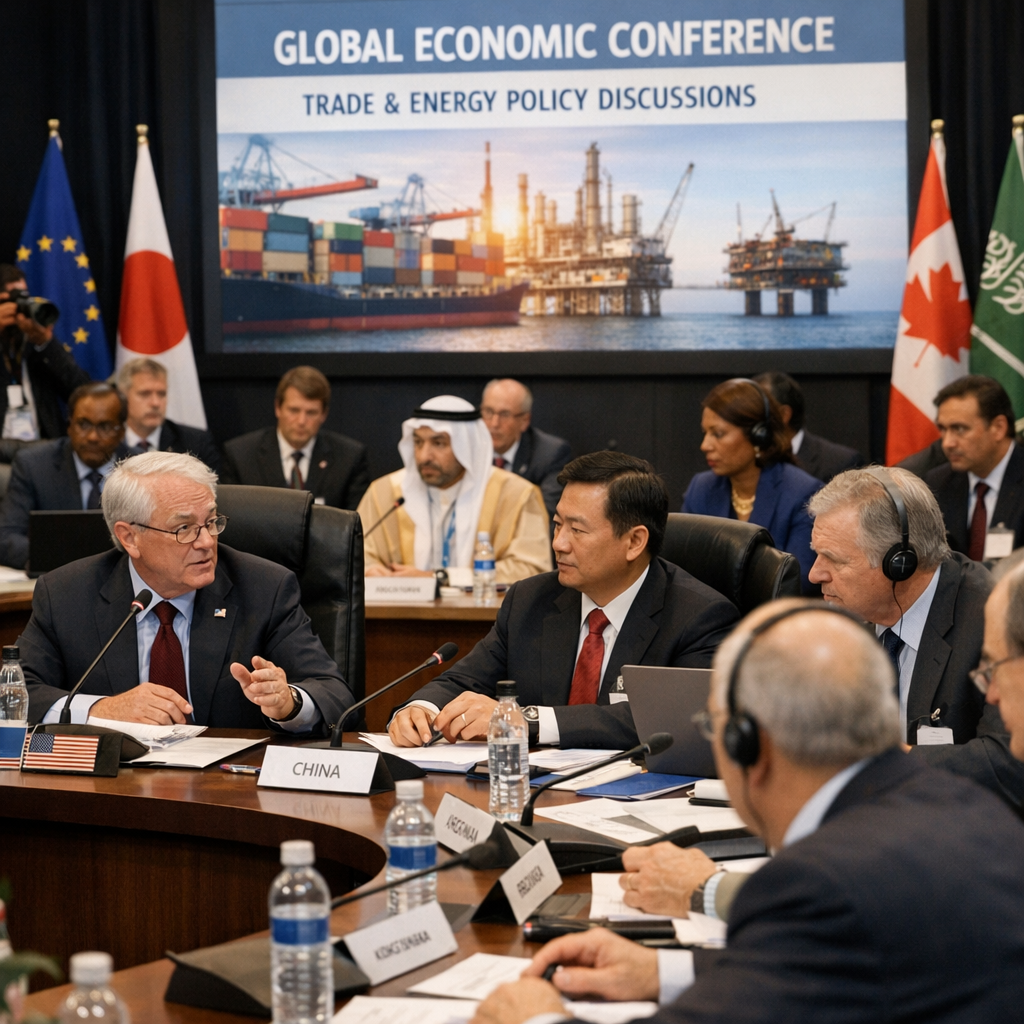
The global economy is currently navigating a complex landscape marked by geopolitical tensions, energy crises, and evolving trade dynamics. These factors have led to a projected slowdown in global growth, with the OECD forecasting a decrease from 3.4% in 2025 to 2.8% in 2026. This deceleration is attributed to the ongoing conflict in the Middle East, which has disrupted energy supplies and heightened inflationary pressures.
In the United States, despite facing challenges such as rising inflation and geopolitical uncertainties, the economy has demonstrated resilience. Analysts anticipate the S&P 500 to reach approximately 7,600 by year-end, translating to a total return of nearly 12% for 2026. This optimism is underpinned by robust corporate earnings and a strong domestic economy.
Conversely, the European Union is grappling with concerns over a potential surge of inexpensive Chinese exports, reminiscent of the ‘China shock’ experienced in previous decades. This situation is influencing current EU trade policies, especially as China’s trade surplus reached a record $1.2 trillion last year. European policymakers are increasingly aligning with the U.S. perspective that China’s industrial overproduction poses a significant threat to domestic manufacturing.
For the United Arab Emirates, these global economic shifts present both challenges and opportunities. As a nation deeply integrated into the global economy, the UAE must navigate the complexities of fluctuating energy prices and shifting trade patterns. However, the country’s strategic position and proactive economic policies position it well to adapt to these changes. By diversifying its economy and strengthening international partnerships, the UAE can leverage its unique advantages to maintain economic stability and growth in an uncertain global environment.