

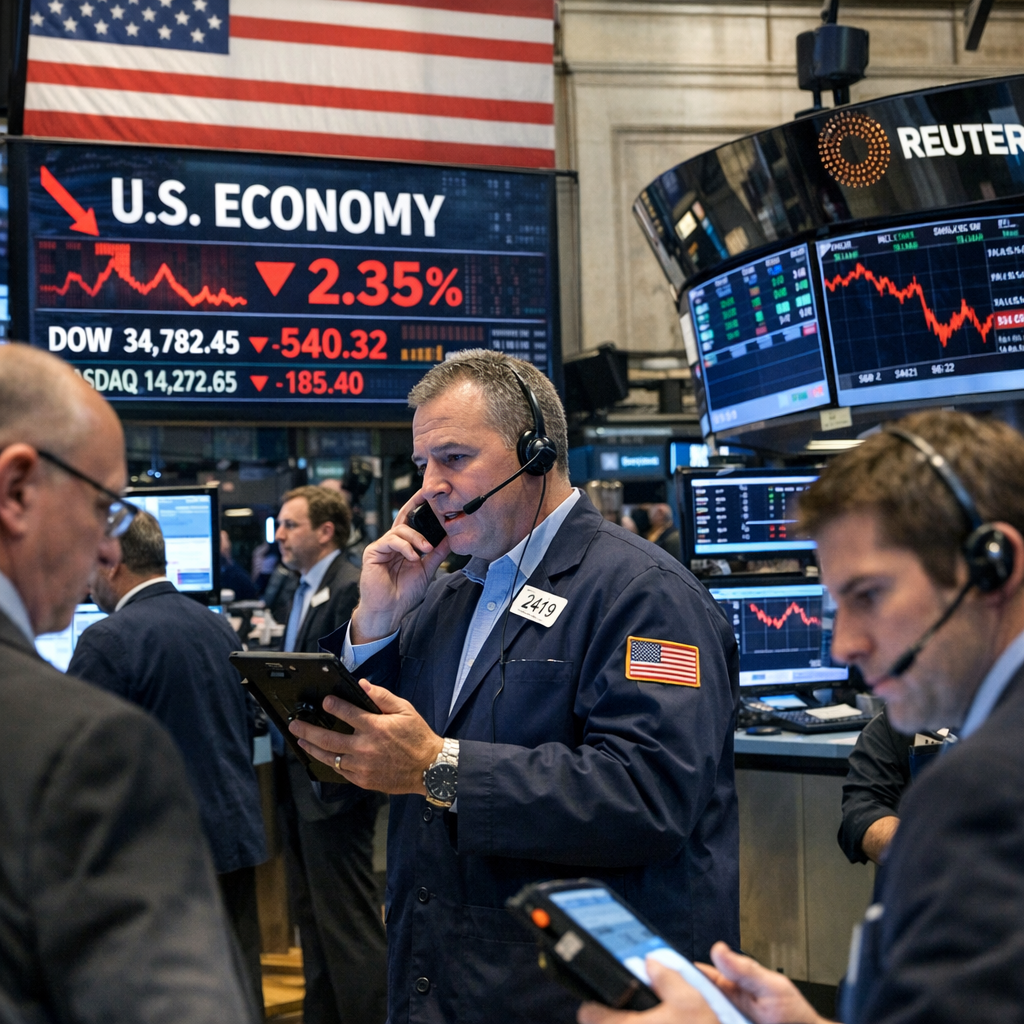
The United States economy, a pivotal force in global markets, continues to demonstrate resilience despite facing a myriad of challenges. Recent data indicates a modest growth trajectory, with the International Monetary Fund (IMF) projecting a 2.4% increase in the U.S. gross domestic product (GDP) for the fourth quarter of 2026, up from 2.2% the previous year. This growth is accompanied by a decline in unemployment rates, expected to drop from 4.5% in late 2025 to 4.1% in 2026.
Inflation and Monetary Policy
Inflation remains a focal point for policymakers. The Federal Reserve has maintained its benchmark interest rate at 3.6%, with considerations for potential adjustments should the labor market experience significant changes. The IMF anticipates inflation aligning with the Federal Reserve’s 2% target by 2027, suggesting a gradual stabilization of prices.
National Debt Concerns
Despite positive indicators, concerns about the national debt persist. BlackRock CEO Larry Fink has highlighted the escalating U.S. debt, now exceeding $38 trillion, as a potential risk to economic stability. He warns that rising debt levels could lead to increased interest costs and erode market confidence, emphasizing the need for fiscal discipline to maintain long-term economic health.
Impact of Global Events
Global events, particularly the ongoing conflict in the Middle East, have introduced additional complexities. The IMF’s April 2026 World Economic Outlook notes that such conflicts can disrupt energy markets and trade routes, potentially slowing global growth to 3.1% in 2026. These disruptions may have cascading effects on the U.S. economy, influencing inflation and trade balances.
Trade Policies and Tariffs
Trade policies continue to shape economic dynamics. The Trump administration’s implementation of new tariffs has raised concerns about potential inflationary pressures and economic slowdowns. Chicago Federal Reserve Bank President Austan Goolsbee acknowledges the solid state of the U.S. economy but cautions that broad tariffs could lead to renewed inflation or hinder economic growth.
Conclusion
In summary, while the U.S. economy exhibits signs of strength, it faces a complex landscape influenced by national debt concerns, global conflicts, and evolving trade policies. Vigilant monitoring and adaptive strategies will be essential to navigate these challenges and sustain economic resilience.