

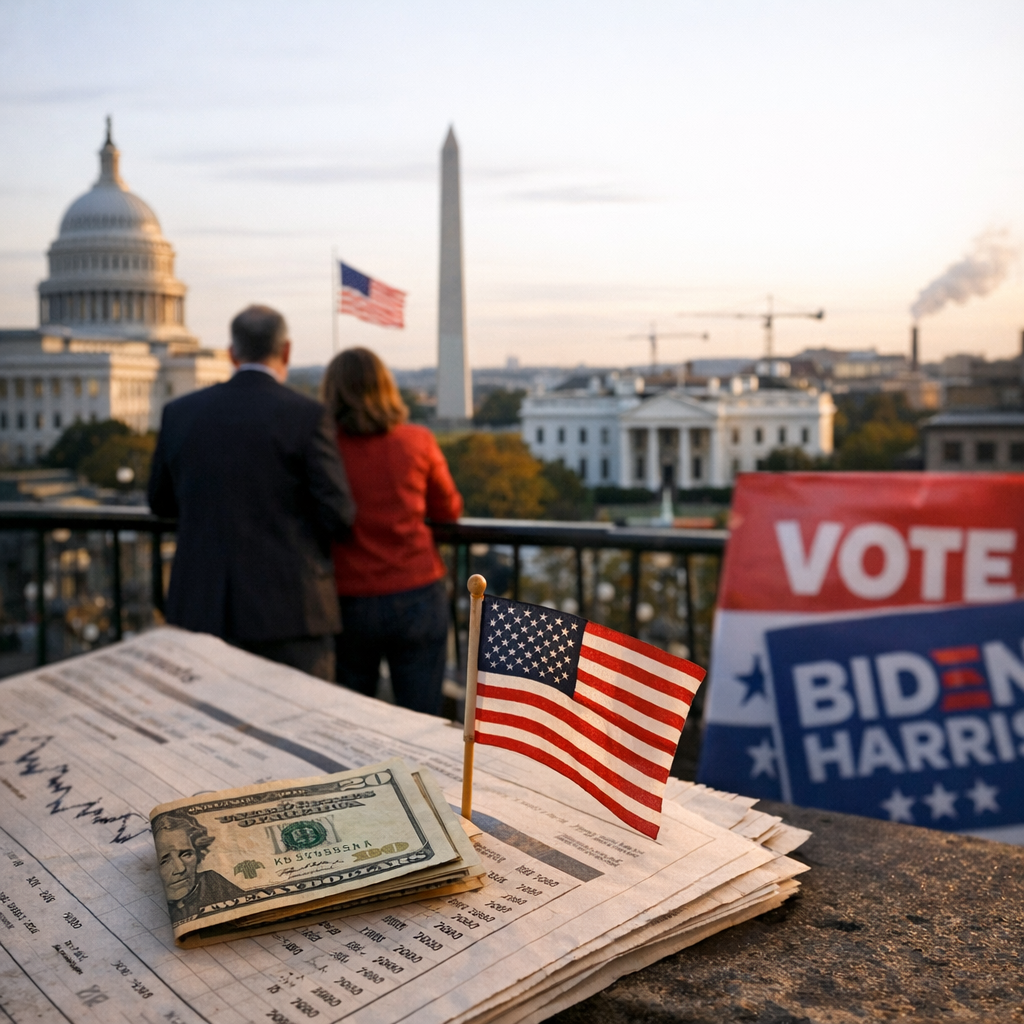
The United States economy continues to demonstrate resilience despite facing a series of policy shifts and global uncertainties. Recent data indicates steady growth, yet underlying challenges persist, reflecting the intricate interplay between economic performance and political dynamics.
Economic Performance and Growth
In 2025, the U.S. economy expanded by 2%, a rate that aligns with long-term growth trends. This growth was achieved despite significant policy changes and a government shutdown in the fourth quarter. The International Monetary Fund (IMF) projects a modest acceleration to 2.4% growth in 2026, driven by strong productivity and consumer spending. However, employment growth has slowed, with the unemployment rate hovering around 4.3% as of March 2026.
Inflation and Consumer Sentiment
Inflation remains a concern, influenced by factors such as tariffs and fluctuating energy prices. The IMF anticipates that core Personal Consumption Expenditures (PCE) inflation will return to the 2% target by the first half of 2027. Despite these projections, consumer sentiment has reached record lows, with many Americans expressing dissatisfaction with the economy. A Pew Research Center survey from February 2026 revealed that only 28% of adults rated economic conditions as excellent or good, highlighting a significant partisan divide in perceptions.
Policy Impacts and Fiscal Outlook
Recent policy changes, including tax reforms and increased tariffs, have had mixed effects on the economy. While some measures have provided short-term boosts to activity, they have also contributed to a growing fiscal deficit, which remains historically large at over 7% of GDP. The Organisation for Economic Co-operation and Development (OECD) emphasizes the need for sustained fiscal consolidation to manage demand pressures and stabilize the debt ratio.
Global Trade and Geopolitical Factors
Trade policies have introduced uncertainties, with higher tariffs expected to modestly reduce the trade deficit but also raise consumer prices. Geopolitical tensions, particularly in the Middle East, have led to increased energy prices, adding to inflationary pressures. These factors underscore the complex environment in which the U.S. economy operates, balancing domestic policy decisions with global economic dynamics.
Conclusion
As the U.S. navigates this intricate economic landscape, the interplay between policy decisions, consumer sentiment, and global factors will continue to shape its economic trajectory. Ongoing monitoring and adaptive strategies will be essential to sustain growth and address emerging challenges.