

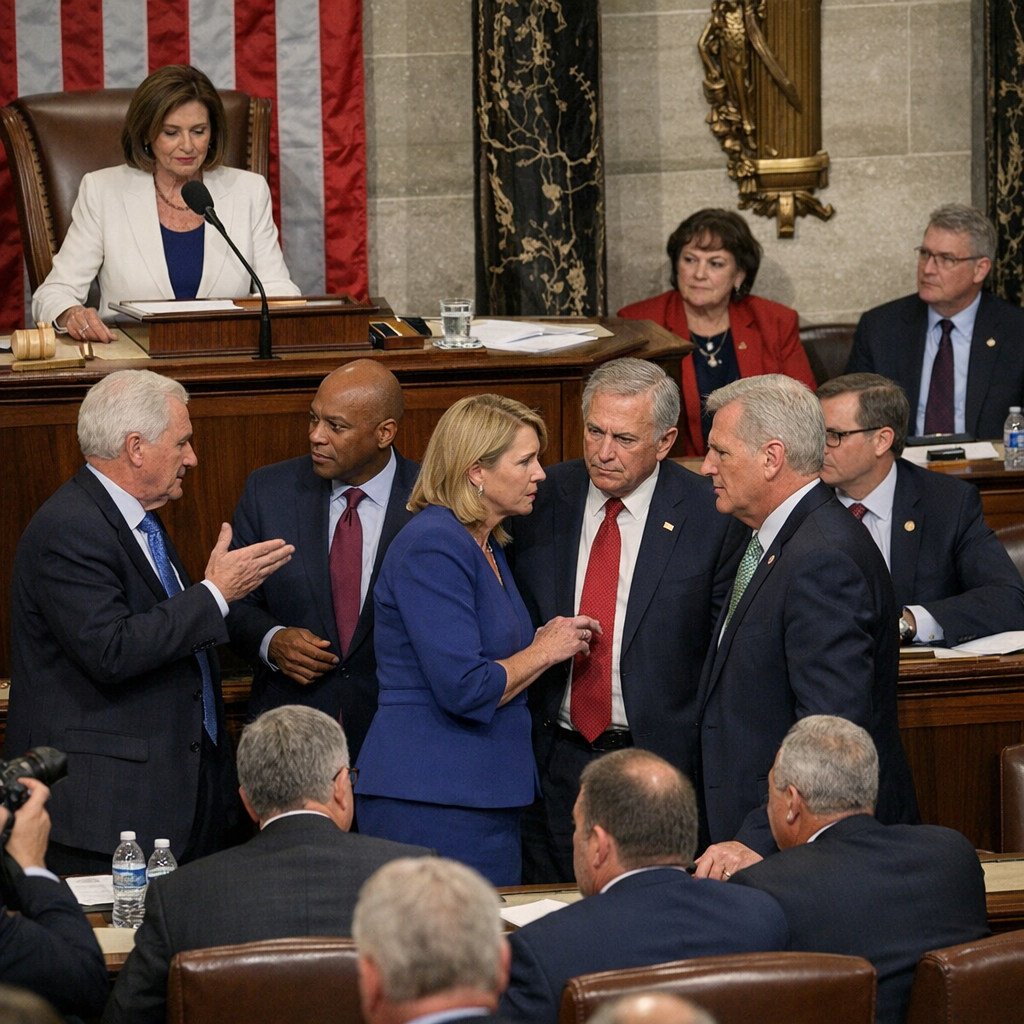
The United States is currently experiencing a period of significant political and economic activity, with developments that have both domestic and international implications.
Political Climate
As the 2026 midterm elections approach, the U.S. political landscape is marked by heightened activity. Redistricting efforts are underway in several states, potentially altering the balance of power in Congress. For instance, in North Carolina’s Triangle region, a new Republican-leaning congressional district has been proposed, which could consolidate GOP control despite the state’s near-even split in statewide voting patterns. This move reflects a broader trend of strategic redistricting across the nation.
Public sentiment towards the political system is also noteworthy. A recent Gallup poll indicates that approximately one-third of Americans view politics and government as the nation’s most pressing issues. This level of concern is higher than in most other wealthy democracies, underscoring the unique challenges facing the U.S. political system.
Economic Overview
On the economic front, the U.S. is demonstrating resilience amidst global uncertainties. The International Monetary Fund (IMF) projects a 2.4% growth in the U.S. gross domestic product (GDP) for the fourth quarter of 2026, an increase from the previous year’s 2.2%. Unemployment rates are also expected to decline, with forecasts suggesting a drop from 4.5% in late 2025 to 4.1% in 2026. However, the IMF has cautioned that rising federal budget debts could pose stability risks in the future.
Inflation trends are another focal point. Recent data shows a slowdown in inflation rates, attributed to the stabilization of energy markets. This development offers a reprieve to consumers and policymakers alike, who have been grappling with the economic impacts of fluctuating energy prices.
Implications for the Global Community
For international observers, including those in Dubai, these developments in the U.S. hold significant relevance. The political decisions and economic policies enacted in the U.S. can have far-reaching effects on global markets and diplomatic relations. As such, staying informed about these changes is crucial for understanding the broader international landscape.
In conclusion, the United States is navigating a complex interplay of political maneuvering and economic strategizing. The outcomes of these efforts will not only shape the nation’s future but also influence global dynamics in the years to come.