

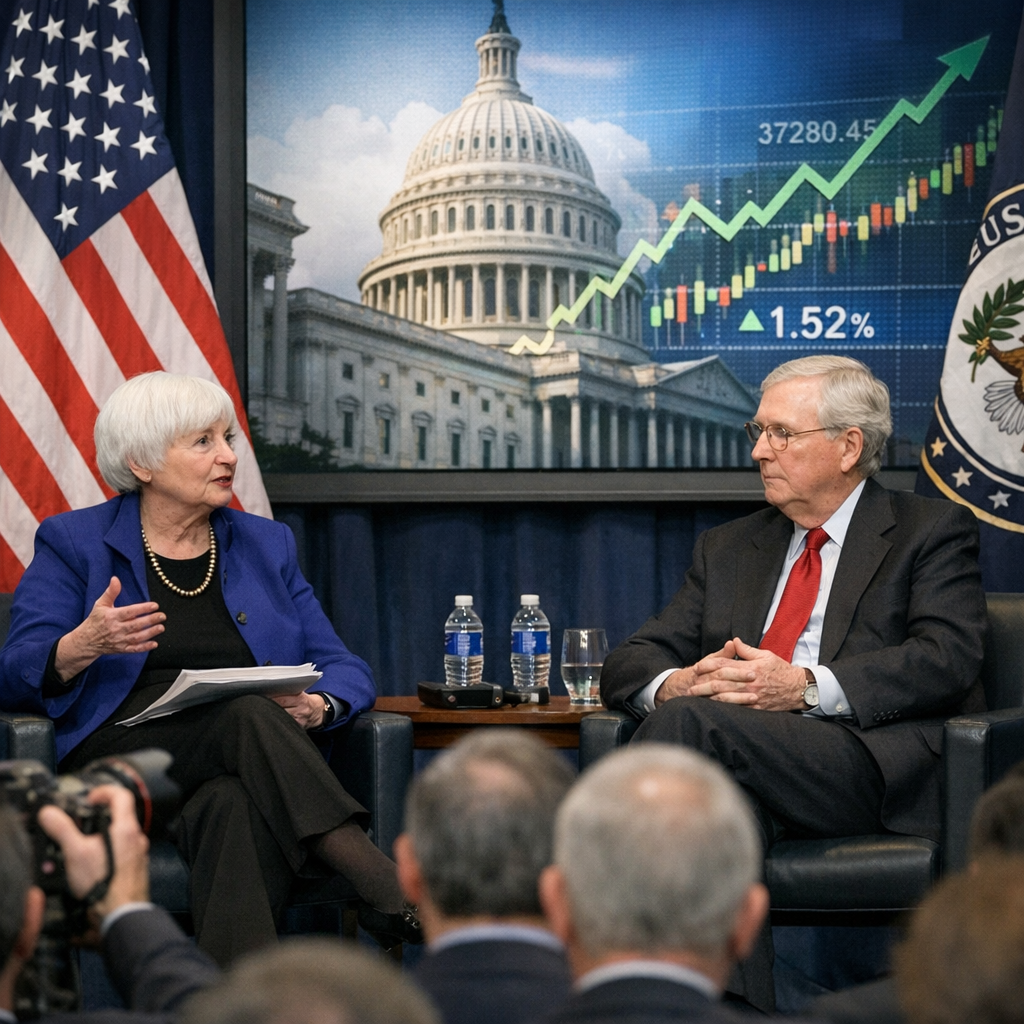
The United States continues to experience significant political and economic shifts, with recent events underscoring the nation’s evolving landscape.
Political Developments
As the 2026 midterm elections approach, the political climate remains dynamic. Speaker Mike Johnson leads a narrow House majority, while Democrats, under House Minority Leader Hakeem Jeffries, seek to regroup ahead of crucial elections. The political landscape heading into the 2026 midterm elections is volatile, with redistricting battles and recent events intensifying disputes between parties.
Economic Outlook
Economic concerns are at the forefront of national discourse. The U.S. national debt has surpassed $38 trillion, prompting warnings from financial leaders about potential impacts on interest costs and market confidence. BlackRock CEO Larry Fink has highlighted the risks associated with rising debt levels, emphasizing the need for sustained economic growth to improve the debt-to-GDP ratio.
Additionally, the Federal Reserve has maintained interest rates but signaled the possibility of future hikes, reflecting ongoing efforts to balance economic growth with inflation control.
International Relations
On the international front, the U.S. and Iran have reached a preliminary agreement to end hostilities and reopen the Strait of Hormuz. This development is expected to have significant implications for global oil markets and regional stability.
These developments highlight the complexities of the current U.S. political and economic environment, with potential ramifications both domestically and internationally.