

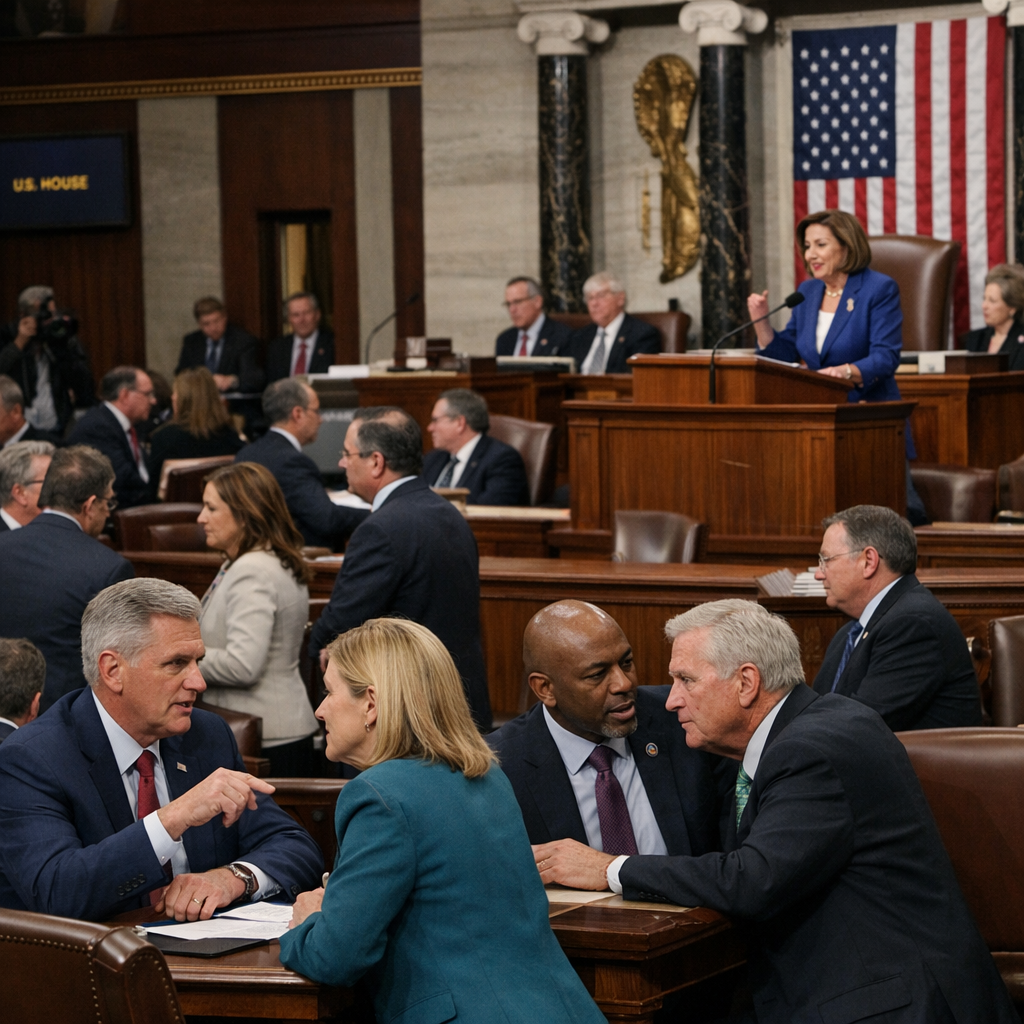
The United States is currently experiencing a period of significant political and economic activity, with developments that have far-reaching implications both domestically and internationally.
Political Climate and Upcoming Elections
As the 2026 midterm elections approach, the political landscape remains highly dynamic. The Republican Party, under the leadership of Speaker Mike Johnson, holds a narrow majority in the House of Representatives. Meanwhile, the Democratic Party, led by House Minority Leader Hakeem Jeffries, is strategizing to regain control. Redistricting efforts across various states are intensifying, with proposals that could alter the balance of power in Congress. For instance, Florida Governor Ron DeSantis has introduced new congressional maps that may reduce Democratic representation, while Virginia’s recent Democratic-led remapping poses challenges for Republican incumbents.
These developments underscore the volatility of the current political environment, with both parties investing heavily in candidate recruitment, fundraising, and voter mobilization strategies ahead of the elections.
Economic Indicators and Challenges
The U.S. economy presents a mixed picture. On one hand, the International Monetary Fund (IMF) projects a “buoyant” economic outlook, anticipating accelerated growth and lower unemployment rates. Specifically, the IMF forecasts a 2.4% growth in gross domestic product (GDP) for the fourth quarter of 2026 and a decrease in unemployment to 4.1% during the same period. However, the IMF also warns of potential risks stemming from rising federal budget deficits and escalating trade tensions.
Inflation remains a pressing concern, with recent data indicating a surge to 4.2%. This uptick is attributed to various factors, including increased energy prices and supply chain disruptions. The Federal Reserve has maintained interest rates at current levels, with officials closely monitoring inflation trends and their potential impact on economic stability.
Public Sentiment and Institutional Trust
Recent polling data reveals a heightened level of public anxiety regarding the political system. Approximately one-third of Americans identify politics and government as the nation’s most pressing issues, a sentiment that surpasses concerns in many other developed democracies. This apprehension is particularly pronounced among older demographics, while younger individuals are more focused on economic challenges such as housing affordability and the cost of living.
The combination of political polarization, economic uncertainties, and fluctuating confidence in institutions contributes to a complex and evolving national mood. These factors are likely to influence voter behavior and policy priorities in the upcoming electoral cycle.
In summary, the United States is navigating a multifaceted landscape marked by political maneuvering, economic fluctuations, and shifting public sentiments. Observers both domestically and internationally are closely monitoring these developments, recognizing their potential to shape the country’s trajectory in the years to come.