

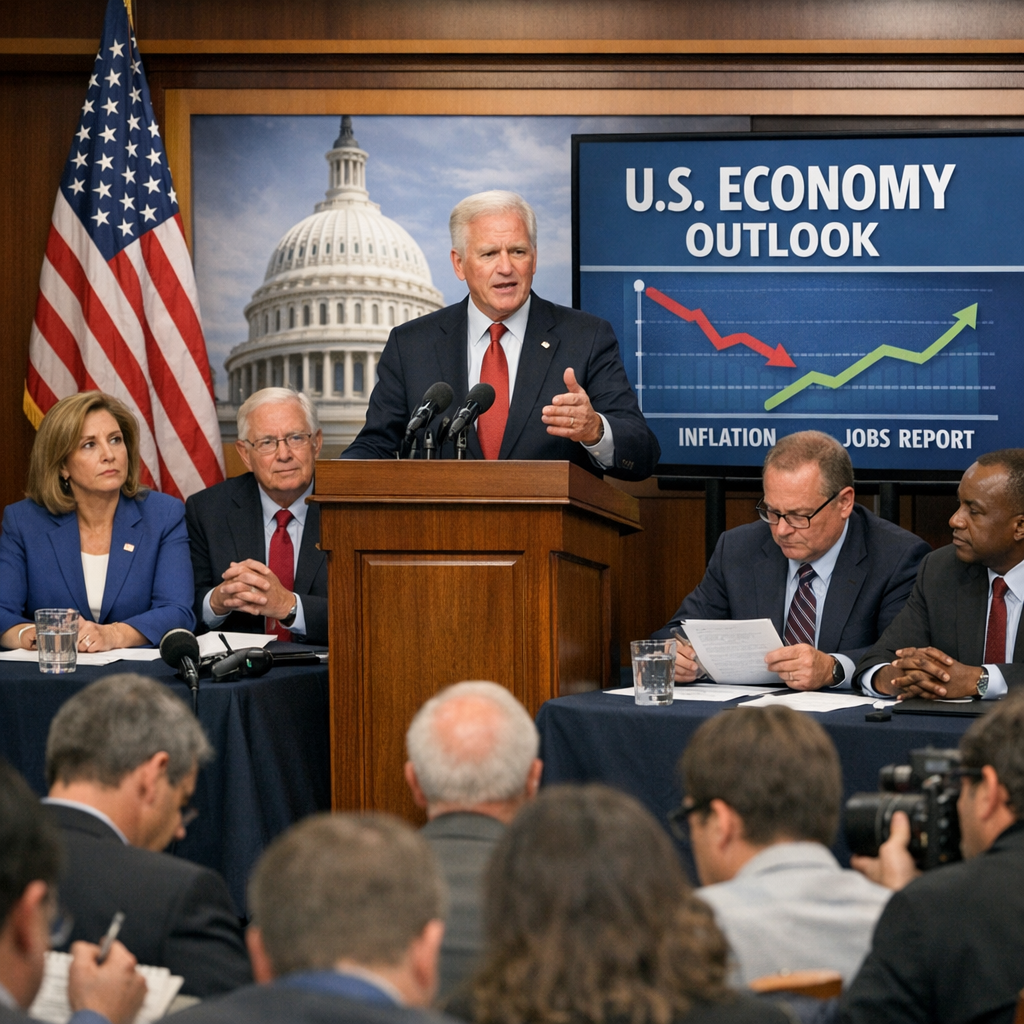
The United States is currently experiencing a dynamic and multifaceted political environment, characterized by significant developments across various sectors. This article provides an overview of the current U.S. political climate, highlighting key developments and their implications.
Economic Indicators and Policy Shifts
Recent economic data presents a mixed picture. While the U.S. economy has shown resilience, certain sectors face challenges. Notably, the International Monetary Fund (IMF) has expressed concerns about rising federal budget deficits, viewing them as potential stability risks. The IMF projects a growth rate of 2.4% for the U.S. economy in the fourth quarter of 2026, with unemployment expected to decline to 4.1% during the same period. However, the IMF also warns that increasing federal budget deficits could pose risks to economic stability. Additionally, the Federal Reserve has maintained interest rates but signaled the possibility of a hike later this year, reflecting ongoing assessments of inflation and economic growth.
Political Developments and Public Sentiment
On the political front, the landscape is marked by significant events and public sentiment shifts. A recent Gallup poll indicates that approximately one-third of Americans view politics and government as the nation’s most pressing issues, a concern that is particularly pronounced among older demographics. This anxiety underscores the deepening polarization and challenges within the U.S. political system. In response to these concerns, legislative actions are underway, including proposed bills addressing election security and immigration reforms. These initiatives aim to restore public trust and address systemic issues within the political framework.
International Relations and Trade Policies
U.S. foreign policy continues to evolve, with recent actions including the imposition of a 50% tariff on Canadian goods, citing disputes over the automotive and alcohol sectors. This move has significant implications for international trade relations and domestic economic policies. Additionally, the U.S. has reinstated a blockade in the Strait of Hormuz amid ongoing strikes, reflecting the complex dynamics of international relations and their impact on global energy markets.
In summary, the current U.S. political and economic landscape is characterized by a blend of resilience and challenges. Ongoing policy decisions and international relations continue to shape the nation’s trajectory, with implications that resonate both domestically and globally.