

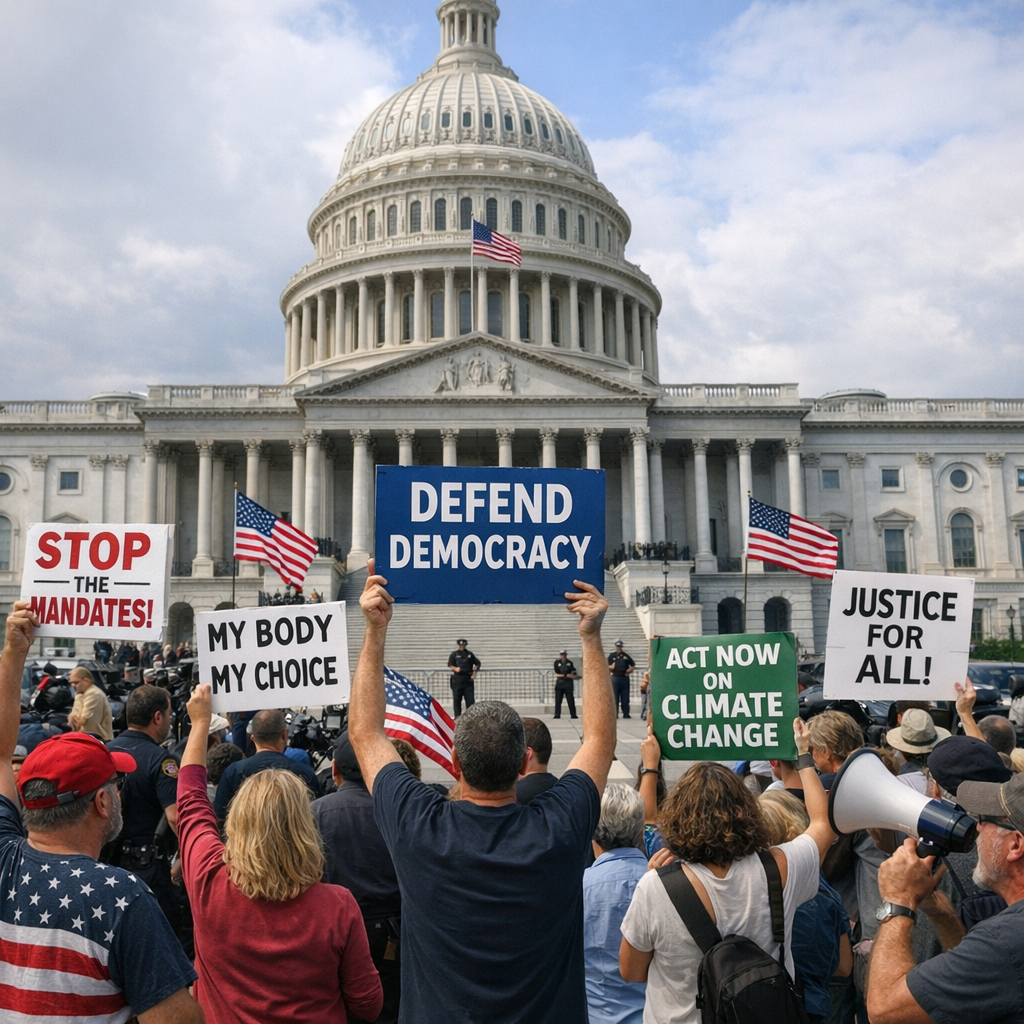
The United States is currently experiencing a period of significant political activity, with developments that have both domestic and international implications.
Government Shutdown and Its Impacts
The federal government shutdown, now entering its second month, is affecting various sectors, including air traffic, food assistance, and scientific research. This prolonged impasse underscores the challenges in reaching bipartisan agreements on budgetary matters.
Upcoming Elections
Voters in key states and cities are preparing for upcoming elections, which are seen as a critical assessment of President Donald Trump’s second term. These elections could potentially reshape the political landscape and influence future policy directions.
Economic Indicators
Recent economic data presents a mixed picture. While some sectors show resilience, others are feeling the strain of ongoing political uncertainties. The International Monetary Fund has highlighted the buoyancy of the U.S. economy but also warned of risks associated with rising tariffs and increasing debt levels.
International Relations
On the international front, the U.S. is engaged in complex negotiations with Iran. Recent developments suggest that a deal is nearing completion, with a signing ceremony expected soon. This agreement could have significant implications for regional stability and global energy markets.
Public Sentiment
Public confidence in the political system appears to be waning. A Gallup poll indicates that about one-third of Americans view politics and government as the nation’s most pressing issues. This sentiment reflects broader concerns about the health of democracy and economic mobility.
In conclusion, the U.S. political scene is marked by a series of interconnected challenges. The outcomes of ongoing negotiations, upcoming elections, and economic policies will be pivotal in shaping the nation’s future trajectory.