

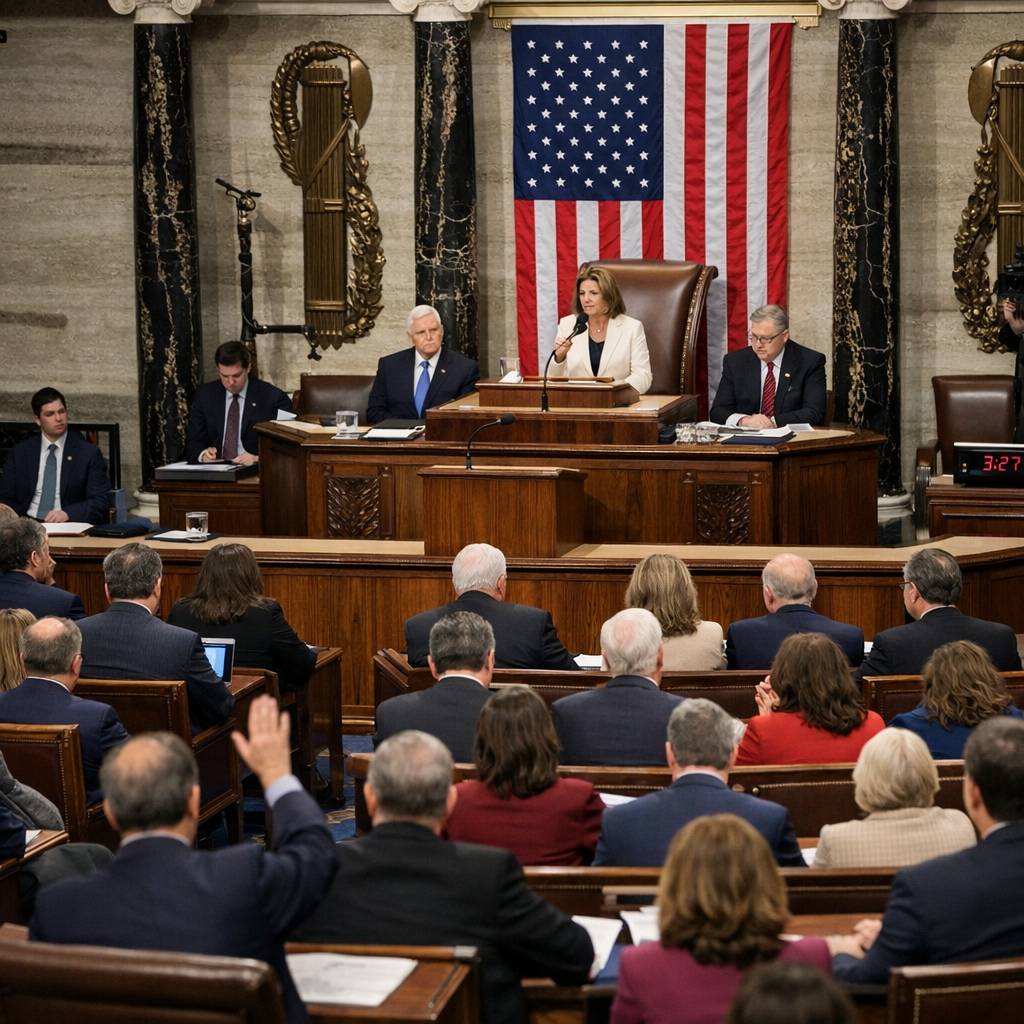
The United States is currently experiencing a period of significant political activity, with several key developments shaping the nation’s trajectory.
Midterm Elections and Congressional Dynamics
The upcoming midterm elections are poised to be pivotal, as all 435 seats in the House of Representatives and 35 seats in the Senate are up for grabs. The outcomes will influence the legislative agenda on critical issues such as immigration, healthcare, and foreign policy.
Economic Indicators and Public Sentiment
Recent economic data presents a mixed picture. While job openings have remained robust, consumer confidence has been affected by rising inflation and fluctuating gas prices. These economic factors are likely to play a significant role in voter sentiment during the elections.
Supreme Court Decisions and Federal Authority
The Supreme Court has recently issued rulings that have significant implications for federal authority. Notably, the court upheld the independence of the Federal Reserve in the case involving Board member Lisa Cook, while also affirming the President’s power to dismiss members of the Federal Trade Commission. These decisions underscore the evolving dynamics between the executive branch and independent federal agencies.
Public Concerns and Political Stability
According to recent polling data, a substantial portion of the American populace expresses anxiety about the political system’s stability. Approximately one-third of Americans identify politics and government as the nation’s most pressing issues, reflecting deep-seated concerns about democratic health and economic mobility.
As the United States navigates these complex political and economic landscapes, the outcomes of the forthcoming elections and policy decisions will be instrumental in shaping the nation’s future direction.