

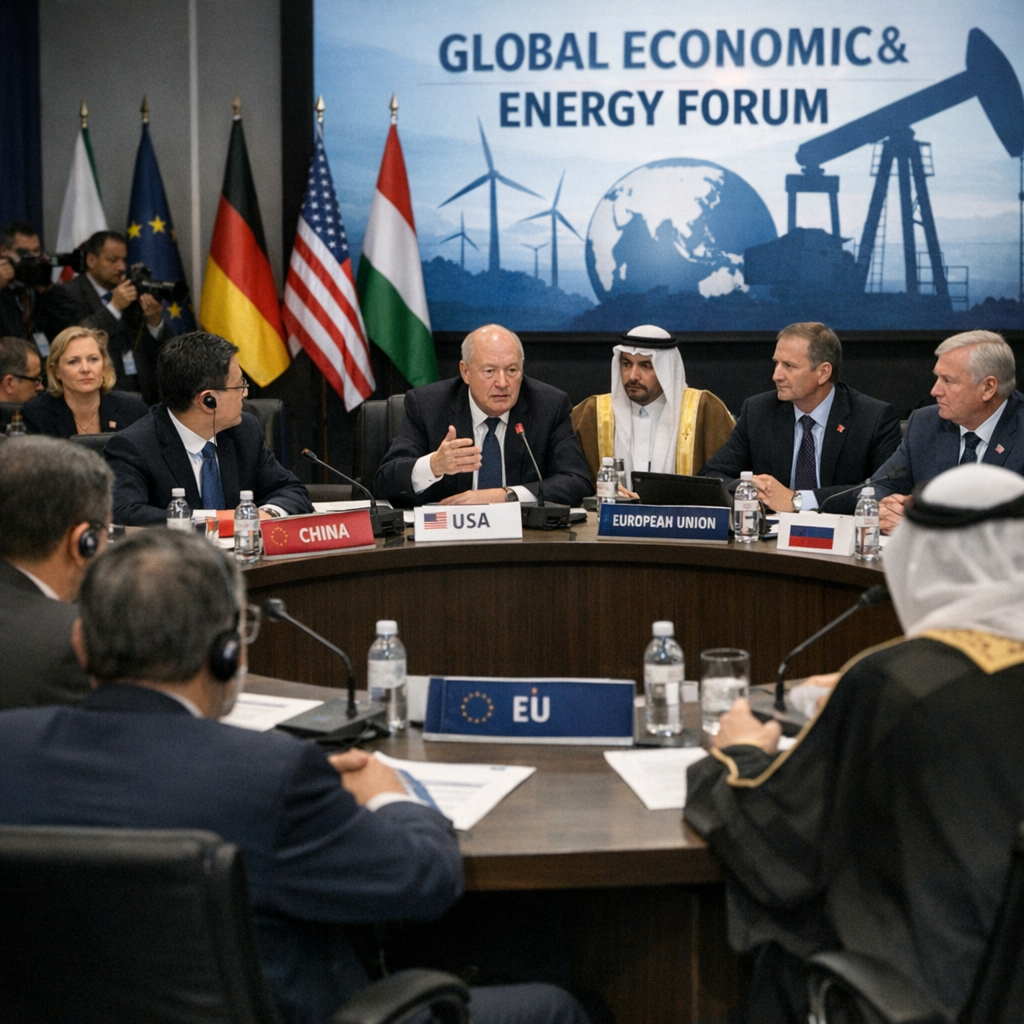
The global economy is currently navigating a complex landscape marked by energy shocks and geopolitical tensions. Recent conflicts in the Middle East have disrupted oil exports, leading to a surge in energy prices and heightened inflationary pressures worldwide.
Global Growth Projections
According to the Organisation for Economic Co-operation and Development (OECD), global growth is projected to slow to 2.8% in 2026, down from 3.4% in 2025. This deceleration is attributed to the energy supply shock resulting from the Middle East conflict, which has introduced significant uncertainty into the economic outlook.
Regional Economic Impacts
The United States is expected to experience a modest slowdown, with GDP growth projected at 2.0% in 2026, down from 2.1% in 2025. This is due to a combination of factors, including rising inflation and potential disruptions in energy supply.
In the Eurozone, growth is anticipated to be more subdued, with projections of 0.8% in 2026, reflecting the region’s vulnerability to energy price fluctuations and geopolitical uncertainties.
China’s economy is also expected to slow, with growth projected at 4.5% in 2026, down from 4.4% in 2025. This slowdown is influenced by ongoing real estate issues and the broader impact of global economic uncertainties.
Inflationary Pressures
Inflation remains a pressing concern, with the OECD projecting a rise to 4.0% in 2026 for G20 countries, up from 3.4% in 2025. The surge in global energy prices is a primary driver of this trend, affecting both advanced and emerging economies.
Policy Responses and Recommendations
In response to these challenges, the OECD emphasizes the need for targeted and temporary fiscal support to assist those most affected by the energy shock. Additionally, it advocates for policies that promote energy efficiency and diversification to mitigate future risks.
As the global economic landscape continues to evolve, staying informed about these developments is crucial for policymakers, businesses, and individuals alike.