

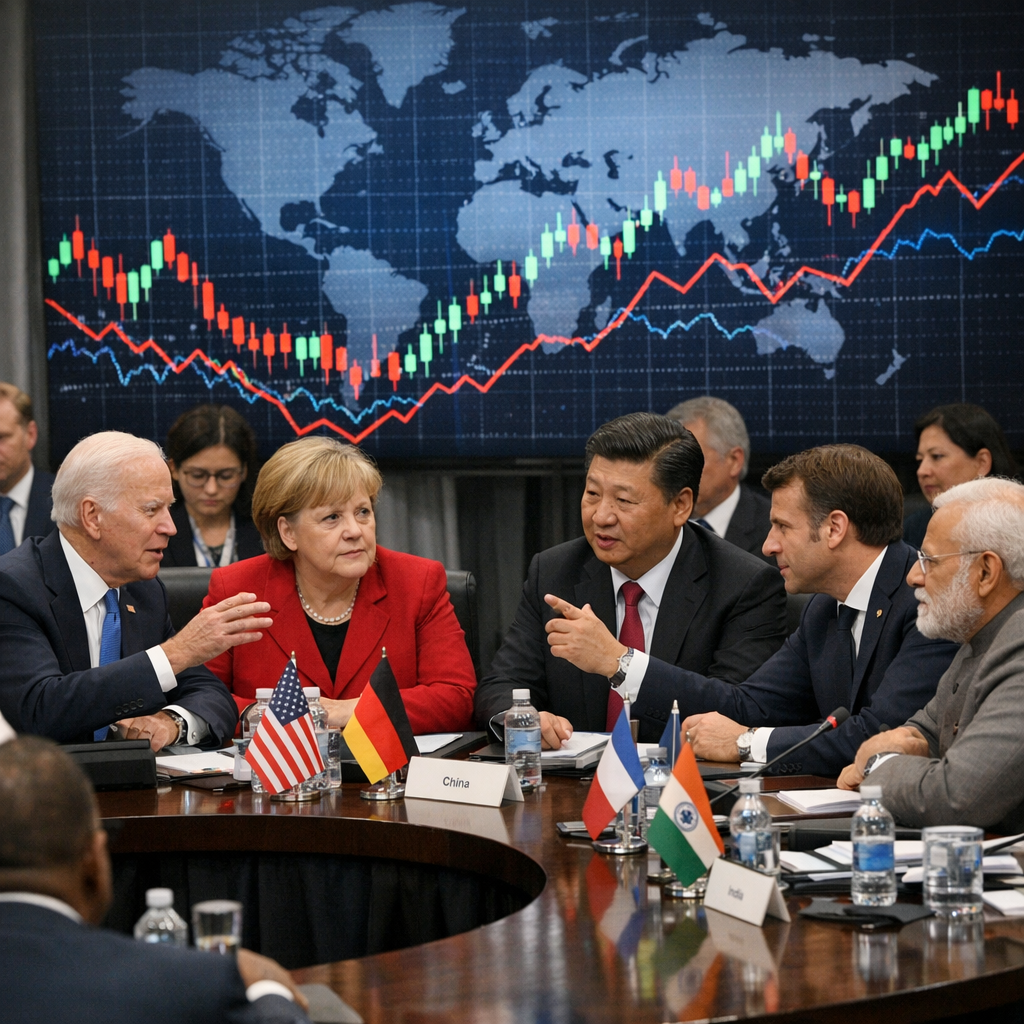
The global economy is currently navigating a complex landscape shaped by geopolitical tensions and rapid technological advancements. Recent conflicts in the Middle East have disrupted energy markets, leading to increased oil prices and inflationary pressures worldwide. This situation has particularly impacted energy-importing nations, including those in Europe and Asia, where economic growth has slowed due to rising energy costs.
In contrast, the United States has demonstrated resilience, with consumer spending and investments in artificial intelligence (AI) driving moderate growth. The integration of AI across various sectors is not only boosting productivity but also reshaping labor markets and business operations globally.
Emerging economies present a mixed picture. India continues to experience robust growth, fueled by strong domestic demand and a burgeoning technology sector. However, China’s growth has moderated, influenced by challenges in the real estate market and evolving trade dynamics.
Central banks worldwide are adopting varied monetary policies in response to these developments. While some are easing rates to stimulate growth, others remain cautious due to inflation concerns. This divergence underscores the importance of tailored policy approaches to address unique national economic conditions.
In summary, the global economic outlook is characterized by a delicate balance between geopolitical challenges and technological opportunities. Stakeholders must remain vigilant and adaptable to navigate this evolving environment effectively.