

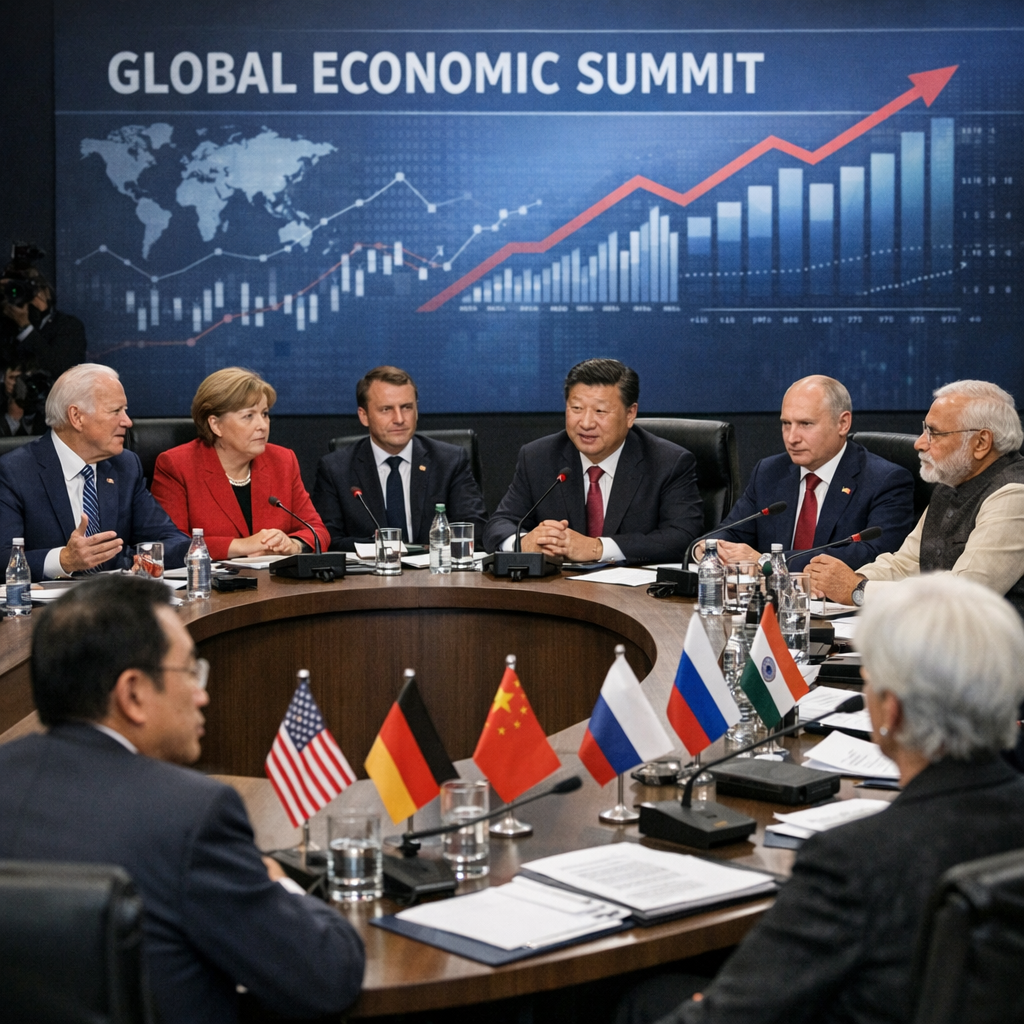
The global economy is currently navigating a complex landscape shaped by geopolitical tensions and rapid technological advancements. Recent conflicts in the Middle East have introduced new inflationary pressures, particularly affecting energy prices. The Organization for Economic Cooperation and Development (OECD) projects global growth at 2.9% in 2026, with inflation in G20 countries expected to reach 4.0% in the same year.
Despite these challenges, certain sectors and regions demonstrate resilience. The United States, for instance, anticipates a GDP growth of 2.0% in 2026, bolstered by robust consumer spending and significant investments in artificial intelligence (AI). This technological momentum is contributing to economic stability, even as other areas face uncertainties.
In contrast, Europe confronts slower growth, with the euro area projected to expand by only 0.8% in 2026. Rising energy costs and geopolitical uncertainties are key factors influencing this subdued outlook. Meanwhile, Asia presents a mixed picture: India is poised for robust growth, driven by strong domestic demand, while China’s growth is expected to moderate due to challenges in the property sector and other structural issues.
These developments underscore the importance of strategic economic planning and adaptability. For regions like Dubai, which are deeply integrated into the global economy, staying informed about these trends is crucial for navigating the evolving economic landscape effectively.