

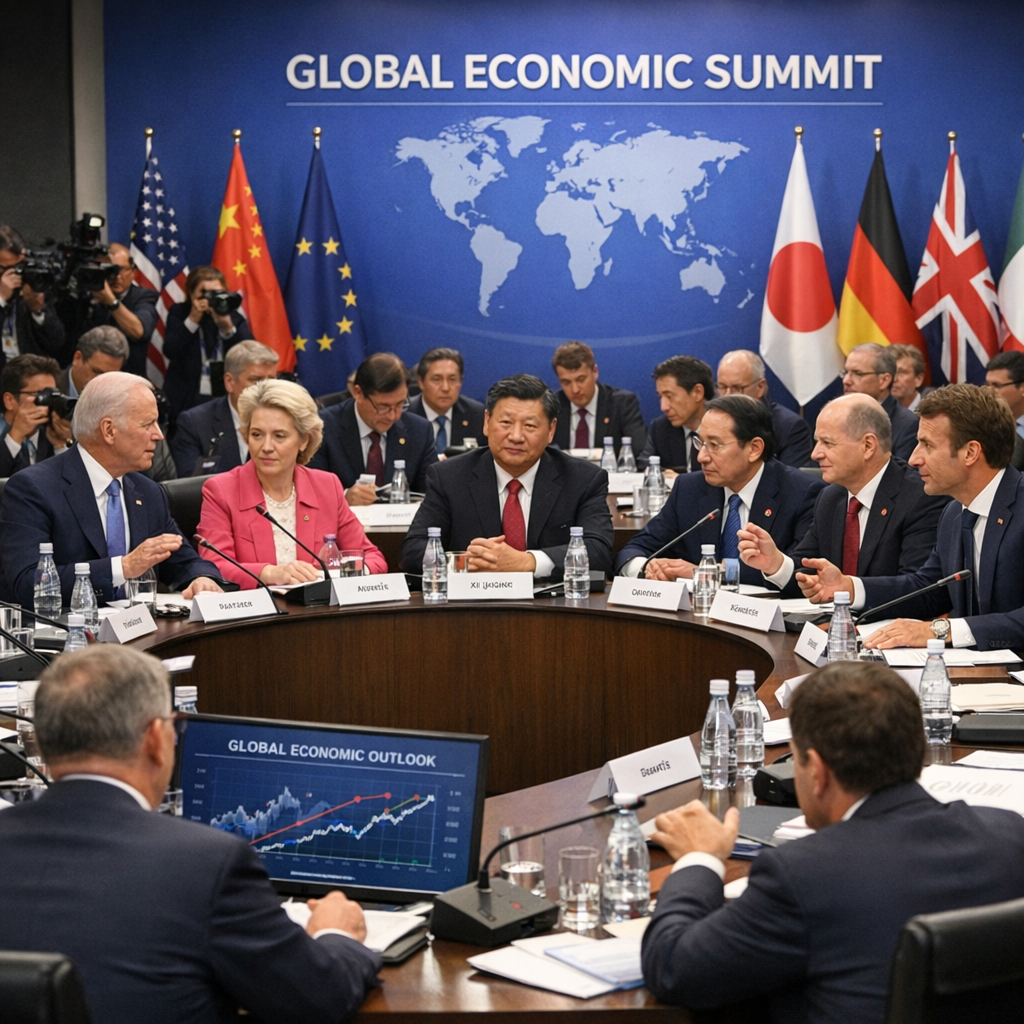
The global economy is currently navigating a complex landscape shaped by geopolitical tensions and rapid technological advancements. Recent conflicts in the Middle East have led to fluctuations in oil prices, impacting energy-importing nations and contributing to inflationary pressures worldwide. For instance, the ongoing conflict in Iran has caused ten-year Treasury yields to rise from 4.5% to 4.7% in July, with projections suggesting they could reach 5.0% by year’s end if the situation persists. Mortgage rates have also been affected, currently standing at approximately 6.6% for 30-year loans and 6.0% for 15-year loans, with potential increases on the horizon.
Despite these challenges, certain sectors are demonstrating resilience. In the United States, investments in artificial intelligence (AI) are driving growth, with business spending expected to rise by 7% in the fourth quarter from a year earlier and 8% overall in 2027. This AI-driven capital expenditure, coupled with robust consumer spending, is providing a firm foundation for the economy.
However, the outlook remains uneven across different regions. The eurozone is experiencing slower growth due to external factors such as stronger currencies and tariffs on exports to the U.S., as well as internal challenges like fiscal consolidation in several countries. In contrast, developing economies are forecasted to outperform larger emerging economies, aided by less exposure to U.S. tariffs and other external pressures.
In the Middle East, particularly in Dubai, the economic landscape is influenced by these global trends. The region’s strategic position as a trade hub means that fluctuations in global markets, especially in energy prices, have direct implications. Additionally, the rapid adoption of AI and other technological innovations presents both opportunities and challenges for local businesses aiming to stay competitive in a rapidly evolving global market.
As the world continues to grapple with these dynamic factors, it is crucial for policymakers and business leaders to remain adaptable, leveraging technological advancements while mitigating the risks associated with geopolitical uncertainties.