

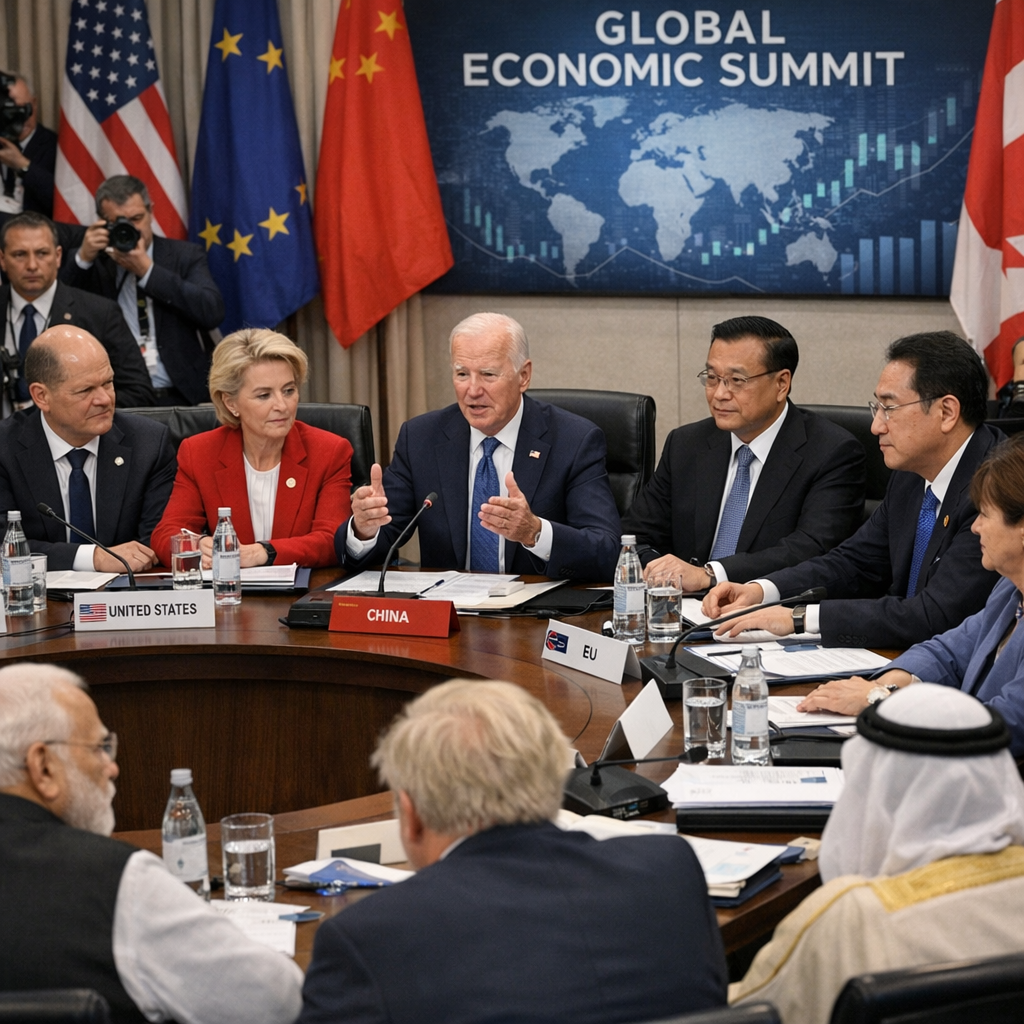
The global economy is currently navigating a complex landscape shaped by geopolitical tensions and rapid technological advancements. Recent conflicts in the Middle East have disrupted oil exports, leading to increased commodity prices and inflationary pressures worldwide. This energy crisis has particularly impacted energy-importing nations, resulting in slower economic growth and heightened inflation rates.
Despite these challenges, certain sectors and regions demonstrate resilience. In the United States, robust investments in artificial intelligence (AI) and a strong tech sector are driving moderate growth. Similarly, India is experiencing significant economic expansion, propelled by strong domestic demand and a burgeoning middle class.
Conversely, Europe faces economic stagnation, with countries like Germany and the United Kingdom grappling with rising energy costs that adversely affect industrial output. China’s growth trajectory is also moderating due to ongoing issues in the real estate sector, although gains in green technology and AI exports offer some optimism.
Central banks worldwide are adopting cautious monetary policies in response to these developments. While some, like the Federal Reserve, are considering modest rate cuts to stimulate growth, others are maintaining or even increasing rates to combat inflation. This divergence underscores the varied economic conditions across different regions.
In the Middle East, particularly in the United Arab Emirates, the economic outlook remains cautiously optimistic. The UAE’s strategic investments in technology and infrastructure, coupled with its role as a regional trade hub, position it to weather global economic fluctuations. However, the nation remains vigilant, closely monitoring global developments to adapt its economic strategies accordingly.
As the global economic environment continues to evolve, staying informed about these trends is crucial for businesses and individuals alike. Understanding the interplay between geopolitical events and economic indicators will be key to navigating the uncertainties of the current global landscape.