

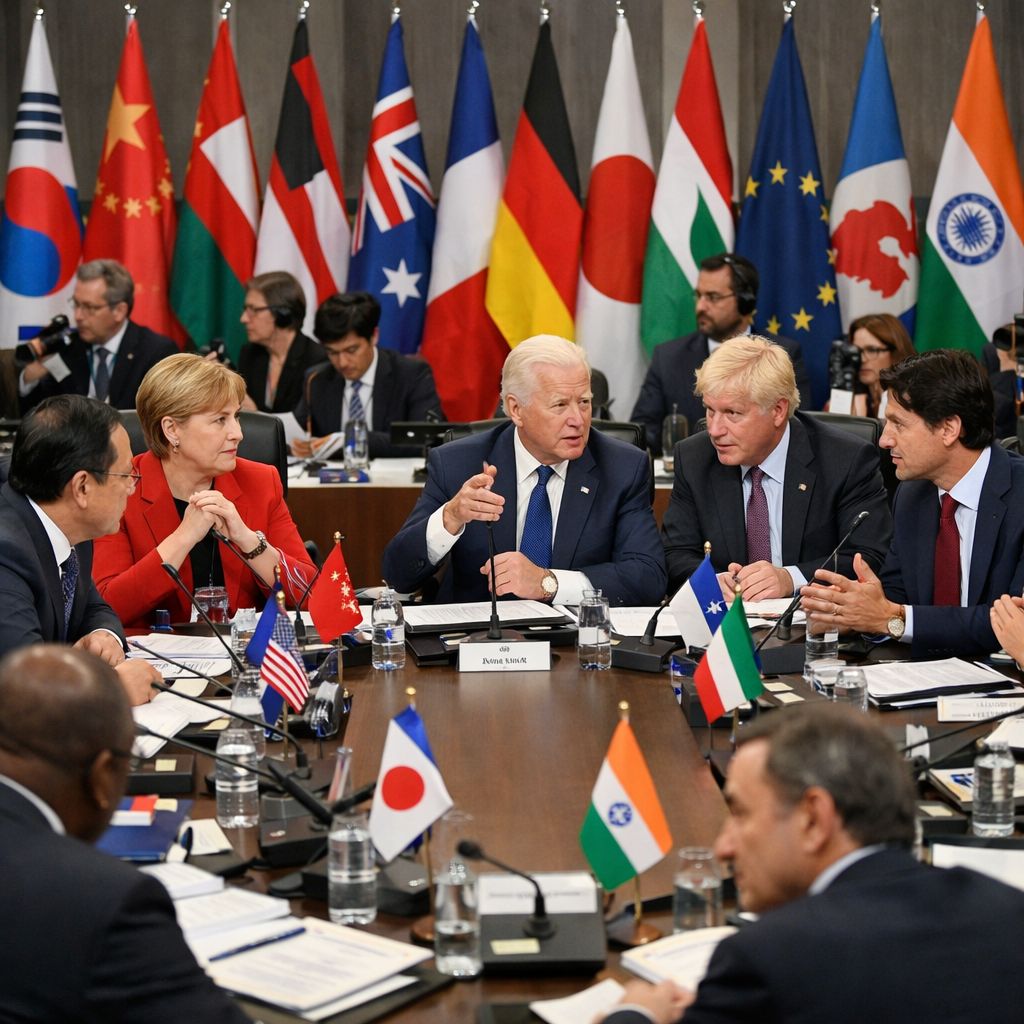
The global economic landscape is currently navigating a complex interplay of geopolitical tensions and technological advancements, each significantly influencing growth trajectories and inflationary trends worldwide.
Geopolitical Tensions and Economic Impacts
Recent conflicts in the Middle East have introduced substantial uncertainties into the global economy. The Organization for Economic Cooperation and Development (OECD) projects a global growth rate of 2.9% in 2026, a slight decrease from previous forecasts. This adjustment reflects the economic repercussions of energy supply disruptions and heightened geopolitical risks. The OECD emphasizes that the evolving situation in the Middle East is a critical factor shaping the global economic outlook, with potential for prolonged conflicts to further dampen growth prospects.
Technological Advancements and Economic Dynamics
Simultaneously, rapid advancements in artificial intelligence (AI) are reshaping economic structures. The integration of AI technologies is driving productivity and innovation, particularly in sectors like technology and finance. However, this transformation also raises concerns about labor market disruptions and the equitable distribution of economic gains. The global economy is experiencing a shift where AI-driven growth coexists with challenges related to employment and income inequality.
Regional Economic Outlooks
In the United States, consumer spending and capital investments in AI are expected to sustain moderate growth, with projections indicating a GDP increase of 2.0% in 2026. Europe faces a more subdued outlook, with growth projected at 0.8% in 2026, influenced by energy price volatility and internal economic challenges. Emerging markets, particularly in Asia, are poised for robust growth, with India leading at a projected 6.4% in 2026, driven by strong consumer demand and economic reforms.
Policy Responses and Future Considerations
Central banks worldwide are adopting cautious monetary policies in response to these multifaceted challenges. The U.S. Federal Reserve, for instance, is maintaining a ‘wait-and-see’ approach, balancing the need to control inflation with the imperative to support economic growth. Policymakers are also focusing on enhancing supply chain resilience and diversifying energy sources to mitigate the impacts of geopolitical disruptions.
As the global economy continues to evolve amidst these complex dynamics, it is imperative for policymakers, businesses, and individuals to remain vigilant and adaptable. Understanding the interplay between geopolitical events and technological advancements will be crucial in navigating the uncertainties of the current economic environment.