

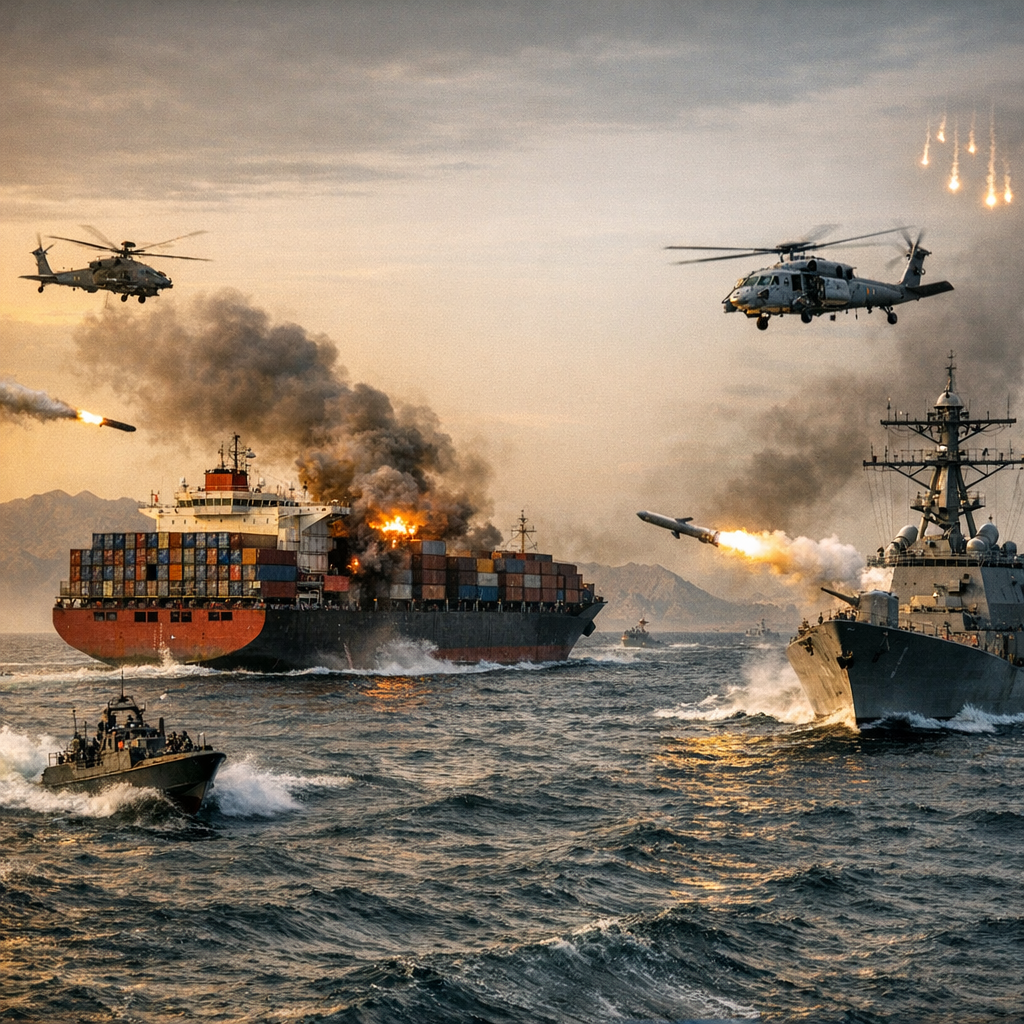
From the bustling ports of Dubai to the world’s supply chains, the stability of maritime trade routes through the Red Sea and Bab al-Mandeb Strait has become a keystone of global economic security. Emerging threats from armed attacks and rising population movements tied to climate change are remaking how international trade and human mobility intersect.
Conflict, Vulnerability, and Trade Disruptions
The Yemeni Houthi movement, aligned with Iran, has repeatedly targeted commercial vessels in the southern Red Sea, Gulf of Aden, and Bab al-Mandeb Strait. Though there was a pause in attacks during late 2025, hostile actions resumed amid broader Middle East tensions and a resurgent Iran-Israel conflict, heightening fears of expanded shipping disruptions.
These attacks include missile and drone strikes, explosive boats, and threats toward ships and ports linked to Saudi Arabia and other Gulf states. As a result, insurers have raised premiums for vessels calling at Red Sea ports, and many companies now reroute via Africa’s Cape of Good Hope or overland alternatives when possible.
Strategic Choke Points at Risk
The Bab al-Mandeb and the Strait of Hormuz are two of the world’s most critical maritime chokepoints. The former connects the Red Sea to the Gulf of Aden and Indian Ocean; the latter bridges the Persian Gulf to global waters. Disruptions here ripple globally, affecting oil, container flows, and even food supply chains.
Recent threats from the Houthis to block Saudi port traffic underscore how quickly a regional conflict can threaten a key artery of global trade. Some shipping lines are already treating these risks as permanent, reshaping investment and route planning accordingly.
Climate, Health, and Migration: The Other Frontiers
Alongside geopolitical tension, climate change is increasingly seen as a driver of migration, displacement, and related health risks. A new WHO global action plan has launched to prioritize research into how climate stressors—from rising temperatures to extreme weather—amplify health vulnerabilities among migrants and displaced populations.
Human migration rates—already rising sharply since 2000—reflect environmental, economic, and social pressures. As communities are forced to move by drought, sea-level rise, or disaster, gaps in health care, water access, and social inclusion tend to widen unless addressed proactively.
What This Means for the UAE and Global Actors
For the UAE, strategically located on the southeastern corner of the Arabian Peninsula, these developments carry compounded risks and opportunities. Ports, supply chains, energy exports, and air traffic are all impacted when nearby straits are threatened.
Moving forward, resilient policy responses will demand stronger regional maritime cooperation, flexible shipping plans, and domestic readiness for climate-induced migration and health crises. Decision-makers in global shipping, insurance, and humanitarian fields must adapt to unpredictable security and environmental pressures—and fast.
Looking Ahead
The Red Sea crisis is not merely a regional concern—it’s reshaping trade, security, and migration flows with global implications. Stay alert, listen to maritime advisory updates, and support climate‐health initiatives that build both readiness and resilience.