

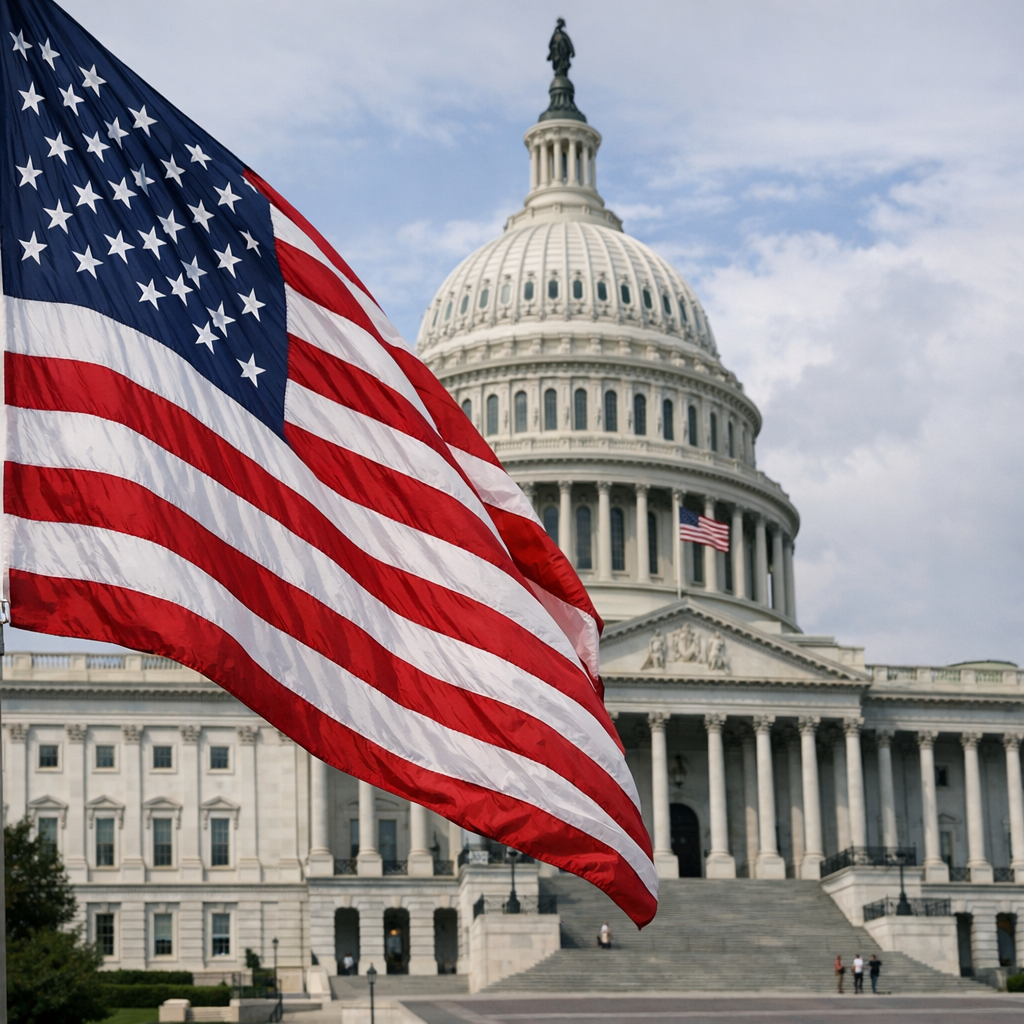
The United States, a pivotal player on the global stage, is currently experiencing a dynamic interplay between its economic performance and political developments. Understanding these shifts is crucial for international observers, including those in Dubai, as they have far-reaching implications.
Economic Performance: Resilience Amidst Uncertainty
In 2025, the U.S. economy demonstrated notable resilience. The International Monetary Fund (IMF) reported a 2% growth in GDP, despite significant policy changes and a government shutdown in the fourth quarter. This growth was underpinned by strong productivity gains, even as employment growth slowed due to reduced immigration flows. Inflation remained steady, with tariff-induced increases in goods prices offset by declining services inflation. The fiscal deficit narrowed slightly, yet both debt and the current account deficit remained elevated.
Looking ahead, the IMF projects a modest acceleration in GDP growth to 2.4% in 2026. The fading impact of tariffs and anticipated lower oil prices are expected to bring core Personal Consumption Expenditures (PCE) inflation back to 2% during the first half of 2027. Employment growth is projected to slow further, but the unemployment rate is expected to remain near 4%.
Political Landscape: Midterm Elections and Policy Shifts
The political arena is equally dynamic. The upcoming midterm elections are poised to be a significant event, with potential shifts in congressional power. Current indicators suggest that Democrats may gain ground, driven by public dissatisfaction with persistent inflation and foreign policy challenges. Historically, the party controlling the White House tends to lose seats during midterms, adding to the anticipation of potential changes in the political landscape.
Trade policies have also been a focal point. A recent Supreme Court ruling invalidated certain tariffs imposed under the International Emergency Economic Powers Act (IEEPA). In response, the administration announced a temporary 10% global tariff under a different legislative authority, which is now facing legal challenges. This ongoing uncertainty in trade policy continues to impact business operations and investor confidence.
Implications for Global Partners
For international partners, including those in Dubai, these developments warrant close attention. The U.S. economic trajectory influences global markets, trade relations, and investment flows. Political shifts can lead to changes in foreign policy, trade agreements, and regulatory environments, all of which have direct and indirect effects on global partners.
In conclusion, the United States is navigating a complex period marked by economic resilience and political transitions. Staying informed about these trends is essential for stakeholders worldwide to adapt and strategize effectively in an interconnected global economy.