

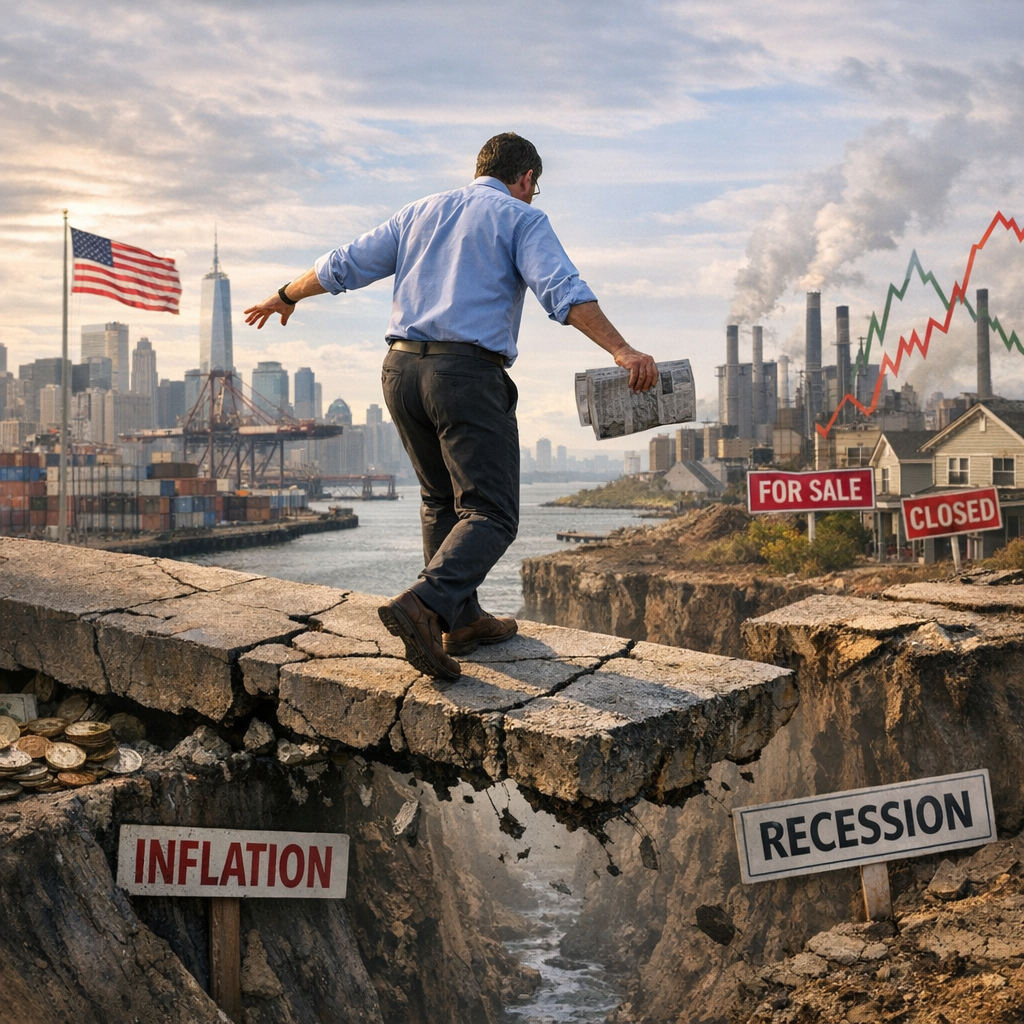
The United States economy is undergoing significant transformations, influenced by a series of policy shifts and global developments. These changes have far-reaching implications, not only for Americans but also for international partners, including those in the United Arab Emirates.
Economic Growth and Productivity
In 2025, the U.S. economy demonstrated resilience, achieving a 2% growth rate despite challenges such as policy adjustments and a government shutdown in the fourth quarter. This growth was largely driven by robust productivity gains, particularly in sectors like artificial intelligence (AI). Investments in AI have bolstered business investment and contributed to a modest acceleration in growth, with projections indicating a rise to 2.4% in 2026. However, the benefits of AI are not uniformly distributed, leading to discussions about the need for effective redistribution policies to ensure equitable economic gains.
Inflation and Monetary Policy
Inflation has remained relatively stable, with the Personal Consumption Expenditures (PCE) price index expected to return to the Federal Reserve’s 2% target by early 2027. The Federal Reserve faces the challenge of balancing its dual mandate of maintaining stable prices and maximizing employment, especially in the context of potential stagflation scenarios where inflation remains above target while the labor market weakens.
Fiscal Policy and Trade
Recent fiscal policies, including tax reforms and increased tariffs, have had a mixed impact. While certain tax provisions have provided a modest boost to economic activity, higher tariffs have introduced inflationary pressures and affected trade balances. The Congressional Budget Office projects that these tariffs will reduce real U.S. imports by 3.7% in 2025, with a gradual rebound expected in subsequent years.
Labor Market Dynamics
The U.S. labor market is experiencing notable shifts. Employment growth has slowed, partly due to stricter immigration policies leading to a reduced foreign-born labor force. This trend is expected to result in slower employment growth and a modest increase in inflationary pressures. Additionally, the rise of AI and automation is reshaping job markets, with certain sectors facing displacement while others, such as healthcare and education, may see job augmentation.
Global Implications
For international partners like the UAE, these developments in the U.S. economy are significant. Changes in U.S. trade policies and economic performance can influence global markets, affecting trade flows, investment decisions, and economic strategies worldwide. Staying informed about these trends is crucial for navigating the interconnected global economy.
In conclusion, the U.S. economy is at a pivotal juncture, with policy decisions and technological advancements shaping its trajectory. Understanding these dynamics is essential for stakeholders both within and outside the United States.