

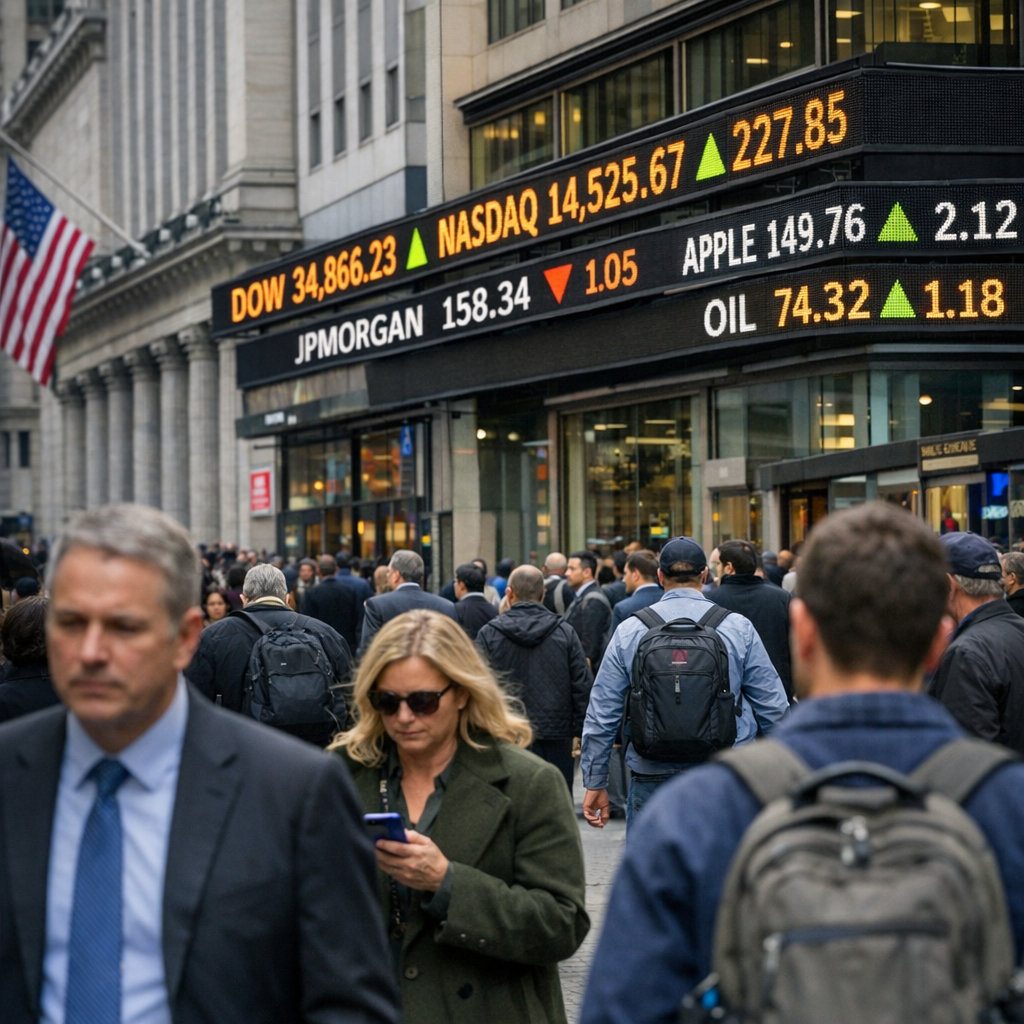
The United States economy is currently experiencing a period of moderate growth, marked by a complex interplay of factors influencing its trajectory. As of early 2026, the Gross Domestic Product (GDP) has expanded by 2.2% from 2024 to 2025, reaching $30.8 trillion. This growth aligns with the average annual rate observed between 2000 and 2024.
Labor Market Dynamics
The labor market has shown resilience, with the unemployment rate stabilizing around 4.3% as of April 2026. However, job growth has decelerated, with a total of 369,000 jobs created by March 2026. This slowdown is partly attributed to stricter immigration policies leading to a reduced foreign-born labor force, which in turn has contributed to slower employment growth and modest inflationary pressures.
Trade and Tariff Impacts
Trade policies have significantly influenced the economic landscape. In March 2026, the U.S. trade deficit widened to $60.3 billion, driven by an $8.7 billion increase in imports that outpaced a $6.2 billion rise in exports. The expansion in imports was notably led by passenger vehicles and high-tech capital goods. Additionally, higher tariffs have been implemented, which are expected to modestly lower the trade deficit and raise approximately 0.75% of GDP in revenue in the near term. However, these tariffs also represent a negative supply shock, anticipated to raise the Personal Consumption Expenditures (PCE) price index by around 0.5% by early 2026 and reduce the level of output by approximately 0.5%.
Fiscal Policy and Debt Concerns
Fiscal policy changes enacted in 2025 are projected to provide a modest boost to economic activity, adding around 0.75% to the level of GDP in 2026-27. This boost primarily stems from more generous tax treatment of capital spending and a lower household income tax burden. However, these changes are also expected to increase the fiscal deficit by about 1.5% of GDP. The general government deficit is anticipated to remain in the 7–7.5% of GDP range, with debt exceeding 140% of GDP by 2031.
Public Sentiment and Economic Outlook
Public perception of the economy remains cautious. As of January 2026, only 28% of U.S. adults rated economic conditions as excellent or good, while 72% viewed them as only fair or poor. This sentiment reflects ongoing concerns about economic stability and future prospects. Looking ahead, GDP growth is expected to accelerate modestly to 2.4% in 2026. The inflationary impact of tariffs is projected to diminish, and oil prices are anticipated to decrease from their currently elevated levels, allowing core PCE inflation to return to 2% during the first half of 2027. Employment growth is expected to slow, but the unemployment rate should remain close to 4% in 2026–27.
In summary, the U.S. economy is navigating a complex environment characterized by moderate growth, evolving trade policies, fiscal adjustments, and cautious public sentiment. While certain indicators suggest resilience, ongoing challenges necessitate careful monitoring and adaptive policy responses to sustain economic stability and growth.