

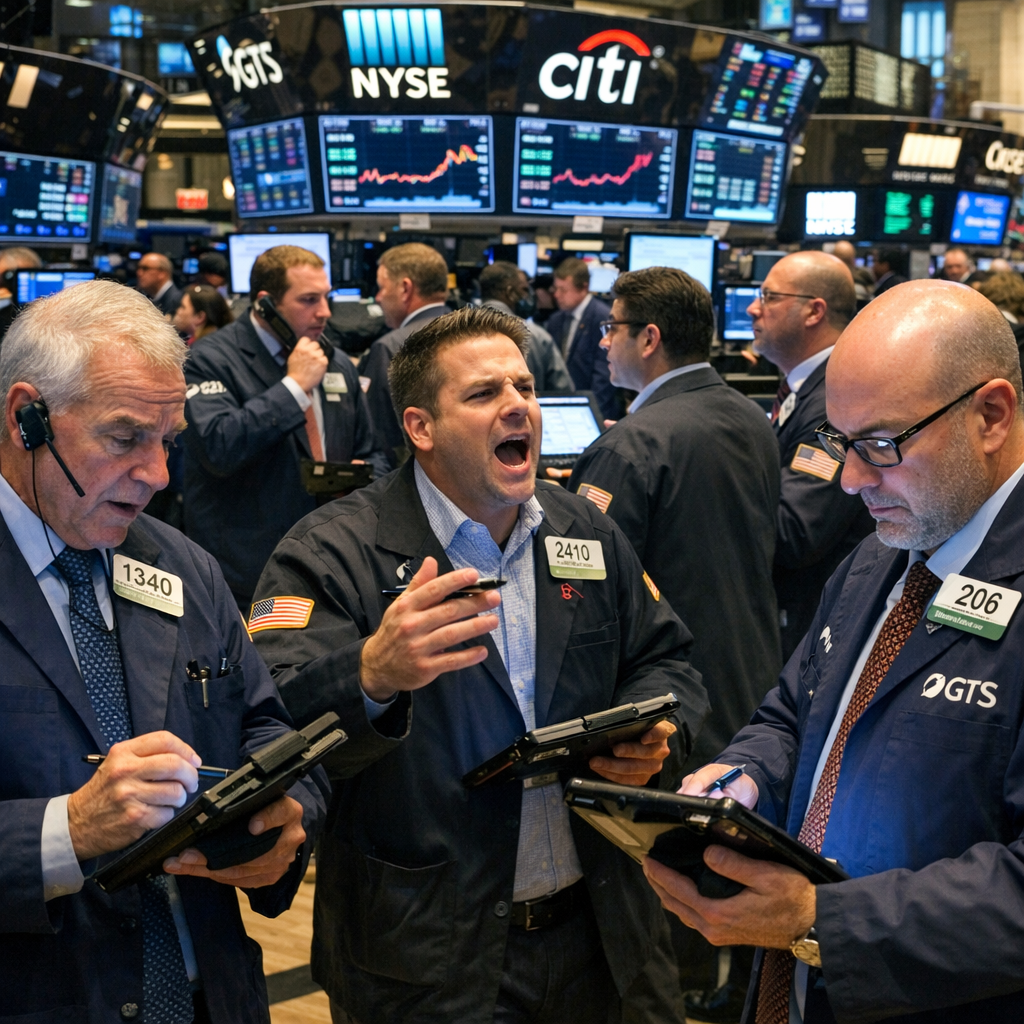
The United States is currently experiencing a period of significant economic and political transformation. Recent data indicates a complex interplay between growth, trade policies, and public sentiment.
Economic Performance and Trade Dynamics
In 2025, the U.S. economy demonstrated resilience, achieving a 2% growth rate despite policy shifts and a government shutdown in the fourth quarter. This growth was underpinned by strong productivity gains, even as employment growth slowed due to reduced immigration flows. Inflation remained stable, with tariff-induced increases in goods prices offset by moderating services inflation. The fiscal deficit narrowed slightly to 5.9% of GDP, while general government debt rose to 123.9% of GDP. The current account deficit remained substantial at 3.7% of GDP. Looking ahead, GDP growth is projected to accelerate modestly to 2.4% in 2026, with core PCE inflation expected to return to 2% by the first half of 2027. Employment growth is anticipated to slow further, but the unemployment rate should remain close to 4% during 2026–27. Near-term risks to growth and unemployment are balanced, though rising energy prices pose upside inflation risks. IMF Executive Board Concludes 2026 Article IV Consultation with the United States
Trade policies have significantly influenced economic indicators. In March 2026, the U.S. trade deficit widened to $60.3 billion from $57.8 billion in February, marking the second consecutive monthly increase. This change was driven by an $8.7 billion rise in imports, outpacing a $6.2 billion growth in exports. Notably, petroleum exports surged by $6.9 billion, while gold exports declined by $768 million. Imports saw substantial increases in passenger cars and AI-related tech equipment, with automotive imports rising by $3.7 billion and capital goods imports by $2.1 billion. Tariff rates dropped to around 6.8%, influenced by a Supreme Court decision, trade route shifts, and a lower proportion of dutiable goods. A narrower deficit is expected in April due to rising crude exports and declining petroleum imports amid Persian Gulf tensions. Kiplinger Trade Outlook: Trade Deficit Widens as Surging Imports Outpace Petroleum and Gold Export Gains
Public Perception and Political Climate
Public sentiment reflects the complexities of the current economic environment. As of January 2026, only 28% of U.S. adults rated economic conditions as excellent or good, while 72% viewed them as only fair or poor. These perceptions have remained largely unchanged over the past six years, indicating persistent concerns among the populace. State of the Union 2026: Where Americans stand on key issues facing the nation
Politically, the landscape is poised for potential shifts. With the 2026 midterm elections approaching, Democrats are positioned to make significant gains due to public dissatisfaction with inflation and ongoing international conflicts. The Republican Party has seen waning support among crucial voting groups, including Hispanics, working-class white women, and Gen Z men. Historically, the president’s party tends to lose seats in midterms, and current polling indicates a Democratic lead in the generic congressional ballot. An Early Midterms Outlook
Implications for the Future
The interplay between economic performance, trade policies, and public sentiment underscores the need for strategic policy decisions. As the U.S. navigates these challenges, the outcomes will have significant implications not only domestically but also for international partners, including those in the Middle East. Observing these developments offers valuable insights into the evolving dynamics of global economics and politics.