

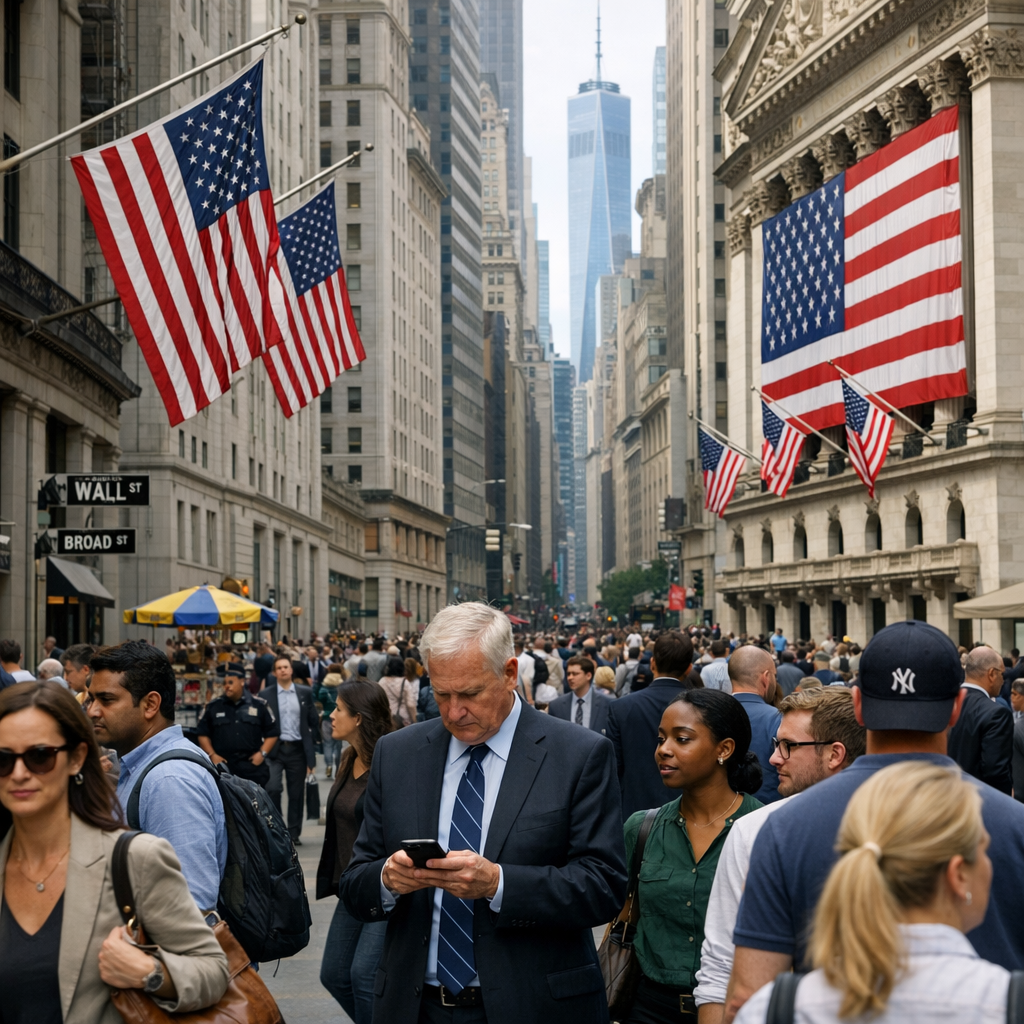
The United States continues to be a focal point in global discussions, with its economic policies and political decisions resonating worldwide. As observers from Dubai, understanding these developments is crucial given their potential impact on international markets and diplomatic relations.
Economic Performance and Projections
In 2025, the U.S. economy demonstrated resilience, achieving a 2% growth rate despite significant policy shifts and a government shutdown in the fourth quarter. This growth was underpinned by strong productivity gains, even as employment growth slowed due to reduced immigration flows. Inflation remained stable, with tariff-induced increases in goods prices offset by declining services inflation. The fiscal deficit saw a slight reduction, yet both debt levels and the current account deficit remained elevated. Looking ahead, projections indicate a modest acceleration in GDP growth to 2.4% in 2026, with core inflation expected to return to 2% by the first half of 2027. Employment growth is anticipated to continue its slowdown, though unemployment rates should hover around 4%.
Policy Shifts and Their Implications
Recent policy changes have introduced both opportunities and challenges. The tax and spending adjustments enacted in 2025 are projected to provide a short-term boost to economic activity, adding approximately 0.75% to GDP levels in 2026-27. However, these measures are also expected to increase the fiscal deficit by about 1.5% of GDP. Additionally, the implementation of higher tariffs is anticipated to modestly reduce the trade deficit and generate revenue equivalent to 0.75% of GDP in the near term. Nonetheless, these tariffs represent a negative supply shock, likely raising the Personal Consumption Expenditures (PCE) price index by around 0.5% by early 2026 and reducing output levels by a similar margin. Stricter immigration policies are also expected to decrease the size of the foreign-born labor force, leading to slower employment growth, slight inflationary pressures, and a reduction in economic activity by approximately 0.4% by 2027.
Public Sentiment and Political Landscape
Public opinion reflects the complexities of the current economic and political environment. As of early 2026, only 28% of Americans rated national economic conditions as excellent or good, while a significant majority of 72% viewed them as only fair or poor. These perceptions are deeply divided along partisan lines, with 49% of Republicans expressing a positive view of the economy compared to just 10% of Democrats. Regarding the impact of President Trump’s policies, 57% of Republicans believe they have improved the economy, whereas 85% of Democrats feel they have worsened it. Overall, 28% of Americans think the president’s policies have made economic conditions better, while 52% believe they have made them worse.
Global Implications
For international observers, particularly in Dubai, these developments in the U.S. hold significant implications. The interplay between economic growth, policy decisions, and public sentiment in the U.S. can influence global markets, trade relations, and diplomatic engagements. Staying informed about these trends is essential for navigating the interconnected global landscape.