

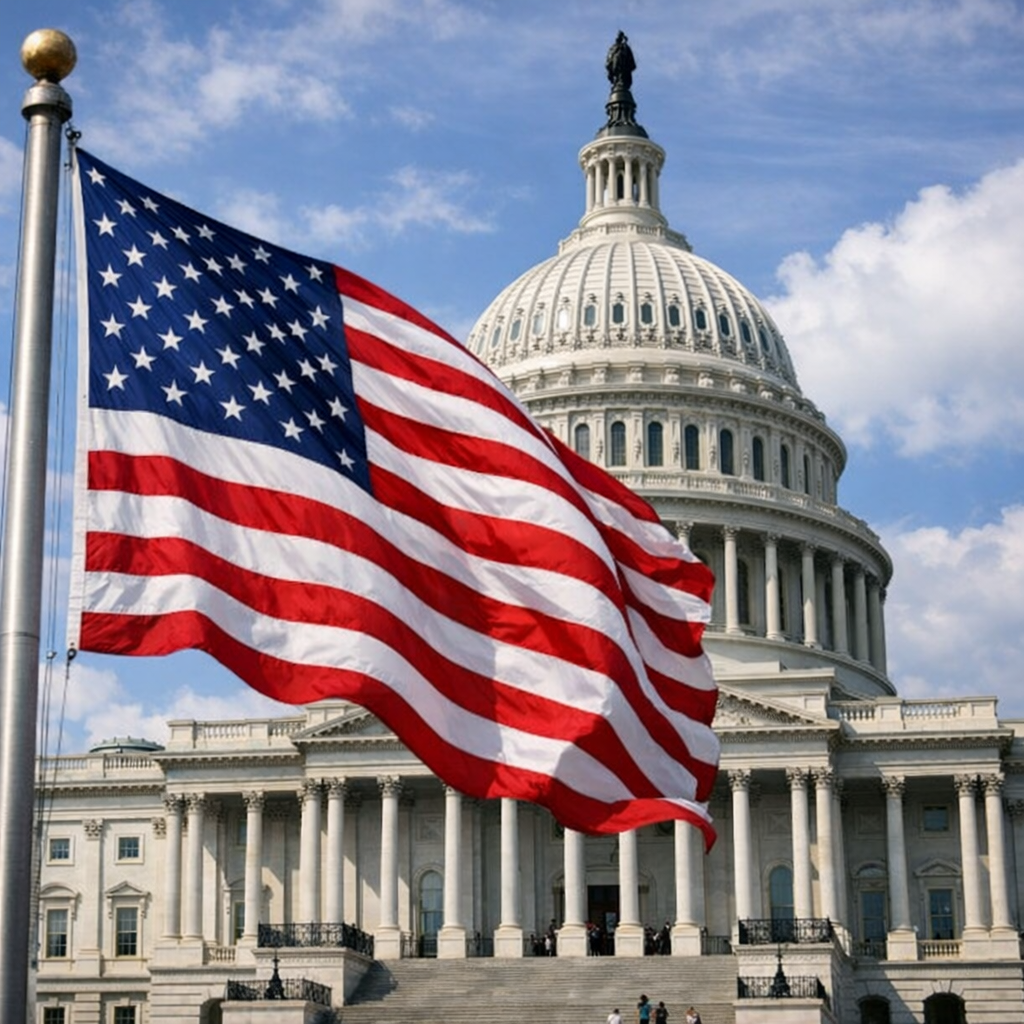
The United States continues to experience significant economic and political transformations, with recent developments influencing both domestic and international landscapes.
Economic Performance and Outlook
In 2025, the U.S. economy demonstrated resilience, achieving a 2% growth rate despite policy shifts and a government shutdown in the fourth quarter. This growth was underpinned by strong productivity gains. Inflation remained stable, as tariff-induced increases in goods prices were offset by declining services inflation. The fiscal deficit narrowed slightly, though debt levels and the current account deficit remained elevated. Looking ahead, growth is projected to rise to 2.4% in 2026, with core PCE inflation expected to return to 2% during the first half of 2027. Employment growth is slowing, but unemployment is anticipated to stay near 4%.
Policy Shifts and Their Implications
Recent policy changes are poised to impact the economic trajectory. Tax and spending adjustments legislated in 2025 are expected to provide a modest boost to activity in the near term, adding approximately 0.75% to the level of GDP in 2026-27, while increasing the deficit by around 1.5% of GDP. However, from 2029 onwards, as some tax provisions expire and spending cuts intensify, fiscal policy is projected to tighten, creating a net drag on growth. Additionally, higher tariffs are anticipated to modestly lower the trade deficit and raise about 0.75% of GDP in revenue in the near term. These tariffs represent a negative supply shock, expected to raise the PCE price index by around 0.5% by early 2026 and reduce the level of output by approximately 0.5%.
Geopolitical Considerations
Geopolitical tensions, particularly in the Middle East, have led to rising energy prices, posing upside risks to inflation. The U.S. is actively asserting its economic and military power amid broader geopolitical risks and competition for access to strategic resources, including energy and minerals. This focus is likely to support robust U.S. defense spending, potentially boosting defense stock performance.
Federal Reserve and Monetary Policy
The Federal Reserve faces challenges, including political pressure advocating for lower interest rates and questioning its independence. High U.S. government debt and deficits are straining the central bank’s ability to implement monetary policy effectively. Rising oil prices could further complicate the Fed’s path, potentially leading to bond market volatility, higher long-term rates, and a weaker dollar.
Trade Uncertainty
Trade policy uncertainty persists, with the administration signaling plans to impose tariffs through alternative sections of U.S. trade law. Additionally, the renegotiation of the United States-Mexico-Canada Agreement (USMCA) may lead to tighter trade restrictions on China and closer North American alignment in an increasingly deglobalizing world. These developments could introduce fresh volatility into equity markets.
In summary, the U.S. is navigating a complex economic and political landscape, with policy shifts and geopolitical tensions influencing both domestic and global markets. Stakeholders should remain vigilant and adaptable to these evolving dynamics.