

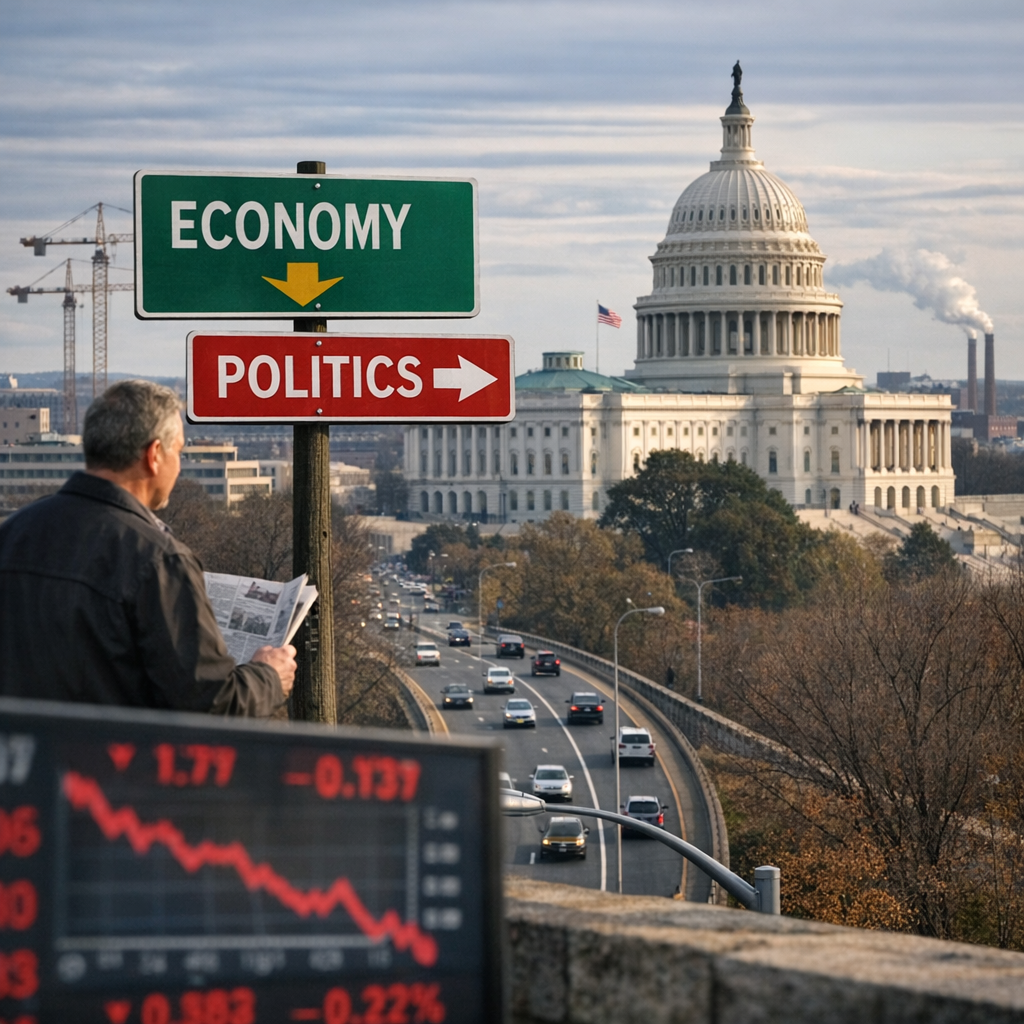
The United States continues to experience significant economic and political transformations, with recent developments influencing both domestic and international landscapes.
Economic Performance and Projections
In 2025, the U.S. economy demonstrated resilience, achieving a 2% growth rate despite policy shifts and a government shutdown in the fourth quarter. This growth was underpinned by strong productivity gains. Inflation remained stable, as tariff-induced increases in goods prices were offset by declining services inflation. The fiscal deficit narrowed slightly, though debt levels and the current account deficit remained elevated. Looking ahead, GDP growth is projected to rise to 2.4% in 2026, with core PCE inflation expected to return to 2% during the first half of 2027. Employment growth is slowing, but unemployment is anticipated to stay near 4%.
Policy Shifts and Their Implications
Recent policy changes have introduced both opportunities and challenges. The tax and spending adjustments legislated in 2025 are expected to provide a modest boost to economic activity in the near term, adding approximately 0.75% to the level of GDP in 2026-27. However, these changes are also projected to increase the deficit by around 1.5% of GDP. Additionally, higher tariffs are anticipated to modestly reduce the trade deficit and generate revenue equivalent to about 0.75% of GDP in the near term. Nonetheless, these tariffs represent a negative supply shock, expected to raise the PCE price index by approximately 0.5% by early 2026 and reduce output levels by a similar margin.
Public Sentiment and Political Landscape
Public perception of the economy remains cautious. As of early 2026, about 28% of U.S. adults rated economic conditions as excellent or good, while 72% viewed them as only fair or poor. These views have remained relatively stable over the past year but are notably lower than pre-pandemic levels. Politically, the upcoming midterm elections are poised to be pivotal. Democrats have the potential to make significant gains, with President Trump’s administration facing challenges related to persistent inflation and foreign policy concerns. Historically, the party controlling the White House tends to lose congressional seats during midterms, and current polling indicates a lead for Democrats in the generic congressional ballot.
Global Implications
The evolving U.S. economic and political landscape has far-reaching implications. Trade policies, particularly the implementation of tariffs, have introduced uncertainties in global markets. Additionally, shifts in U.S. foreign policy, characterized by renewed regional assertiveness and economic nationalism, are influencing international relations and economic strategies worldwide.
As the United States navigates these complex dynamics, both domestic and international stakeholders are closely monitoring developments to adapt to the changing environment.