

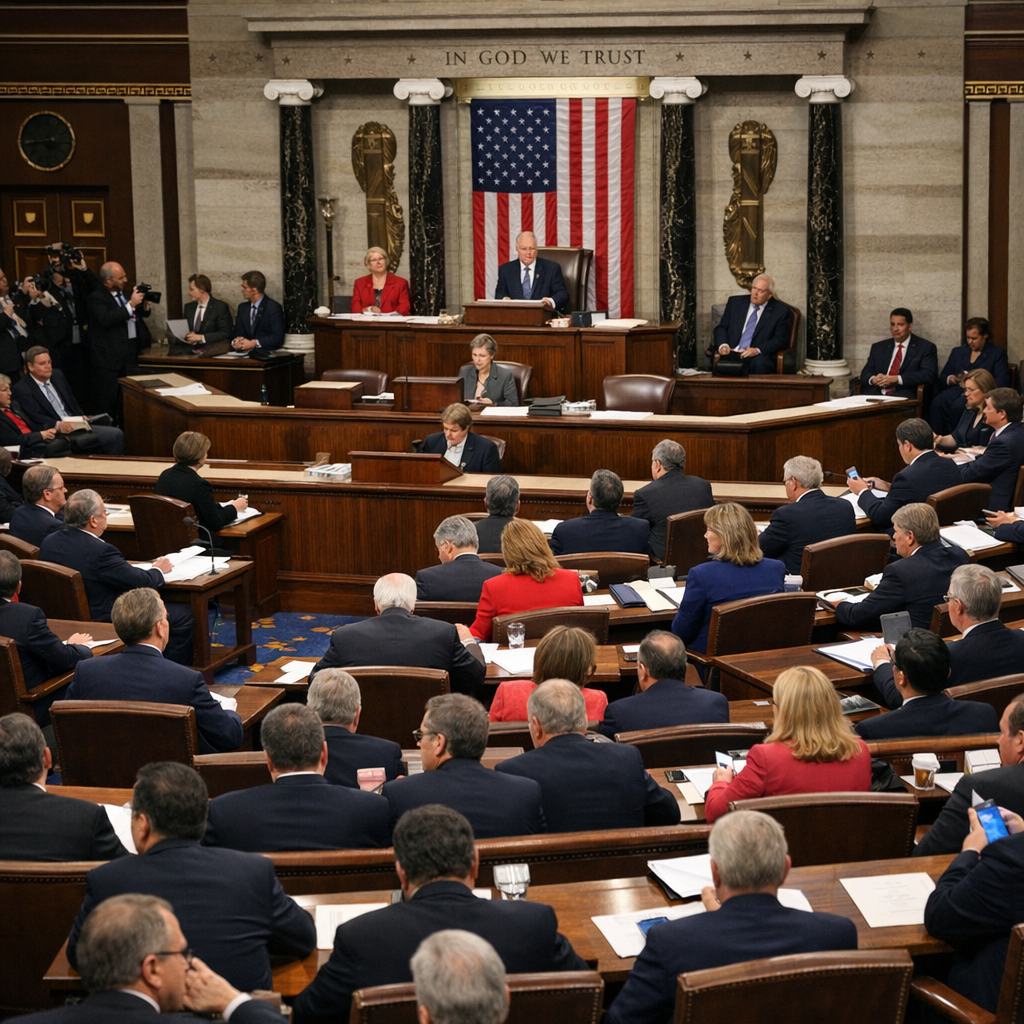
The United States is currently experiencing significant shifts in its political and economic spheres, with recent events shaping the nation’s trajectory.
Political Developments
Recent redistricting efforts have led to the creation of new Republican-leaning congressional districts, consolidating GOP control despite near-equal statewide voting patterns. This move could influence the balance of power in the U.S. House of Representatives.
Additionally, a Gallup poll indicates that about one-third of Americans view politics and government as the nation’s most pressing issues, reflecting heightened concerns over political stability and the health of democracy.
Economic Landscape
The U.S. economy has shown mixed signals. While there have been job announcements and economic growth, challenges persist. Rising bankruptcies and weak job growth signal mounting pressure on small firms, indicating that not all sectors are benefiting equally from economic policies.
Furthermore, the International Monetary Fund (IMF) has highlighted that while the U.S. economy remains buoyant, risks from tariffs and rising debt could pose stability challenges in the future.
Implications
These developments underscore the complexities of the current U.S. political and economic environment. The interplay between political decisions and economic outcomes continues to shape the nation’s path forward.