

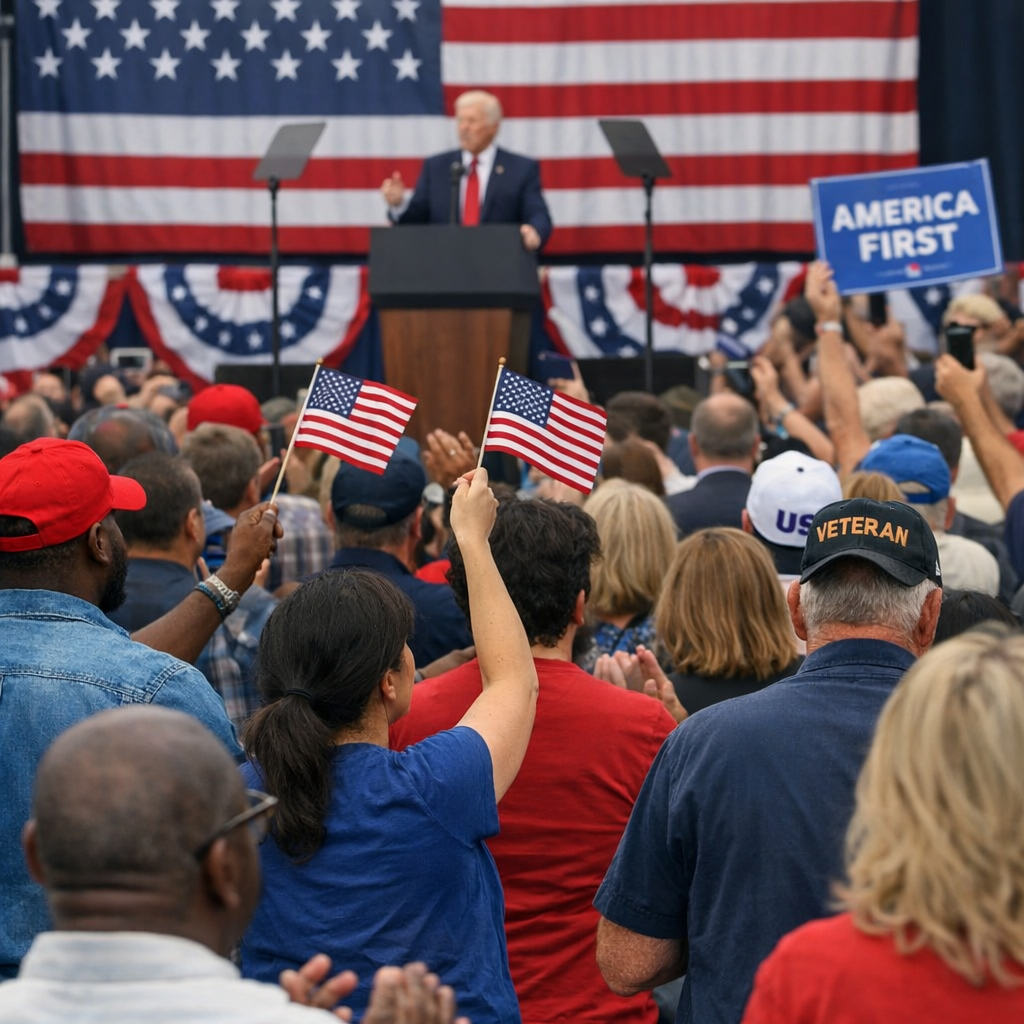
The United States is currently experiencing significant shifts in both its economic and political spheres, with recent events shaping the nation’s trajectory.
Economic Developments
Recent data indicates a complex economic landscape. In September, wholesale inflation rose by 0.3%, maintaining an annual level of 2.7%. Retail sales saw a modest increase of 0.2% during the same period; however, when adjusted for inflation, consumer spending actually declined by 0.1%. Additionally, consumer confidence has dipped to its lowest point since April, reflecting growing concerns about employment prospects and the overall economic outlook.
Political Landscape
The political arena is equally dynamic. The upcoming 2026 midterm elections are poised to be pivotal, with all 435 House seats and 35 Senate seats up for grabs. Redistricting efforts across various states are intensifying, potentially altering the balance of power. Notably, Florida’s Governor Ron DeSantis has proposed new congressional maps that could impact Democratic representation, while Virginia’s recent remap poses challenges for Republican incumbents.
Furthermore, the political climate has been marked by heightened tensions following an alleged assassination attempt on President Trump during the White House Correspondents’ Dinner in April 2026. This incident has intensified debates over political rhetoric and violence, underscoring the deepening polarization between Republicans and Democrats.
Implications
These developments carry significant implications. Economically, the interplay between inflation, consumer spending, and confidence levels will influence policy decisions and market dynamics. Politically, the outcomes of the midterm elections and redistricting efforts will shape legislative priorities and governance approaches in the coming years.
As the United States navigates these complex challenges, the global community, including regions like Dubai, remains attentive to the ripple effects that may emerge from these shifts.