

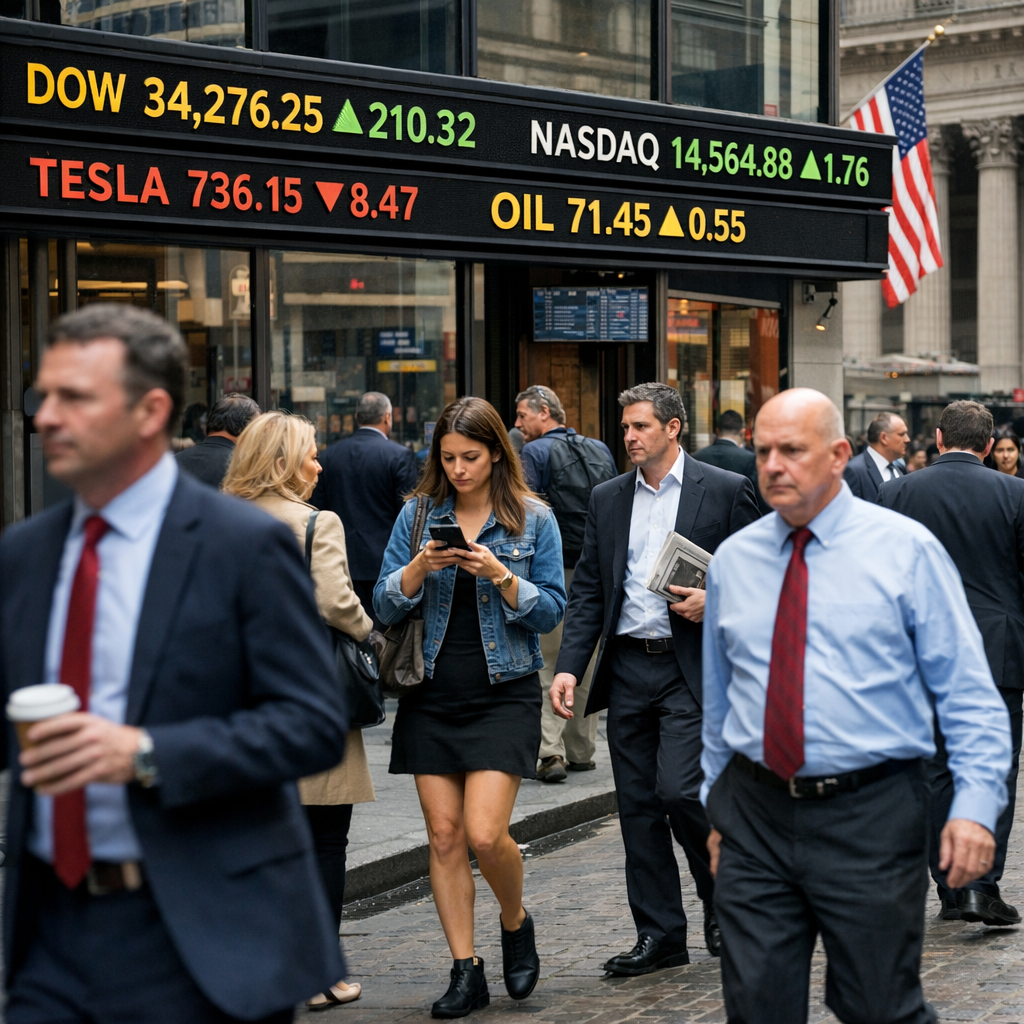
The United States economy has demonstrated notable resilience in the face of recent political shifts and policy changes. As of early 2026, the Gross Domestic Product (GDP) grew by 2.1% in 2025, with projections indicating a modest acceleration to 2.4% in 2026. This steady growth reflects the economy’s ability to adapt to evolving circumstances.
Labor Market Dynamics
The labor market has experienced fluctuations, with the unemployment rate ticking up to 4.3% as of March 2026. Despite this slight increase, the economy added 115,000 jobs in April, signaling ongoing job creation. However, employment growth has slowed compared to previous years, partly due to stricter immigration policies affecting the labor force size.
Inflation and Consumer Sentiment
Inflation remains a concern, with the Consumer Price Index (CPI) showing a 2.4% increase over the 12 months leading up to January 2026. Rising energy prices, influenced by geopolitical tensions, have contributed to this uptick. Consumer sentiment has also been affected, reaching record lows, reflecting public apprehension about economic conditions.
Trade Policies and Global Relations
Recent trade policies, including increased tariffs, have introduced uncertainties. A federal court ruling overturned certain tariffs, adding to the complexity for businesses and investors. These trade measures have led to higher costs in sectors like agriculture and food processing, while some manufacturing regions have seen benefits from protectionist policies.
Fiscal Policies and National Debt
Fiscal policy changes enacted in 2025 are expected to provide a short-term boost to economic activity but may increase the deficit by approximately 1.5% of GDP. The general government debt is projected to exceed 140% of GDP by 2031, raising concerns about long-term fiscal sustainability.
Technological Investments and Productivity
Investment in artificial intelligence and related technologies is on the rise, with significant spending on data centers and software development. While these investments are expected to enhance productivity over time, their immediate impact on GDP is limited due to the importation of much of the necessary hardware.
Conclusion
The U.S. economy continues to navigate a complex landscape shaped by political decisions, trade policies, and global events. While growth persists, challenges such as inflation, labor market shifts, and fiscal sustainability require careful management to ensure long-term economic stability.