

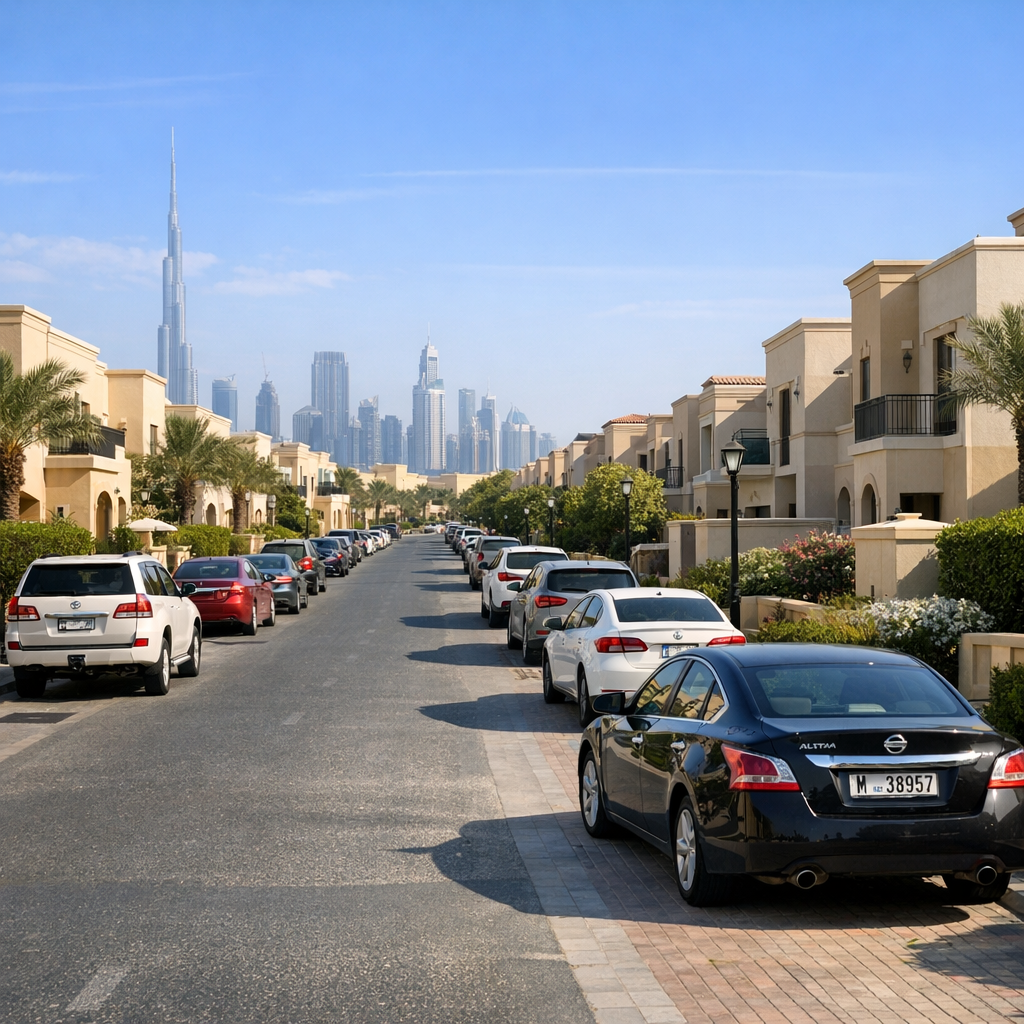
Dubai is seeing several persistent issues that are increasingly affecting residents’ daily lives. Two big topics—parking tensions in dense neighbourhoods, and enforcement around wastewater disposal—are now front of mind for many locals. Here’s what people are raising, what’s being done, and how authorities are responding.
Parking friction in communities like Discovery Gardens, International City, JVC
One of the most frequently voiced complaints is around new or increasing parking charges for residents. In Discovery Gardens, for instance, each apartment is now permitted one free car permit. But owners of second vehicles are being charged Dh945 per month (or Dh2,625 per quarter) for uncovered, non-reserved parking, a cost many feel is steep given the lack of dedicated spaces. Families with two cars say they are bearing the brunt. Others are relieved—they finally can park closer to home without waking up to blocks filled with non-resident vehicles. (Sources: residents’ interviews; Parkonic communications)
International City also recently saw paid parking introduced across areas that were previously free. Streets long clogged with commercial vehicles—cargo vans, company fleets, delivery fleets—have cleared up significantly. Many residents say the added cost has restored some livability: streets are quieter, parking is now more accessible late in the day. But complaints remain, especially around app glitches, lack of alternative spots, and hourly rates during peak periods. Route access and public transport options are also cited as weaknesses in areas such as Dubai Design District, where employees day after day face high daily fees and a sparse transit network. (Sources: community feedback; public reporting)
Technology, enforcement, and tension
Dubai is investing in tools to improve parking management: hundreds of AI-powered curb and pole cameras are going up to track occupancy, enforce regulations automatically, detect misuse of disability parking, and integrate with digital mobility apps for payment. (Sources: Parkin; RTA announcements)
Random parking violations remain frequent. In 2025 alone, Dubai’s Roads and Transport Authority logged 9,753 such offenses. Vehicles parked improperly—in no-parking zones, blocking road right-of-ways, or taking up shared spaces—are being impounded under regulations aiming to protect traffic flow and safety. (Sources: RTA statistics; enforcement notices)
Public health and environmental implications: Wastewater dumping crackdown
Alongside parking, enforcement around public cleanliness has escalated sharply. Dubai Municipality has launched stricter actions against tankers caught dumping wastewater outside of designated disposal sites. Under Dubai’s Resolution No. 14 of 2015, each illegal dumping violation may incur a Dh100,000 fine, and offending vehicles face impoundment. (Sources: Municipality notices; Gulf News reports)
Even leakage from septic tanks, improper oil disposal, or material spills from concrete mixers carry penalties ranging from Dh3,000 to Dh50,000 depending on severity. These fines aim to protect public health, prevent environmental degradation, and preserve Dubai’s image as a clean, well-maintained global city. (Sources: official law summaries; municipal enforcement briefings)
What residents are asking for—and what might help
Several community requests are surfacing:
- More affordable second-car parking permits or tiered fees recognizing families or multi-vehicle homes.
- Better communication and faster support via apps and community management for parking complaints and activation.
- Expansion of public transport or shuttle services in areas where transit access is weak, especially where parking fees are high.
- Transparent schedules for enforcement, including where and when wastewater disposal inspections happen.
- Visible signage and clear policies so residents understand where fees, penalties, and designated zones apply.
If these are addressed, tensions may ease. Meanwhile, the city’s authorities appear committed to improving compliance, safety, and quality of life through both technological tools and stronger regulation. The question for many residents is whether these changes will be balanced and fair.