

By Ali Al-Ameri
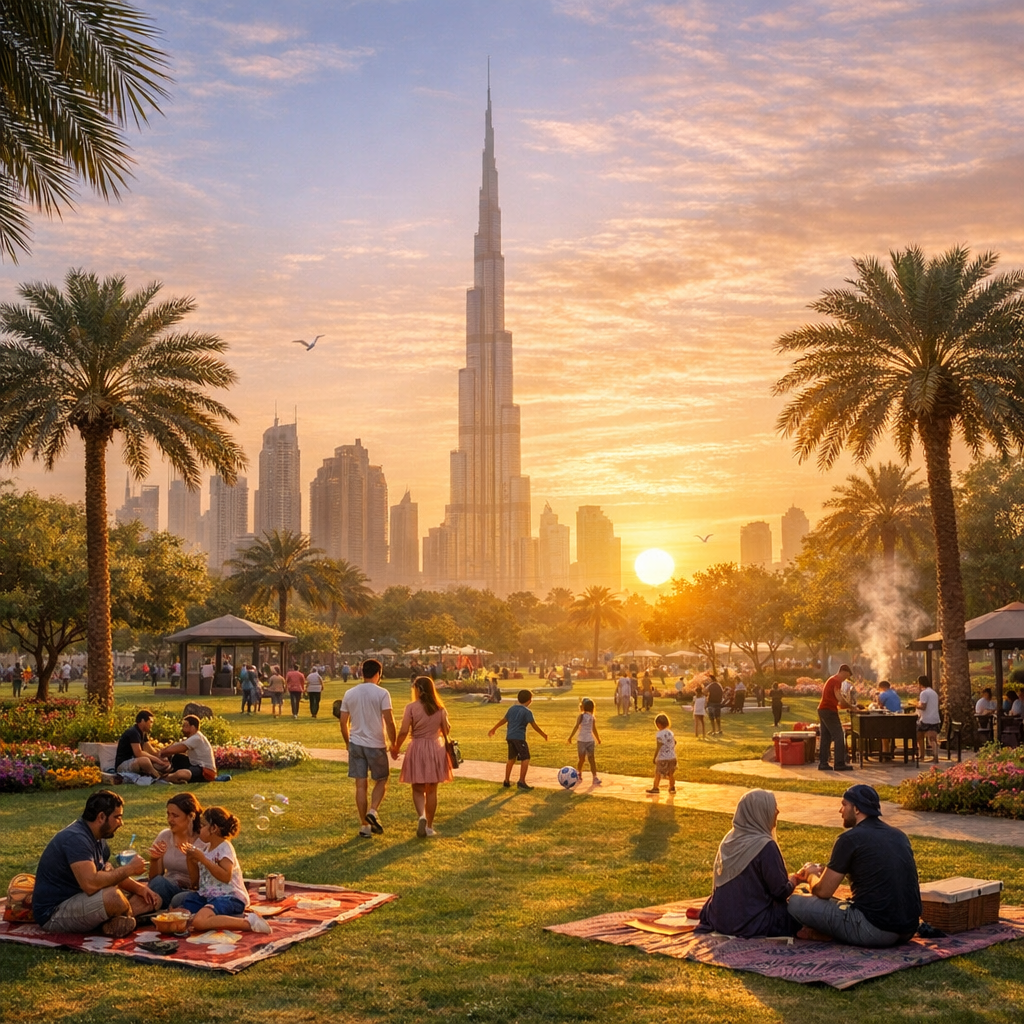
When I walk through Al Barsha Park early in the morning, the air carries the smell of jasmine and khaleeji coffee. Children are already chasing pigeons; elderly men sit on marble benches overlooking playgrounds; neighbours greet each other in several languages. These moments capture something vital about our city: the shared community spaces where people from vastly different backgrounds come together.
Spaces as the heart of daily life
Dubai’s public parks, souks, and local neighbourhoods are more than pretty scenery—they are where life happens. Whether it’s exchanging greetings at Majlis sessions, shopping in Al Fahidi, or taking a walk by Dubai Creek, these places enable us to share cultural traditions, practice hospitality, and create ties across differences. The formal architecture meets informal rituals in ways that both honour our heritage and reflect our modern, multicultural reality.
Voices from the mosaic
I’ve spoken with expats who’ve made Dubai their home for decades. Many speak of the patience required—navigating visa renewals, adapting to new rhythms, learning basic Arabic greetings. Yet the same people often point to the community centre or local park as the first spot where they felt seen—where someone asked about their children, shared their tea, made a space for their stories.
Emiratis too describe this. They take pride in traditions like hasan al-diyafa (generous hospitality), though the forms have shifted—formal majlis gatherings might now coexist with family movie nights or weekend hikes. Tradition remains a foundation even as lifestyles evolve.
Challenges under the surface
Though these shared spaces bring people together, they can also highlight inequality. Accessibility issues exist: some parks lack ramps, some public transport doesn’t reach every community easily, and cultural barriers—like dress codes or gender norms—still persist for many.
For newcomers especially, belonging means more than a legal visa—it’s being welcomed, being included, being able to participate in rituals both big and small. When community planning includes their voices—asking what kind of play areas people want or what events bring them together—Dubai becomes more than a city. It becomes a home.
Building belonging through everyday acts
Belonging isn’t made only in grand schemes. It’s in inviting a neighbour for coffee, blessing the date-laden plate at Ramadan, teaching a child how to fold the kandura, or learning how to tie the ghutra properly. It’s finding common ground, offering kindness, and being visible.
If Dubai is to thrive, it’s not enough to construct glittering towers, cultural museums, or luxury malls. We need to invest in the small—green spaces, local halls where voices can be heard, accessible centres for all ages—to ensure that every resident, Emirati or expat, feels invested in the city’s unfolding story.
Because at the end of the day, spaces that connect us help us become truly rooted here.