

By Ahmed Al-Hamed
Political Landscape: Polarization & Party Struggles
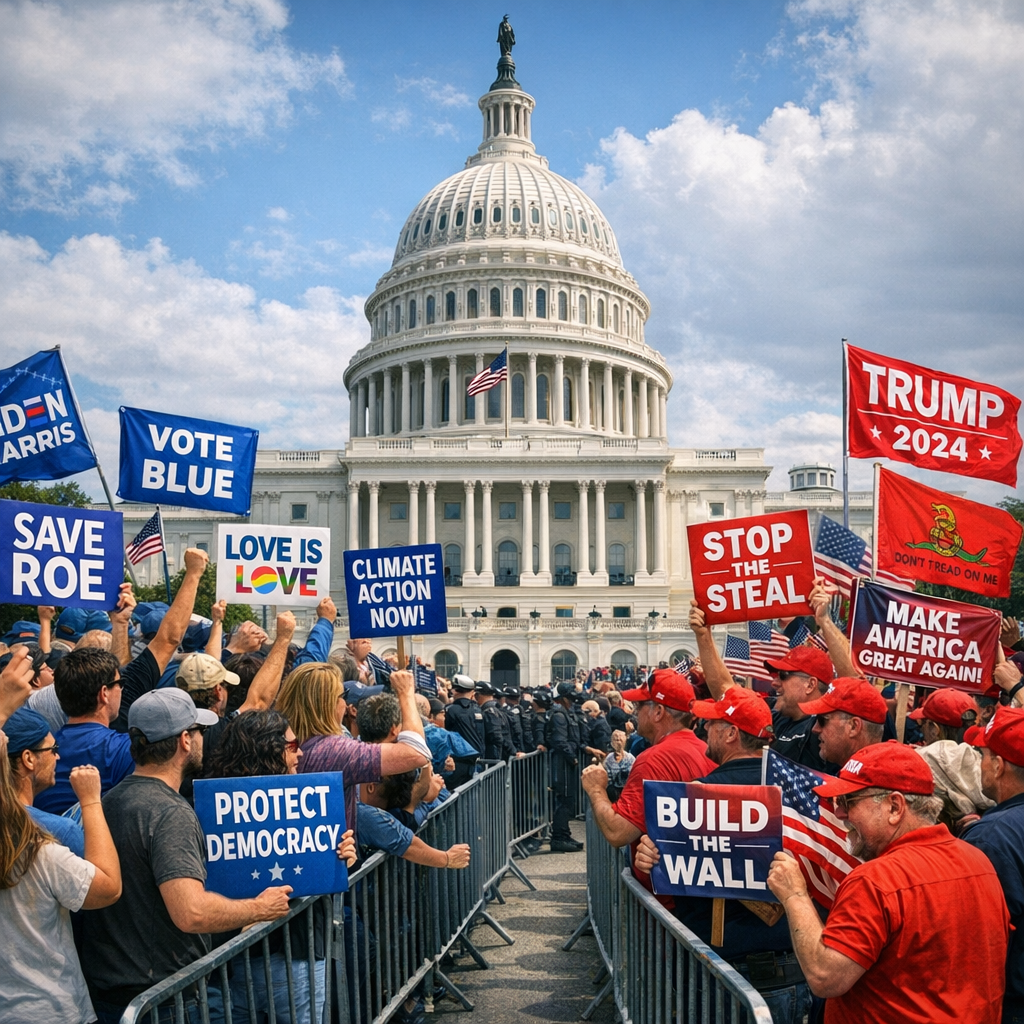
American politics remains sharply divided. Recent research breaks the electorate into nine typology groups, showing that many voters don’t align cleanly with either Republican or Democratic ideals. Even within those who identify strongly with a party, values on issues like immigration, the economy, and social policy vary widely. Some groups sit on a mixed spectrum rather than strictly on one side. This fluidity makes political messaging and coalition-building more complex than ever.
Economic Sentiment & Midterm Stakes
Voters are telling pollsters they are disappointed about the economy. In a recent Pew study, only about 28% of Americans described economic conditions as “excellent or good,” with a large majority saying things are only “fair or poor.”
One result: economic policy has nearly equal support between the two major parties, unlike some social issues where one tends to dominate. With midterm elections approaching, economic satisfaction—or the lack thereof—is turning into a central factor shaping political competition.
Immigration Policy: Legal Battles & Broad Impacts
The Trump administration’s sweeping immigration agenda is facing pushback in multiple arenas. Some of its most controversial executive actions—related to asylum, legal pathway reductions, and deportation policies—have been blocked or modified by federal judges. One recent ruling invalidated policies that had restricted immigration rights for people from dozens of countries, for example.
Meanwhile, Congress has passed legislation providing strong funding for immigration enforcement from now through 2029. This long-term investment supports expanded operations for ICE and Border Patrol. Critics warn that this institutionalizes aggressive enforcement even as legal challenges continue.
What This Means Going Forward
These overlapping trends—political fragmentation, economic disillusionment, and an aggressive immigration regime under legal scrutiny—signal a period of sustained tension in U.S. domestic affairs. Issues that may once have seemed niche are now central to public opinion and policy. Many voters are looking for leaders who can offer clarity and balance rather than ideological extremes. For international observers, including those of us in Dubai and beyond, U.S. stability matters both for global markets and diplomacy.